Travel
Hoi An, Vietnam: Lantern-Lit Ancient Town & the Best-Preserved Trading Port in Southeast Asia
The best-preserved historic trading port in Southeast Asia, Hoi An is a UNESCO town of mustard-yellow facades and silk lanterns where Japanese, Chinese, and Vietnamese heritage meet — home to the 16th-century Covered Bridge and the regional noodle dish cao lầu.
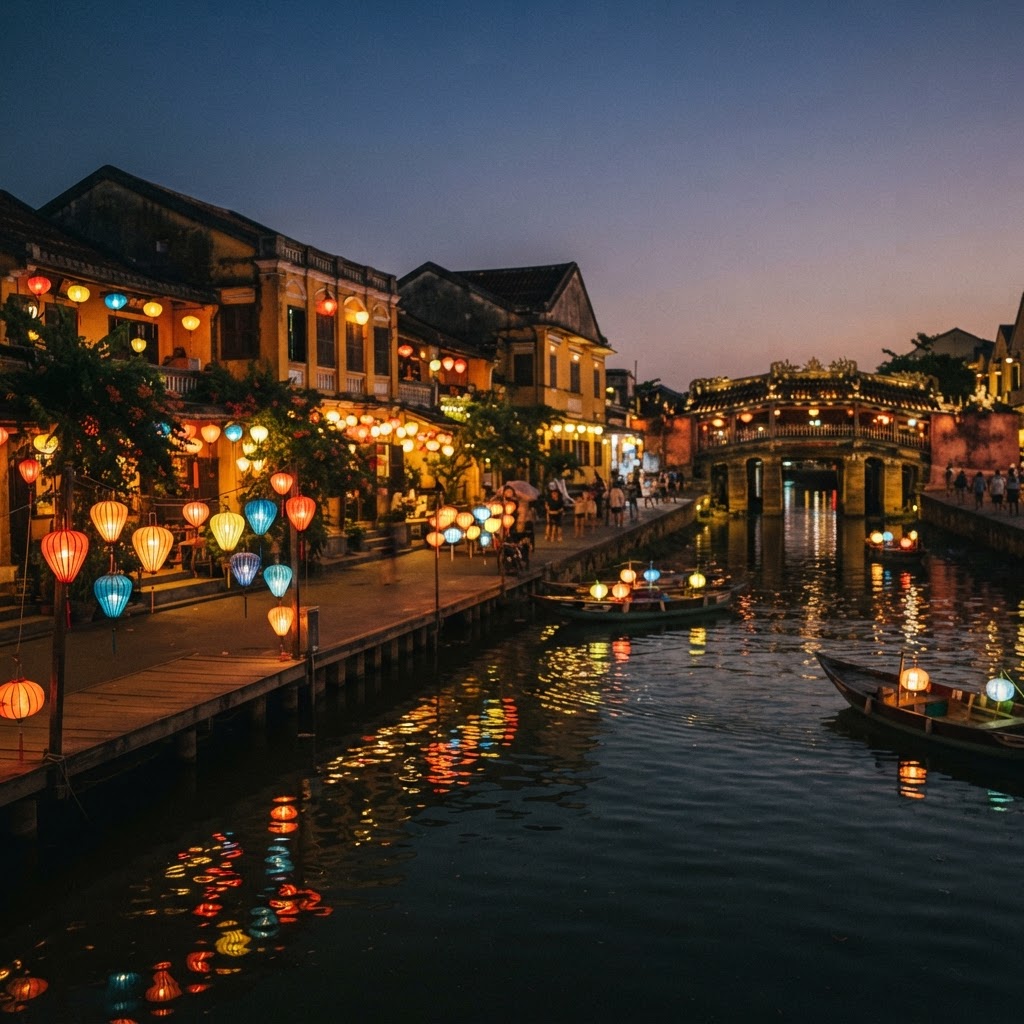
Hoi An, on the central coast of Vietnam, is the best-preserved historic trading port in Southeast Asia — a town of mustard-yellow facades, tiled roofs, and silk lanterns where the architecture of Japan, China, and Vietnam's own Cham and colonial traditions meet in a single riverside streetscape. Inscribed as a UNESCO World Heritage Site in 1999, Hoi An is, in UNESCO's words, 'an exceptionally well-preserved example of a South-East Asian trading port dating from the 15th to the 19th century.' It is also, at dusk, when its hundreds of silk lanterns are lit above the Thu Bon River, one of the most beautiful small cities in Asia.
A Flourishing Trading Port
Hoi An's golden age ran from the 15th through the 19th century, when it was one of Southeast Asia's most active international ports. The Thu Bon River, which flows through the town to the South China Sea, made Hoi An a natural harbor, and merchant ships from China, Japan, the Netherlands, and Portugal traded here in silk, ceramics, spices, and agarwood. The town was known to Western traders as Faifo, a name of debated origin.
The river eventually silted up — by the 19th century, the harbor could no longer accommodate large ships, and trade shifted up the coast to Da Nang. That decline, however, is precisely what preserved Hoi An. While Da Nang modernized, Hoi An slept, and its 800-odd historic buildings — wooden houses, assembly halls, temples, and bridges — survived the centuries largely intact. The town was classified as a National Cultural Heritage Site in 1985, elevated to a Special National Cultural Heritage Site in 2009, and inscribed by UNESCO on December 12, 1999.
The Japanese Covered Bridge
The single most iconic structure in Hoi An is the Japanese Covered Bridge (Chùa Cầu), a wooden-roofed span built by the town's Japanese merchant community in the late 16th or early 17th century to connect their quarter with the Chinese quarter across a small canal. The bridge is so emblematic that it appears on Vietnam's 20,000-dong banknote. Its tiled roof, dog and monkey statues (representing the years the bridge was begun and finished, in the Chinese zodiac), and small temple within make it a monument to the cosmopolitan community that built Hoi An.
The Assembly Halls and Old Houses
Hoi An's Chinese community left a network of assembly halls (hội quán), built as clan and congregation houses. The Fukian Assembly Hall (Hội quán Phúc Kiến, c. 1697), the most elaborate, served the merchants of Fujian province and is a cascade of gates, courtyards, and a central temple richly decorated in tile and lacquer. The Cantonese, Hainan, and Chaozhou halls each served their respective regional communities.
Among the finest preserved private homes is the Tan Ky House (nearly 200 years old, inhabited by seven generations of the same family), a combination of Japanese, Chinese, and Vietnamese architectural elements that is itself a cross-section of Hoi An's heritage. The Phung Hung House, dating to 1780, is another of the town's remarkable merchant residences, with its balconies of carved ironwood.
Lanterns and the River
Hoi An is famous for its silk lanterns, which hang above nearly every street in the Ancient Town. The tradition of lantern-making is centuries old, and the town holds a monthly Lantern Festival on the 14th night of each lunar month, when electric lights are dimmed and the streets are lit only by silk and candle. On these nights, small paper lanterns bearing candles are floated on the Thu Bon River — a tradition said to bring good fortune.
The Vietnamese Table
Hoi An is one of Vietnam's great eating towns. Cao lầu, the city's signature noodle dish — thick noodles, pork, greens, and a small amount of broth, made with water drawn from a specific local well — is found nowhere else and can, by tradition, only be properly made in Hoi An. Bánh mì, the Vietnamese-French baguette sandwich, reaches a regional apotheosis at Bánh mì Phượng, among the most famous sandwich shops in Vietnam. And the town's riverside restaurants serve the fresh seafood of the central coast, from whole grilled fish to prawns and the regional white rose dumplings (bánh bào).
Reference Links:
- Hoi An Ancient Town (UNESCO): whc.unesco.org/en/list/948
- Hội An Old Town (Wikipedia): en.wikipedia.org/wiki/Hội_An_Old_Town
- Vietnam National Administration of Tourism: vietnam.travel
- Quang Nam Tourism: visitquangnam.com


Continue Reading