Travel
Cusco & the Sacred Valley, Peru: The Inca Capital & the Road to Machu Picchu
The archaeological capital of the Americas, Cusco was the navel of the Inca Empire — from its puma-shaped streets and the Twelve-Angle Stone, through the Sacred Valley's terraces and fortresses, to Machu Picchu, the royal estate revealed to the world by Hiram Bingham in 1911.
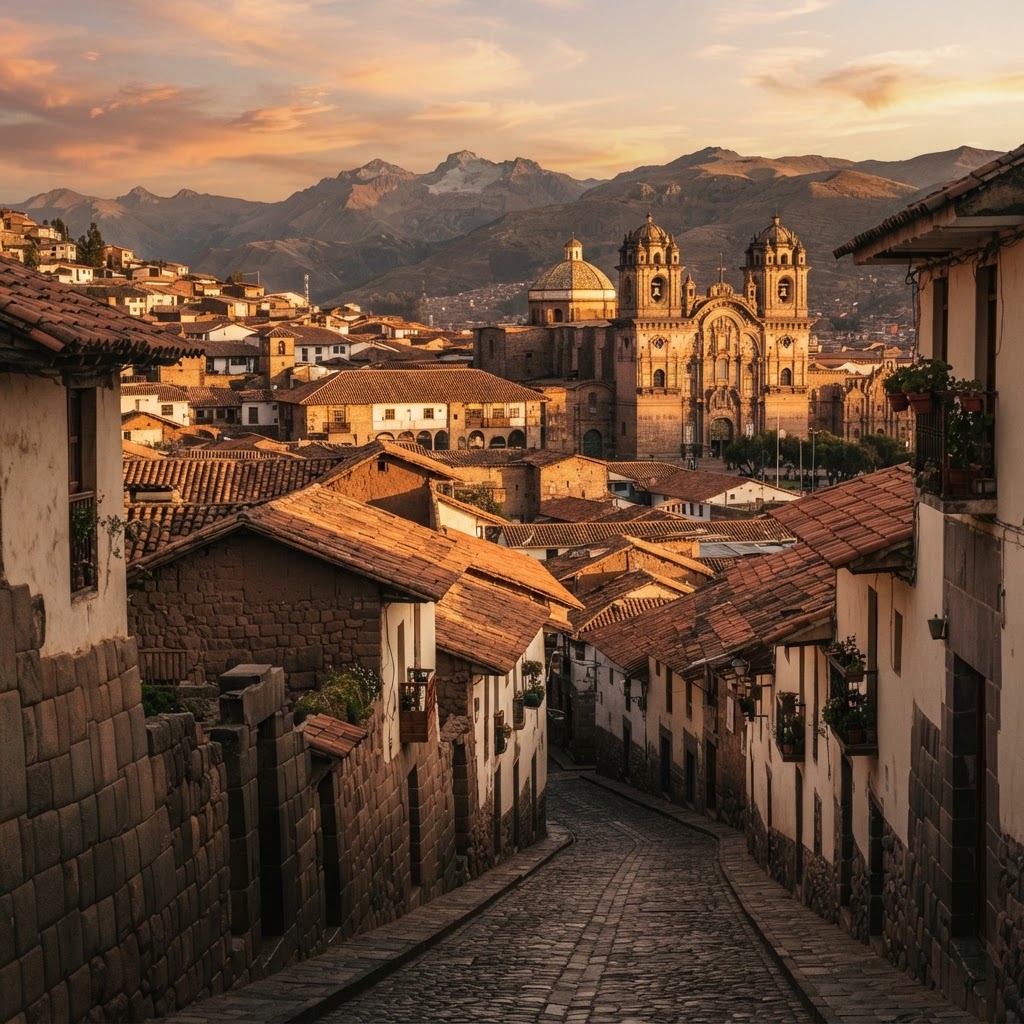
Cusco, set at 11,152 feet in the Peruvian Andes, is the archaeological capital of the Americas — the capital of the Inca Empire and the gateway to Machu Picchu. Founded, by Inca tradition, in the 12th or 13th century, Cusco became the navel of Tawantinsuyu, the 'Realm of the Four Parts,' the largest empire pre-Columbian America ever produced. When the Spanish conquistador Francisco Pizarro arrived in 1533, he found a city of stone so finely cut that its walls — and its successor colonial city built atop them — remain standing today. Cusco and the Sacred Valley below it, together with Machu Picchu, form the most concentrated corridor of pre-Columbian and colonial heritage in the Western Hemisphere.
The Inca Capital
Cusco was laid out by the Inca in the shape of a puma, with Sacsayhuamán, the great fortress-temple above the city, as the head. The site was constructed over several generations from massive limestone blocks — some weighing over 100 tons — fitted so precisely without mortar that a blade cannot be inserted between them, a technique that has allowed the walls to survive centuries of earthquakes that have destroyed later colonial construction.
The heart of the colonial city is the Plaza de Armas, the former Inca main square (Huacaypata), now flanked by the Cathedral of Santo Domingo (begun 1550, completed 1654) and the Church of the Society of Jesus (La Compañía, begun 1571). The Cathedral, built on the foundations of the Inca Viracocha palace, is one of the great colonial churches of the Americas, holding the Cusqueña School of painting and the famous Last Supper in which Christ dines on cuy (guinea pig). The Temple of the Sun, the Inca Qorikancha — once sheathed in gold and the most important temple in the empire — survives beneath the colonial Church of Santo Domingo, its curved Inca walls still visible.
The most visible evidence of Inca masonry in the city streets is the famous Twelve-Angle Stone, on Calle Hatunrumiyoc, a single block so intricately fitted that it has become a symbol of Inca engineering.
The Sacred Valley
The Urubamba Valley — the Sacred Valley of the Incas — stretches between Cusco and Machu Picchu, a fertile river valley of Inca terraces, agricultural estates, and fortresses that served as the empire's breadbasket. Its lower elevation and warmer climate made it the Inca's preferred place of residence and cultivation.
Pisac, at the valley's eastern end, is an Inca site of agricultural terraces, a hilltop fortress, and a colonial village famous for its market. Ollantaytambo, further along, is the best-preserved surviving Inca town, its streets and water channels still in use, its fortress climbing massive terraces up the hillside — the site of the Incas' greatest military victory over the Spanish in 1536, under Manco Inca. Chinchero, with its Inca terraces and a colonial church built atop an Inca palace, is the traditional center of Andean weaving.
Machu Picchu
At the end of the Sacred Valley, reached by train from Ollantaytambo or by foot on the four-day Inca Trail, stands Machu Picchu — the royal estate built by the Inca emperor Pachacuti around 1450 and abandoned roughly a century later, during the Spanish Conquest. Perched on a ridge at 7,970 feet above the Urubamba, with giant walls, terraces, and ramps that appear to grow from the living rock, it was, in UNESCO's words, 'probably the most amazing urban creation of the Inca Empire at its height.'
The site was largely unknown to the outside world until the Yale historian Hiram Bingham, guided by local farmers, brought international attention to it in 1911. (Bingham believed he had found Vilcabamba, the last Inca refuge; the identification was later corrected.) Machu Picchu was inscribed as a UNESCO World Heritage Site in 1983, and was named one of the New Seven Wonders of the World in 2007. It is reached today by the PeruRail and Inca Rail trains from Ollantaytambo, or by the classic Inca Trail trek, which must be booked months in advance and is strictly capped for conservation.
The Andean Table
Cusco is the center of Andean cuisine, built on potatoes (the potato originated in Peru, where over 4,000 native varieties are cultivated), quinoa, corn, and the high-altitude meats. The pachamanca — meat and tubers cooked in an earth oven with hot stones — is an ancient Andean technique still practiced in the Sacred Valley. In Cusco itself, restaurants like Cicciolina and Chicha by Gastón Acurio offer refined versions of the Peruvian table, while San Pedro Market provides the raw materials — from giant kernels of choclo corn to wheels of fresh Andean cheese.
Reference Links:
- Peru Travel (Official): peru.travel
- Machu Picchu (UNESCO): whc.unesco.org/en/list/274
- City of Cusco (UNESCO): whc.unesco.org/en/list/273
- Sacred Valley of the Incas (World Monuments Fund): wmf.org
- Inca Trail (Peru For Less): peruforless.com
More Stories
Continue Reading