Travel
Luang Prabang, Laos: Buddhist Temples, French Colonial Charm & the Mekong's Most Serene City
The most serene city in Southeast Asia, Luang Prabang is a UNESCO town at the confluence of the Mekong and Nam Khan, where the 1560 Wat Xieng Thong, French colonial villas, and the dawn alms-giving ceremony make the spiritual heart of Lao Buddhism.
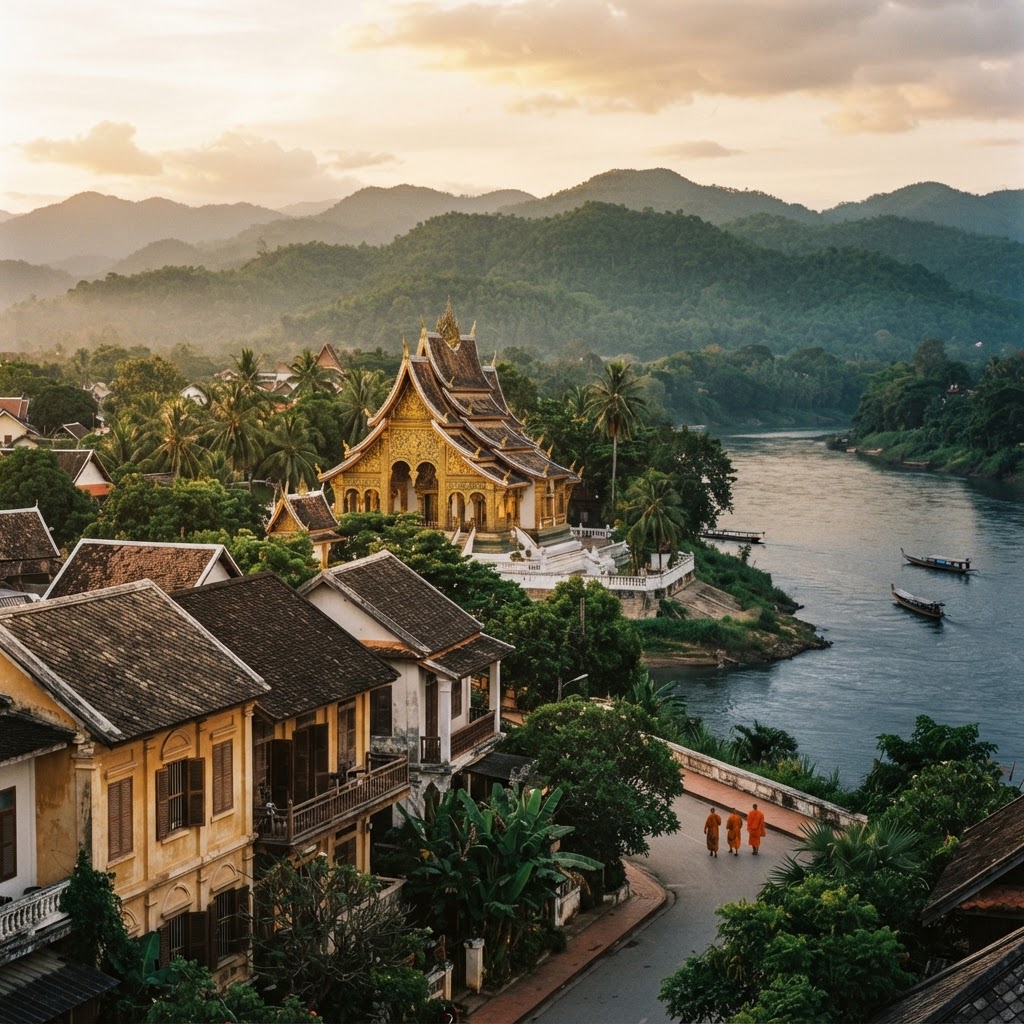
Luang Prabang, in the mountainous north of Laos, is the most serene city in Southeast Asia — a UNESCO World Heritage town built on a peninsula at the confluence of the Mekong and Nam Khan rivers, where gilded Buddhist temples and French colonial villas coexist beneath the sacred peak of Mount Phousi. Inscribed by UNESCO in 1995, Luang Prabang is described as 'an outstanding example of the fusion of traditional architecture and Lao urban structures with those built by the European colonial authorities in the 19th and 20th centuries.' It is also the spiritual heart of Lao Buddhism, where the daily alms-giving ceremony (tak bat) draws hundreds of saffron-robed monks through streets at dawn.
The Royal and Religious Capital
Luang Prabang's history reaches back well over a millennium. Known in early records as Muang Sua, then Xieng Thong, the town became, from the 14th to the 16th century, the capital of the powerful kingdom of Lane Xang — the Kingdom of a Million Elephants. The city takes its modern name from the Phra Bang, a standing Buddha image offered by the Khmer kingdom and the palladium of the Lao monarchy. After the establishment of the French Protectorate in 1893, Luang Prabang served as the royal and religious capital under King Sisavang Vong until Vientiane became the administrative capital in 1946.
This layered history produced a townscape of extraordinary fusion: the wooden vernacular houses and stone temples of Lao tradition, overlaid with the brick-and-balcony villas of the French colonial era. UNESCO credits the town with illustrating 'a key stage in the blending of two distinct cultural traditions.'
Wat Xieng Thong and the Temples
The greatest of Luang Prabang's 34 Buddhist temples is Wat Xieng Thong, the 'Temple of the Golden City,' built in 1560 by King Setthathirath at the confluence of the Mekong and the Nam Khan. Its sweeping multi-tiered roof, its mosaic Tree of Life on the eastern wall, and the royal funerary carriage hall make it one of the most significant monasteries in Southeast Asia. It remained in royal use until the abolition of the monarchy in 1975.
Wat Mai Suwannaphumaham, built in the late 18th century, is the largest and most richly decorated temple in the town, known for its five-tiered roof and gilded bas-reliefs. The Royal Palace (Haw Kham), built in 1904 for King Sisavang Vong during the French colonial period, is now the Royal Palace Museum, housing the Phra Bang and the throne hall.
Mount Phousi and the Alms-Giving
At the center of the peninsula rises Mount Phousi, a 328-foot sacred hill crowned by Wat Chom Si, reachable by a staircase of 328 steps. The summit offers a panoramic view over the town, the rivers, and the surrounding mountains, and is the favored spot for sunset — the legend holds that Buddha himself smiled when he rested here, prophesying the site's future as a great city.
Each dawn, the tak bat — the alms-giving ceremony — sees hundreds of monks from Luang Prabang's temples walk silently through the streets in single file, receiving sticky rice and offerings from kneeling devotees. It is one of the most ancient and dignified living traditions in Buddhism, and witnessing it with respect is a defining experience of a visit to Luang Prabang.
The French Colonial Quarter and the Mekong
The town's main street, Sakkaline Road, is lined with the brick-and-balcony villas of the French era, many now converted into guesthouses, cafés, and boutiques. The French Protectorate's architecture, with its wooden shutters and overhanging balconies, sits in harmony with the temple roofs, producing the townscape UNESCO found so remarkable. Many of the finest colonial buildings are now hotels — among them the Belmond La Résidence Phou Vao, set on a hillside with views of Mount Phousi.
A short boat ride up the Mekong leads to the Pak Ou Caves (Tham Ting and Tham Theung), two sacred limestone caves filled with thousands of Buddha images left by pilgrims over centuries. Downriver, the cascading pools of Kuang Si Falls, a multi-tiered turquoise waterfall in the jungle outside town, are among the most beautiful natural swimming spots in Laos. The Tat Kuang Si Bear Rescue Centre, at the falls, provides sanctuary to rescued Asiatic black bears.
Reference Links:
- Town of Luang Prabang (UNESCO): whc.unesco.org/en/list/479
- Luang Prabang Heritage: luangprabang-heritage.org
- Visit Laos (Official Tourism): visit-laos.com
- Pak Ou Caves & Kuang Si: luangprabang-laos.com



Continue Reading