Caribbean
Key West & the Dry Tortugas: America's Caribbean Frontier & the Conch Republic
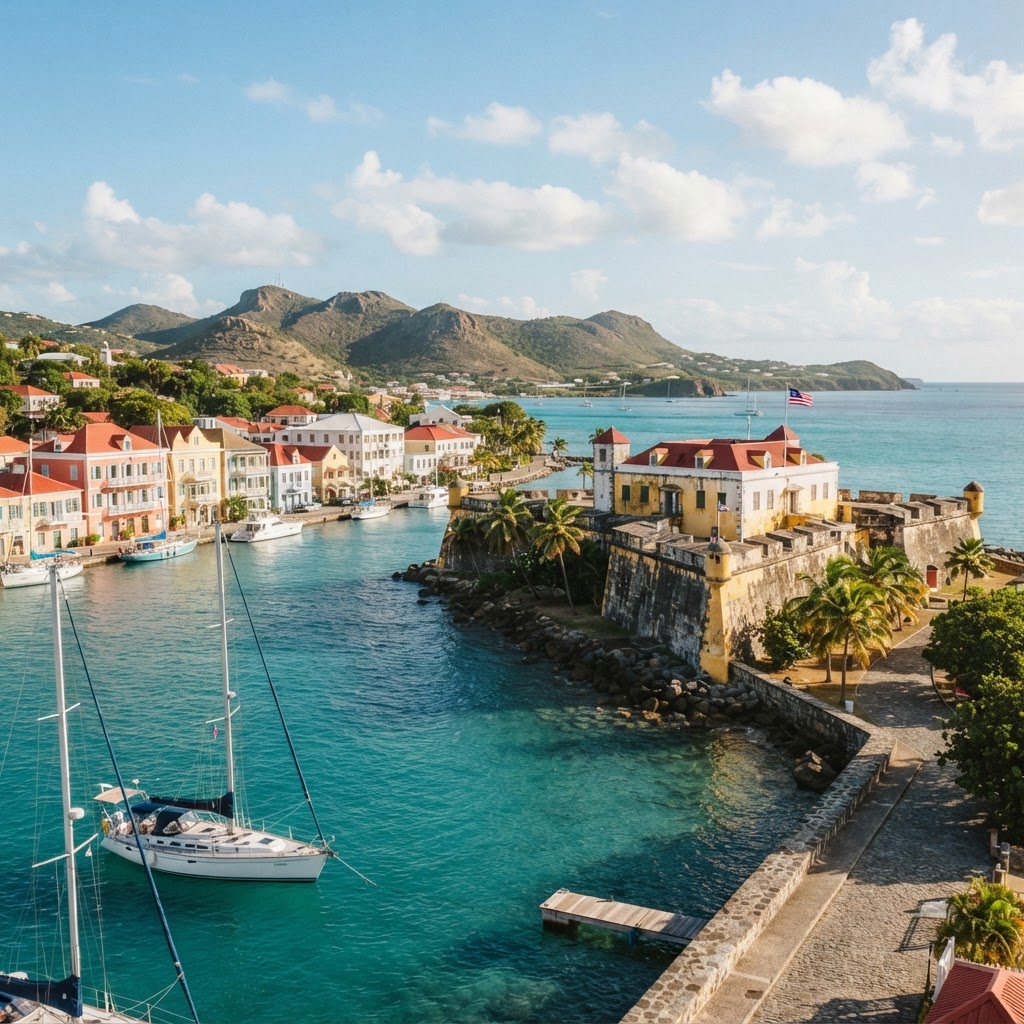
Key West is America's Caribbean frontier — the end of the Overseas Highway, the tongue-in-cheek Conch Republic, Hemingway's house, and the Dry Tortugas seventy miles out to sea.
Key West is the end of the road, literally, the last inhabited island at the tip of the Florida Keys, connected to the mainland by a single hundred-mile highway that jumps from key to key across the turquoise of the Gulf Stream. It is the southernmost city in the continental United States, closer to Havana than to Miami, and it has spent two centuries cultivating a personality that is half Southern, half Caribbean, and entirely its own. In 1982, in protest of a federal border checkpoint on the only road in, the city playfully seceded from the Union and declared itself the Conch Republic, a micronation that still issues its own passports and throws its own Independence Day celebration every April. The joke stuck because it fit the place.
The Hemingway Years
Key West's golden age ran from the late 1920s through the 1930s, and its central figure was Ernest Hemingway, who lived in a limestone house at 907 Whitehead Street from 1931 to 1939 and wrote To Have and Have Not in its second-story studio. The house, now a museum, is still home to descendants of his famous six-toed cats, and it is one of the most visited literary sites in America. Tennessee Williams followed, living on Duncan Street from 1949 until his death, and Harry Truman made Key West his winter White House, spending 175 days at the Little White House on the naval base. At sunset, the whole town gathers at Mallory Square to watch the sun drop into the Gulf, a nightly carnival of fire-eaters, cats, and conch fritters that has become the island's central ritual.
Dry Tortugas
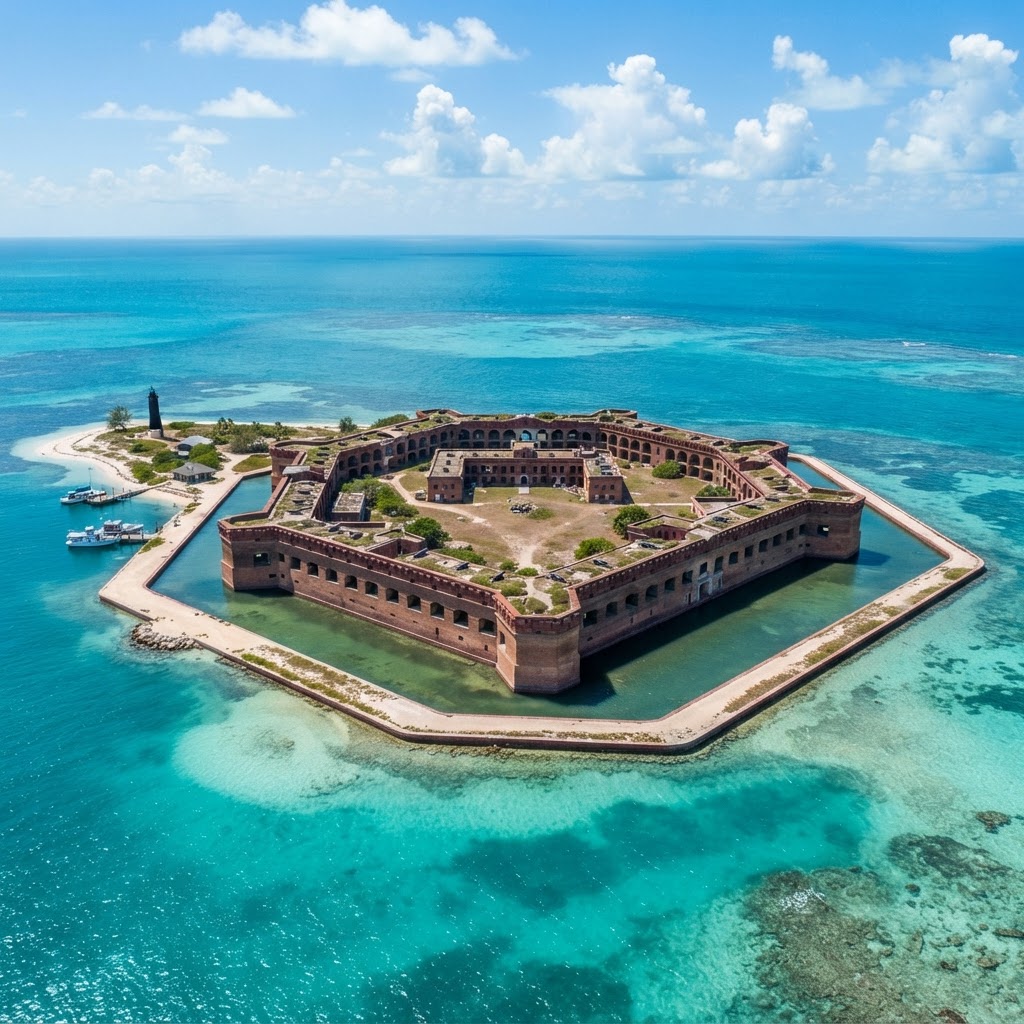
Seventy miles west of Key West, beyond the reef and the shipping channel, lie the Dry Tortugas, seven small sandy islands and the surrounding waters that form one of the most remote national parks in the United States. At their center is Fort Jefferson, a hexagonal brick fortress begun in 1846 on Garden Key and never finished, still the largest masonry structure in the Western Hemisphere with over sixteen million bricks. It was built to guard the shipping channel and later used as a Civil War prison, most famously for Dr. Samuel Mudd. The fort is surrounded by moat and brilliant shallow water, accessible only by ferry or seaplane, and the snorkeling along its walls, over coral and the ruins of a nineteenth-century coal shoal, is the finest in the Florida Keys.
Getting There
Key West International Airport (EYW) is served by direct flights from Miami, Atlanta, Charlotte, and Tampa. The drive from Miami down the Overseas Highway (US 1) takes about four hours and is one of the great American road trips. The Dry Tortugas are reached by the Yankee Freedom ferry or by seaplane from Key West.
Reference Links:
- Florida Keys & Key West (official tourism): visitfloridakeys.com
- Dry Tortugas National Park (NPS): nps.gov/drto
- The Conch Republic (official): conchrepublic.com
- Key West (Wikipedia): en.wikipedia.org/wiki/Key_West
More Stories
Continue Reading