Travel
Kerala, India: Backwaters, Tea Plantations, and Ayurvedic Luxury
Kerala is India's most beautiful state — a tropical paradise of palm-fringed backwaters, misty tea plantations, spice gardens, and the world's most ancient tradition of Ayurvedic wellness.
Kerala, on India's southwestern Malabar Coast, is widely regarded as the most beautiful state in India. A narrow strip of land between the Western Ghats mountain range and the Arabian Sea, Kerala is a tropical landscape of palm-fringed backwaters, emerald tea and spice plantations, white-sand beaches, and dense tropical forest. It is also the home of **Ayurveda** — the 5,000-year-old Indian system of traditional medicine — and the destination for some of the most sophisticated wellness retreats in the world. Kerala was the first state in India to achieve 100% literacy, and it has the highest Human Development Index of any Indian state, making it not only beautiful but well-governed and welcoming.
The Backwaters
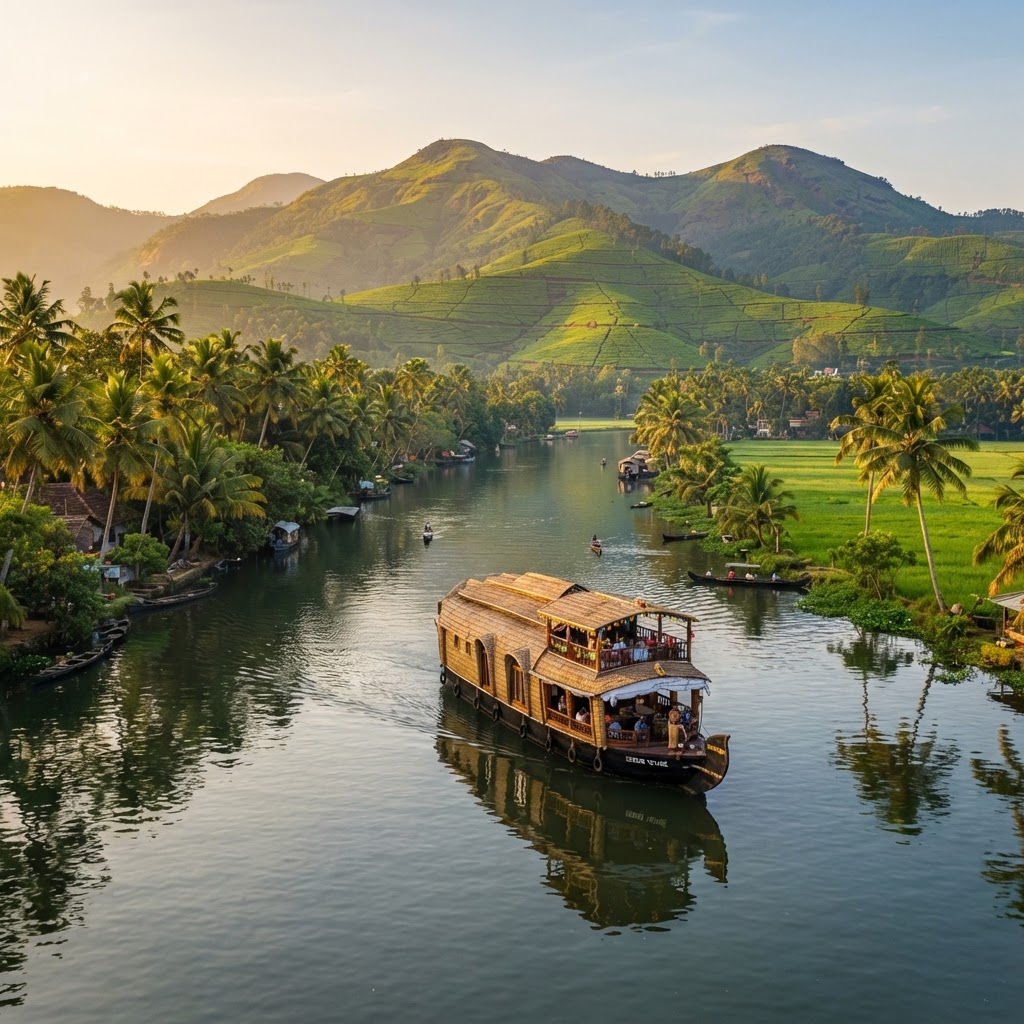
The **Kerala backwaters** are a vast network of lagoons, lakes, canals, and rivers that extend for over 900 kilometres along the coast of Kerala. The backwaters are the defining feature of the Kuttanad region around the towns of **Alleppey** (Alappuzha) and **Kumarakom**, where palm-lined waterways connect traditional fishing villages, rice paddies, and coconut groves.
The traditional way to experience the backwaters is on a **kettuvallam** — a converted rice barge, now luxuriously appointed as a houseboat. These boats, originally used to transport rice and spices through the waterways, have been transformed into some of the most romantic accommodations in India, with en-suite bedrooms, open-air dining decks, and a crew including a chef who prepares Keralan cuisine from locally caught fish and seafood.
The most scenic stretch of backwater is between Alleppey and Kumarakom, and overnight houseboat cruises on this route are the quintessential Kerala experience. The **Kumarakom Lake Resort** and the **Taj Kumarakom Resort & Spa** are the most celebrated properties on this stretch.
Munnar and the Tea Plantations
**Munnar**, in the Western Ghats at an elevation of 1,600 metres (5,200 feet), is the centre of Kerala's tea-growing region. The hillsides around Munnar are covered in a patchwork of tea plantations, producing some of the finest tea in India. The town was developed in the 1880s by the Scottish planter John Daniel Munro, who leased the land from the Poonjar royal family and began planting tea. The **Tata Tea** company (now Tata Global Beverages) acquired the plantations in 1976 and remains the dominant tea producer in the region.
The **Kannan Devan** tea brand, named after a local tribal leader, is the primary tea produced in Munnar. The **Tea Museum**, run by Tata Tea, provides an overview of the history and process of tea production in the region.
Near Munnar is **Eravikulam National Park**, home to the **Nilgiri tahr** (an endangered mountain goat) and the **Neelakurinji** flower, which blooms once every 12 years and covers the hillsides in a carpet of blue-purple.
Fort Kochi
**Fort Kochi** (Kochi/Cochin), on the coast north of Alleppey, is the historic gateway to Kerala and one of the most charming colonial towns in India. The Portuguese, Dutch, and British all established trading posts in Kochi, and the town's architecture reflects this layered colonial history. The **Chinese fishing nets** (cheena vala), introduced by traders from the court of Kublai Khan in the fourteenth century, are one of the most iconic images of Kerala.
The **Mattancherry Palace** (Dutch Palace), built by the Portuguese in 1555 and renovated by the Dutch in 1663, contains a remarkable series of Hindu mural paintings depicting scenes from the Ramayana. The **Paradesi Synagogue**, built in 1568, is the oldest active synagogue in the Commonwealth of Nations and stands in the heart of Jew Town, a neighbourhood that was once home to a thriving Jewish community.
Ayurveda and Wellness
Kerala is the world centre of **Ayurveda** — the ancient Indian system of holistic medicine that dates back at least 5,000 years. Ayurveda (from the Sanskrit *ayur*, 'life,' and *veda*, 'knowledge') emphasizes balance between body, mind, and spirit, and Kerala's tropical climate, abundant medicinal plants, and tradition of hereditary Ayurvedic practitioners make it the ideal setting for Ayurvedic treatment.
The most sophisticated Ayurvedic retreats in Kerala include:
**Somatheeram Ayurvedic Health Resort**, located on a cliff top overlooking the Arabian Sea near Kovalam, is the world's first Ayurvedic resort, established in 1985. It offers traditional Ayurvedic treatments and Panchakarma detoxification programmes.
**Kalari Kovilakom**, in the Palakkad district, is a restored palace that offers authentic Ayurvedic treatments under the guidance of traditional practitioners. It was the subject of a book, 'Ayurvedic Healing,' by the wellness author Deepak Chopra.
**Ananda in the Himalayas**, while not in Kerala, is India's most celebrated luxury wellness resort. In Kerala itself, the **Taj Malabar Resort & Spa, Cochin** and the **Niraamaya Retreats Surya Samudra** in Kovalam combine Ayurvedic treatments with five-star luxury.
Kerala Cuisine
Kerala's cuisine is built around coconut, rice, seafood, and an extraordinary array of spices — black pepper (which originated in Kerala and was the spice that drew European traders to India), cardamom, cinnamon, cloves, and nutmeg. The traditional Keralan feast is the **sadya**, a vegetarian banquet served on a banana leaf, with as many as 28 different dishes. The most iconic non-vegetarian dish is **Karimeen pollichathu** — pearl spot fish marinated in spices, wrapped in banana leaf, and grilled. **Appam** (a lacy rice-flour pancake) with **stew** (a coconut-milk vegetable or meat stew) is the traditional Keralan breakfast.
Reference Links:
- Kerala Tourism (Official): keralatourism.org
- Taj Resorts Kerala: taj.tajhotels.com
- Somatheeram Ayurvedic Resort: somatheeram.in
- Kalari Kovilakom: kalarikovilakom.com
- Munnar Tea Museum (Tata Tea): kdhp.com
- Eravikulam National Park: eravikulam.org
- Paradesi Synagogue Kochi: mattyancherrysynagogue.com
- Backwater Tourism: keralatourism.org/backwater-tourism
Continue Reading