Fashion
The Stetson Hat: John B. Stetson's 1865 Boss of the Plains and the Birth of the American Cowboy Hat
In 1865, a young hatmaker's son from Philadelphia designed a lightweight fur-felt hat to survive the American frontier. He called it the Boss of the Plains. From that single design descends nearly every cowboy hat worn since.
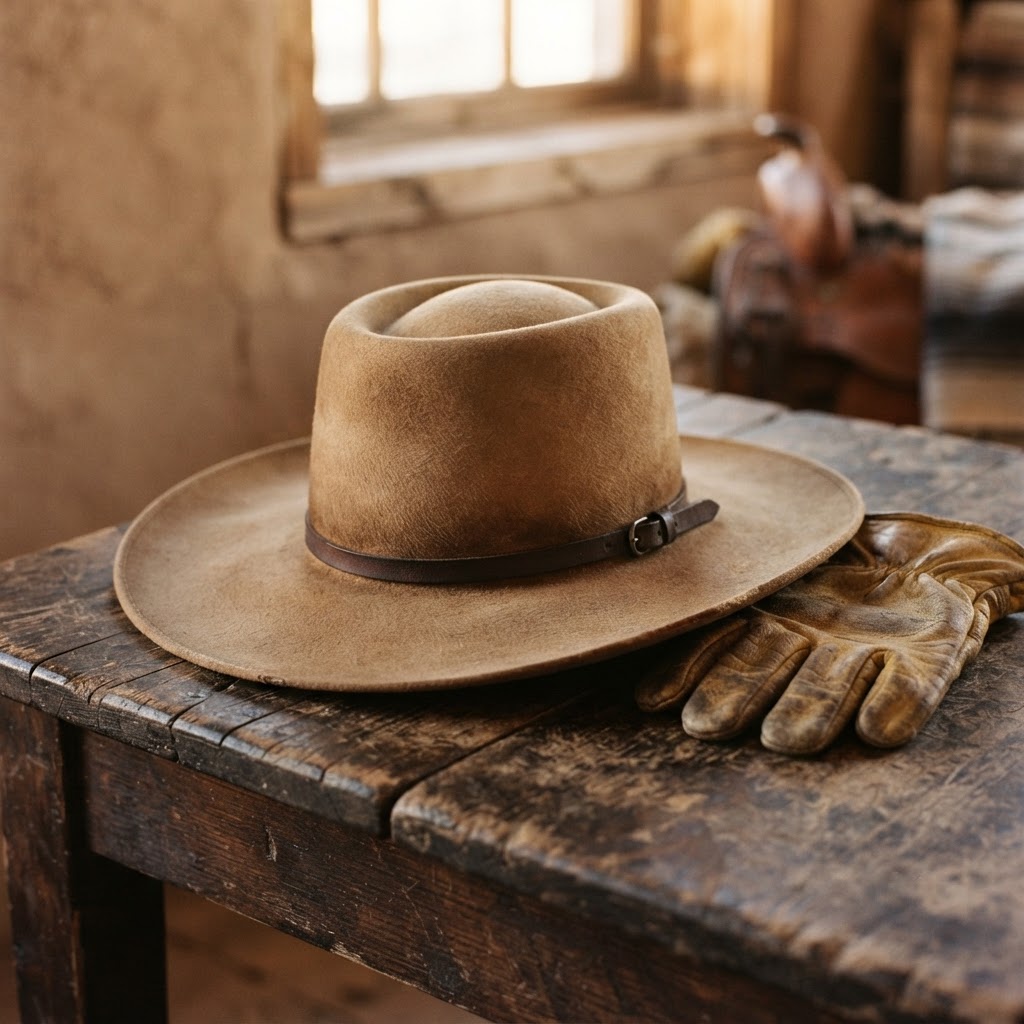
In the early 1860s, a young Philadelphian named John Batterson Stetson traveled west to recover from tuberculosis, and in the course of that journey he made himself a hat. The story, as the company he founded tells it, is that while camped in the mountains he fashioned a canopy of fur felt from animal pelts, using a process he had learned from his father, a master hatter. The hat he made had a wide flat brim and a high rounded crown, and it was light, waterproof, and durable enough to survive the conditions of the frontier. He wore it into a mining camp, where a horseman saw it and bought it off his head for five dollars. Stetson returned to Philadelphia, and in 1865 he began to manufacture the hat in earnest. He called it the Boss of the Plains.
The Design: A Hat Built for Survival
The Boss of the Plains was a lightweight, all-weather hat made of fur felt, with a four-inch crown and a flat brim roughly four inches wide. It was designed for the demands of the American West: the wide brim shaded the face and neck from the sun, shed rain, and could be used to carry water. The crown was tall enough to allow air circulation that kept the head cool. The felt was dense enough to turn a light blow. Stetson made it from beaver and rabbit fur, felted under pressure, and the resulting hat was both soft and nearly indestructible. The National Cowboy Museum in Oklahoma City credits Stetson's 1865 Boss of the Plains as the hat that effectively created the American cowboy hat.
From the Plains to the Range
Stetson moved to Philadelphia to manufacture the hat commercially, and the John B. Stetson Company grew into one of the largest hat manufacturers in the world. The Boss of the Plains was the foundation of the line, and as cowboys on the open range adopted it, they began to customize it to suit their work. A cowboy who needed to see clearly while riding would pinch the crown into a crease, and one who needed to keep the brim out of the wind would roll the sides up. Over decades, these practical modifications produced the creased crown and curved brim of the classic cowboy hat we recognize today. The Cattleman crease, the Gus crease, and the pinch-front all descend from working modifications of Stetson's original flat-brimmed, round-crowned design.
The Stetson Empire and Its Legacy
By the early twentieth century, the John B. Stetson Company employed thousands of workers at a vast factory in Philadelphia, and the hat had become a defining symbol of the American West. Stetson himself became a noted philanthropist, founding the town of Stetson, Florida, and endowing what is now Stetson University. The company weathered the decline of hat-wearing in the mid-twentieth century by leaning into its Western identity, and the Stetson name remains, a century and a half later, the most recognized maker of Western headwear in the world. The Boss of the Plains is still produced, in fur felt, much as it was in 1865.
Practical Guidance: Choosing and Wearing a Felt Hat
A good fur-felt hat should be dense to the touch, spring back when creased, and hold its shape through rain. Beaver felt is the finest and most water-resistant; wool felt is the most affordable but less durable. The brim width should be proportional to the wearer — between three and four inches is the most versatile. The crown is creased to taste, but the pinch-front and Cattleman creases are the most universally flattering. A quality hat should be brushed clean after each wearing, stored crown-down on a clean surface, and reshaped by a hatter rather than at home.
Related Reading
The cowboy hat belongs to the larger vocabulary of American Western dress — our [Texas boot guide](/lifestyle/texas-boot-guide-from-lucchese-to-custom-cowboy-footwear) and our piece on [Nashville style](/lifestyle/nashville-style-music-city-americas-unexpected-fashion-capital) cover the boots and the broader Western wardrobe the hat crowns.
Reference Links
- Boss of the Plains (John B. Stetson, 1865, fur felt): [Wikipedia](https://en.wikipedia.org/wiki/Boss_of_the_Plains)
- History of the Cowboy Hat (Stetson, 1865, Philadelphia): [National Cowboy & Western Heritage Museum](https://nationalcowboymuseum.org/explore/history-of-the-cowboy-hat/)
- The Story of John B. Stetson (Boss of the Plains, Pike's Peak): [Stetson](https://blog.stetson.com/the-story-of-john-b-stetson/)
- The History Behind Stetson: The Quintessential Cowboy Hat (1865): [Journal of Antiques](https://journalofantiques.com/digital-publications/joac-magazine/features/the-history-behind-stetson-the-quintessential-cowboy-hat/)



Continue Reading