Fashion
The Indian Sari: Six Thousand Years of Draped Elegance from Mohenjo-daro to the Modern Runway
From a terracotta figurine carved at Mohenjo-daro around 2500 BCE to the bridal couture of Sabyasachi Mukherjee, the sari is one of the oldest continuously worn garments in the world. Here is how six yards of unstitched cloth became a living fashion tradition.
Around 2800 BCE, in the Indus Valley city of Mohenjo-daro, a sculptor carved a small terracotta figurine of a woman draped in a length of cloth that falls from the waist over one shoulder. It is the earliest known depiction of a garment that is still worn today, more than four thousand years later: the sari. The word itself comes from the Sanskrit sati, meaning a strip of cloth, and the garment it describes is, at its essence, a single uncut length of fabric — usually between five and nine yards — draped around the body without a single stitch. The sari's persistence is one of the great anomalies of fashion history. Most garments are invented, fade, and are replaced. The sari has simply continued, adapting across centuries and regions without losing its essential form.
The Ancient Roots and the Three Drapes
The earliest sari-like garments were described in Sanskrit literature as a three-piece ensemble: the antariya (a lower garment wrapped around the legs), the uttariya (a veil or shawl worn over the shoulders), and the stanapatta (a chest band). Over centuries, these three pieces merged into the single continuous drape worn today. The terracotta figurines from Mohenjo-daro show women in garments recognizably close to the modern sari, and the drape has been documented continuously through the Mauryan, Gupta, and Mughal periods, each era adding new fabrics, motifs, and methods of tying.
The Textiles: Banaras, Kanchipuram, and Chanderi
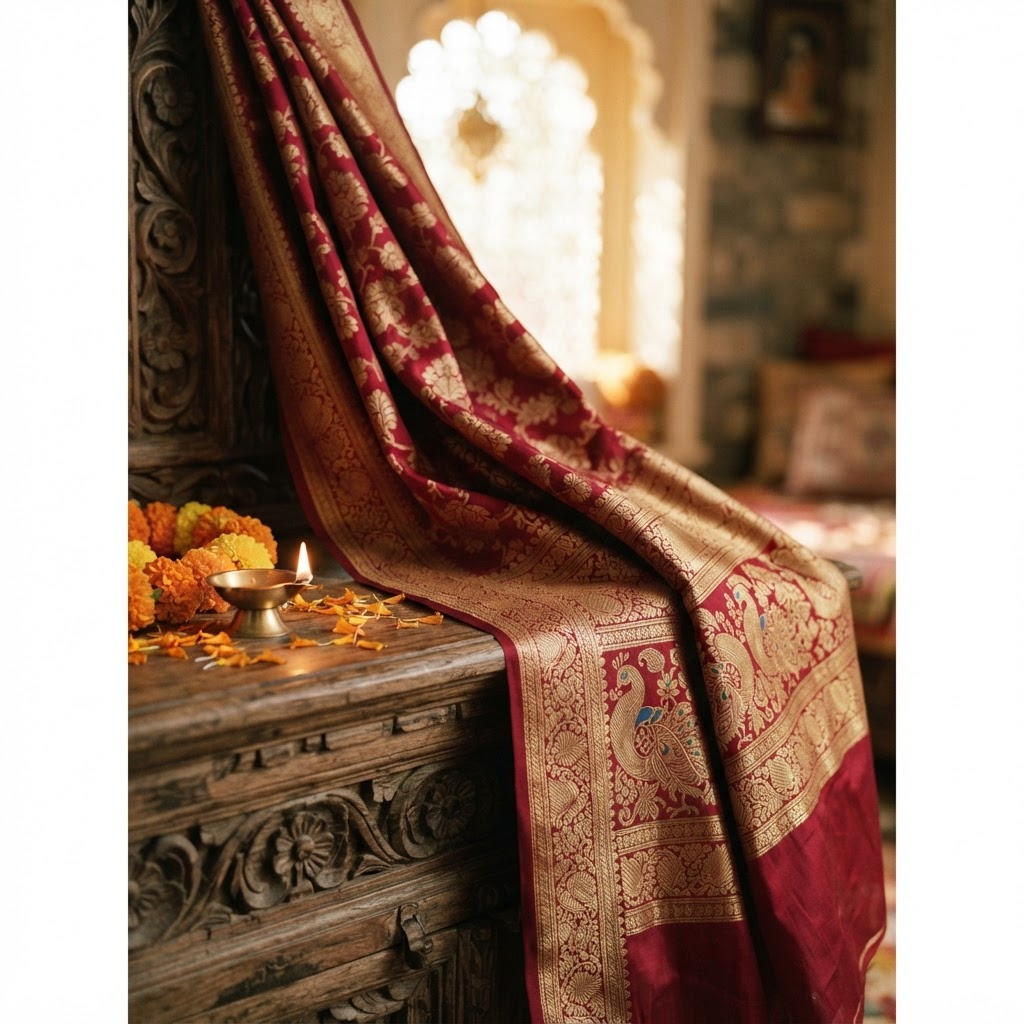
The sari's beauty is inseparable from the textile traditions of the regions that produce it. A Banarasi sari, woven in Varanasi, is famous for its fine silk and gold zari brocade, a technique brought to India by Persian weavers during the Mughal period. A Kanchipuram sari, woven in the temple town of the same name in Tamil Nadu, is distinguished by its heavy silk, contrasting borders, and the korvai technique that joins the body and border by hand. A Chanderi sari, from Madhya Pradesh, is light and gauzy, woven from silk and cotton with a texture that shimmers. Each region's sari carries its own grammar of motif, weight, and meaning — a wedding sari from South India, a festive sari from Bengal, and an everyday cotton from Andhra Pradesh are entirely different garments.
The Modern Revival: Ritu Kumar, Sabyasachi, and the Return to the Handloom
By the mid-twentieth century, the sari was being worn less by younger Indian women, who increasingly adopted Western clothing or the salwar kameez for daily wear. The revival of the sari as a modern, fashionable garment is credited in large part to a generation of designers who worked to restore India's handloom traditions. Ritu Kumar, born in Amritsar in 1944, was among the first Indian designers to recognize that the country's craft traditions — block printing, bandhani, zardozi — could be revived and presented as contemporary luxury. In the early 1970s she rediscovered zardozi embroidery techniques once owned by the Mughal emperors, and she spent decades working with rural artisans to bring dying textiles back to commercial life.
Sabyasachi Mukherjee, a Kolkata-born designer who founded his label in 1999, took a different path: opulent, maximalist bridal saris that draw on the aesthetic of old Calcutta, hand-embroidered with thousands of hours of labor. His work has made the handwoven sari a centerpiece of high Indian fashion again, worn at international red carpets and royal weddings. Designers such as Manish Malhotra and Masaba Gupta have further expanded the sari's reach into contemporary and celebrity wardrobes.
Practical Guidance: Choosing and Wearing a Sari
A first sari should be silk or a silk-cotton blend, in a color that flatters the wearer. The most common drape is the Nivi style, originating from Andhra Pradesh, in which the sari is tucked into a petticoat, wrapped once around the body, and the pallu — the decorated end — is pleated and pinned over the left shoulder. A well-draped sari should allow a full stride and feel secure. Handloom saris, while more expensive than power-loom versions, carry the irregularities and depth that mark a textile made by a human hand, and they age beautifully.
Related Reading
The sari shares with other heritage garments a story of a single textile tradition enduring across centuries — our guides to [Italian craftsmanship](/lifestyle/italian-craftsmanship-fashion-brands-worth-knowing) and [Moroccan leather](/lifestyle/moroccan-leather-ancient-tanneries-of-fez-art-of-worlds-finest-leather-goods) explore the same theme of living craft traditions.
Reference Links
- Evolution of the Indian Saree over centuries (Indus Valley, Mohenjo-daro, Ritu Kumar, Sabyasachi): [Eduindex](https://eduindex.org/2023/04/12/evolution-of-indian-saree-over-centuries/)
- How Ritu Kumar Crafted the Revival Story of Indian Textiles: [Vue.ai](https://www.vue.ai/blog/leaders-in-retail/how-kumar-revived-indian-textiles/)
- Ritu Kumar: Pioneer of Indian Fashion and Textile Revival (born 1944, Amritsar, zardozi): [LegalWiz](https://www.legalwiz.in/blog/ritu-kumar-pioneer-in-fashion-handmade-and-textile-heritage-revival)
- The Timeless Elegance of the Saree: A Journey Through History: [The Better India](https://www.facebook.com/thebetterindia/posts/saree-has-been-an-integral-part-of-indian-attire-for-centuries-but-did-you-know-/10160658278984594/)



Continue Reading