Fashion
Ralph Lauren and the Preppy American Dream: How a Bronx Tie Salesman Built a Fashion Empire in 1967
In 1967, a 28-year-old named Ralph Lifshitz convinced a tie manufacturer to let him sell wide, hand-made neckties under his own label. From that $50,000 stake, Ralph Lauren built an empire that defined what American style would look like for the next half-century.
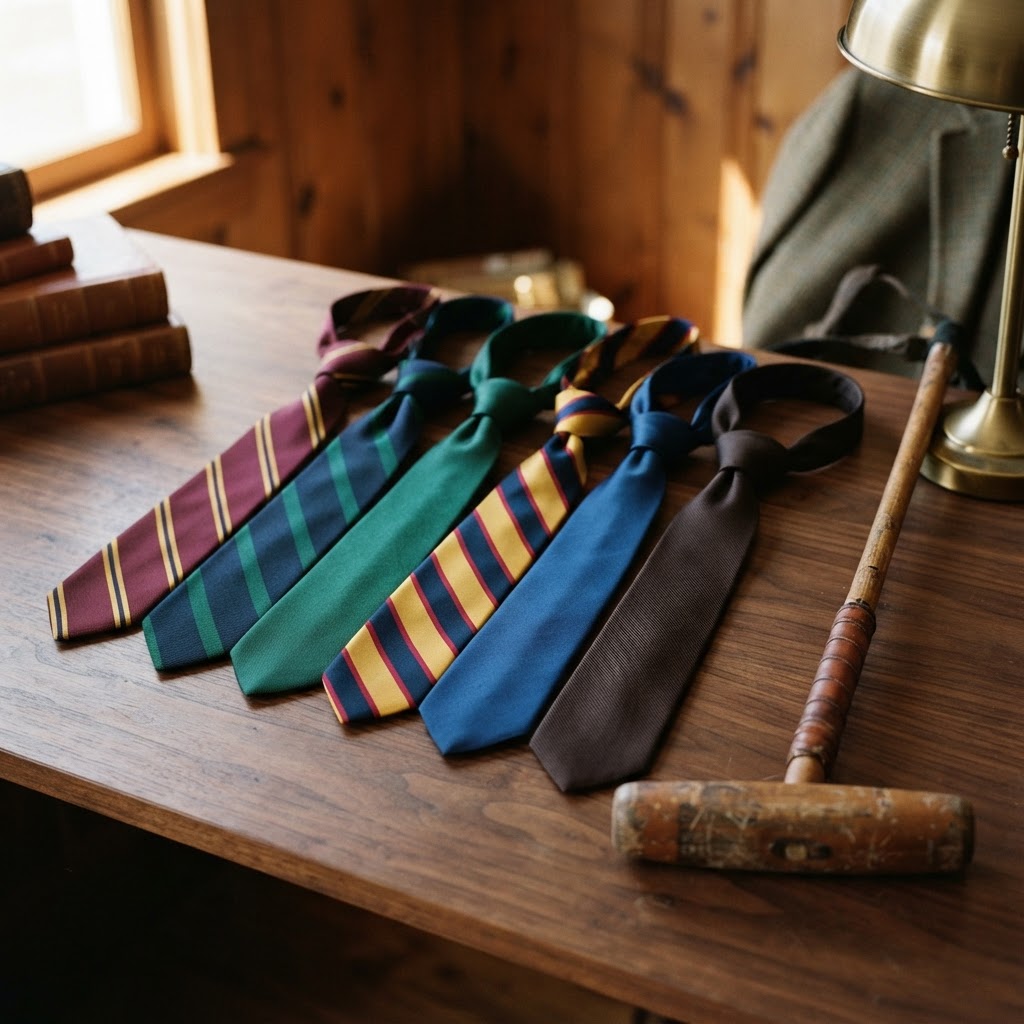
In 1967, a 28-year-old tie salesman from the Bronx named Ralph Lifshitz walked into the offices of Beau Brummell Neckwear with a proposition: let him design and sell his own line of wide, luxurious neckties under his own name. The manufacturer agreed, and with a $50,000 investment Lauren launched the label that would, over the following half-century, define what American style looked like to the world. The ties were wide — nearly twice the standard two inches of the era — cut from Italian fabrics, and hand-made. They bucked the conservative standard of 1960s menswear, and they sold.
The Early Years: From Lifshitz to Lauren
Ralph Lauren was born Ralph Lifshitz in the Bronx on October 14, 1939, the youngest of four children of Ashkenazi Jewish immigrants. His father was a house painter. The family changed their surname to Lauren when Ralph was a teenager, after years of teasing at school. He attended Baruch College, dropped out, served in the United States Army Reserve, and briefly worked as a salesman at Brooks Brothers — the establishment menswear firm whose preppy aesthetic would later become the foundation of his own design language. Before Brooks Brothers, he had worked as a glove cutter and a tie salesman at Rivetz & Company.
The Polo Name and the Full Vision
Lauren named his first full line of menswear "Polo" in 1968, and the polo-player emblem — designed by the Argentine-born tennis player Roberto Muller — followed in 1971. The name was a deliberate invocation of an aspirational, country-club America: a world of tweed, oxford cloth, cable knit, and leather that did not strictly exist for most Americans but that they could buy their way into, piece by piece. Lauren's genius was not invention but curation. He took the existing vocabulary of Ivy League and Anglo-American sportswear — the oxford shirt, the cable-knit sweater, the blazer, the chino — and packaged it into a coherent, romantic vision of an American life that was part real and part imagined.
In 1972, Lauren released the short-sleeve cotton mesh polo shirt in 24 colors, with the polo player embroidered on the chest. It became one of the most widely worn garments of the late twentieth century. The Ralph Lauren Corporation went public in 1997, and the brand expanded across multiple tiers — Polo, Ralph Lauren Purple Label, Ralph Lauren Collection, Lauren, Chaps — covering everything from runway couture to department-store basics.
The Substance: Selling a World, Not Just Clothes
What set Lauren apart from his contemporaries was that he sold an entire world, not merely garments. His stores were designed as rooms — leather chairs, mahogany paneling, vintage sporting prints — and his advertising campaigns presented a staged, gauzy vision of old-money America: Hampton estates, Wyoming ranches, Newport sailing. The critic Kennedy Fraser, writing in The New Yorker, described Lauren's work as the most successful act of nostalgia in the history of American fashion. Whether one considers that nostalgia a flaw or a feature depends on one's taste, but its commercial power was undeniable.
Practical Guidance: Building a Preppy Wardrobe That Lasts
The preppy wardrobe Lauren codified is built on a small number of durable, interchangeable pieces: the oxford-cloth button-down shirt, the cable-knit crewneck sweater, the navy blazer, the chino, the repp-stripe tie, and the leather loafer. Quality matters more than quantity. A single well-made navy blazer, kept for twenty years, is worth more than five that lose their shape in a season. Fit should be classic rather than trendy — the preppy aesthetic is deliberately timeless, which is the whole point.
Related Reading
The preppy wardrobe connects to several pieces in our journal — the [perfect white shirt](/lifestyle/the-perfect-white-shirt-definitive-guide), the [silk scarf](/lifestyle/the-art-of-the-silk-scarf), and our guide to building an [investment wardrobe](/lifestyle/investment-wardrobe-fashion-that-endures) that endures beyond a single season.
Reference Links
- Ralph Lauren (born Lifshitz, Bronx, 1967, Polo 1968): [Wikipedia](https://en.wikipedia.org/wiki/Ralph_Lauren)
- Ralph Lauren History: From Ties to Fashion Empire (1967, Beau Brummell, $50,000): [Social Life Magazine](https://sociallifemagazine.com/the-archive/ralph-lauren-history/)
- The Polo Player: Ralph Lauren's Journey from the Bronx to Fashion Icon: [New York Loan Company](https://newyorkloan.com/the-polo-player-ralph-laurens-journey-from-the-bronx-to-fashion-icon-2/)
- Ralph Lauren Biography (Bronx, 1939, Brooks Brothers): [Notable Biographies](https://www.notablebiographies.com/Ki-Lo/Lauren-Ralph.html)



Continue Reading