Entertaining
The Tapas Party: Spanish Small Plates and the Art of Sherried Wines
The tapas party is the Spanish art of convivial grazing — a table covered with small plates of jamón, manchego, tortilla, and olives, paired with sherry and Rioja. Born in the taverns of Andalusia, tapas is not just a style of eating but a philosophy of social life: the tapeo, or tapas crawl, is one of the world's great entertaining traditions.
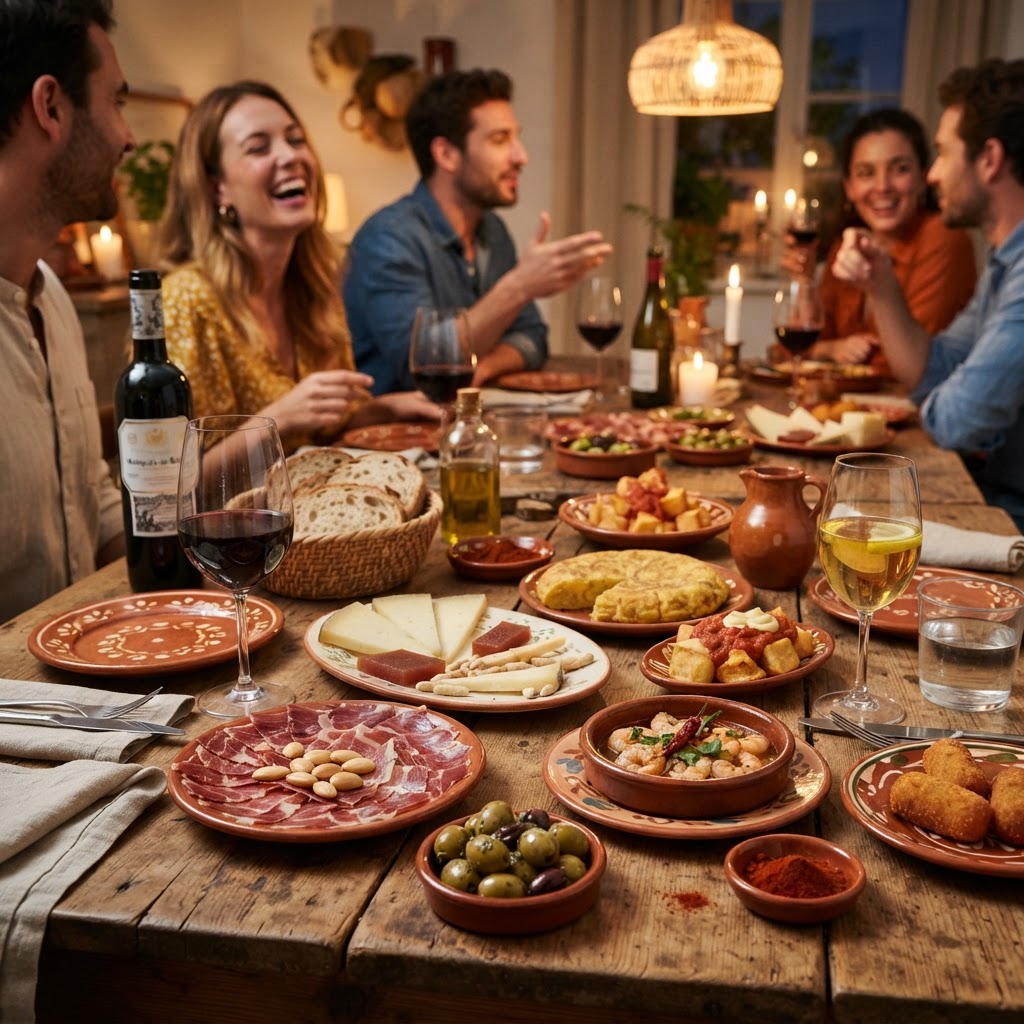
The tapas party is the Spanish art of convivial grazing — a table covered with small plates of jamón, manchego, tortilla, and olives, paired with glasses of chilled sherry and Rioja. In Spain, tapas is not merely a style of eating but a philosophy of social life: the tapeo, or tapas crawl, involves moving from bar to bar, having a small drink and a bite at each, and is one of the most beloved social rituals in Spanish culture. Bringing this tradition into your home creates one of the most relaxed, social, and generous ways to entertain — a party where there is no formal seated meal, no courses, and no rigid structure, only abundant food, good wine, and conversation.
The Origins of Tapas
The word 'tapas' comes from the Spanish verb tapar, meaning 'to cover.' The most popular origin story holds that the tradition began in Andalusia, the southernmost region of Spain, where tavern patrons drinking sweet sherry would cover their glasses with slices of bread or cured ham to keep fruit flies and dust out of their drinks. The salty meat — typically jamón or chorizo — made the patrons thirsty, increasing alcohol sales, and bartenders began creating an ever-wider variety of snacks to serve alongside the sherry. Over time, the tapas — the 'covers' — became as important as the sherry itself. Reference: [Wikipedia — Tapas](https://en.wikipedia.org/wiki/Tapas)
Another popular legend attributes the tradition to King Alfonso XIII, who stopped at a tavern in Cádiz, a windy Andalusian coastal city, and was served a glass of wine with a slice of cured ham placed on top to protect it from blowing beach sand. The king, after eating the ham and drinking the wine, ordered another glass 'con la tapa' ('with the cover'). A third theory attributes tapas to King Alfonso X of Castile (1221-1284), who recovered from an illness by drinking wine with small dishes between meals and subsequently decreed that taverns must serve food with wine. Reference: [Reluctant Gourmet — All About Tapas](https://reluctantgourmet.com/all-about-tapas/)
The word entered the Royal Spanish Academy dictionary in the 1930s, initially marked as an Andalusianism. Beginning in 2005, the city of Valladolid in northwest Spain has hosted a national tapas competition each November, drawing schools from around the world. Reference: [The Bottle Room — History of Tapas](https://www.the-bottle-room.com/History-Of-Tapas)
The Essentials of a Tapas Table
A tapas party should offer a balance of cold dishes (tapas frías) and hot dishes (tapas calientes), with a mix of purchased and homemade items. The key is abundance and variety — the table should look lavish and overflowing.
**Jamón Ibérico and Jamón Serrano** — dry-cured Spanish ham, the cornerstone of any tapas table. Jamón Ibérico de bellota, from free-range Iberian pigs fed on acorns, is the finest and most expensive ham in the world. Jamón Serrano, from white pigs, is the everyday alternative. Reference: [Jamón Ibérico](https://en.wikipedia.org/wiki/Jam%C3%B3n_ib%C3%A9rico)
**Queso Manchego** — sheep's milk cheese from the La Mancha region, aged for varying periods. It should be served with a drizzle of honey or a few slices of membrillo (quince paste).
**Tortilla Española** — the Spanish potato and onion omelet, served at room temperature in wedues. It is one of the most iconic dishes of Spanish home cooking.
**Patatas Bravas** — fried potato cubes with a spicy brava sauce (paprika, tomato, and vinegar) and sometimes aioli.
**Aceitunas** — marinated olives, preferably Spanish varieties like Manzanilla or Gordal.
**Gambas al Ajillo** — shrimp sautéed in olive oil with garlic and chili flakes, served sizzling.
**Croquetas** — béchamel-based fritters, filled with jamón, chicken, or cod.
**Pan con Tomate** — crusty bread rubbed with tomato, garlic, olive oil, and salt — a Catalan classic.
**Boquerones** — fresh white anchovies marinated in vinegar, served on toast.
**Pimientos de Padrón** — small green peppers blistered in olive oil and sprinkled with coarse salt. Most are mild, but one in a dozen is fiery — 'Uno pica y los otros no' ('one bites and the others don't').
The Sherries of Andalusia
No tapas party is complete without sherry — the fortified wine of Andalusia. Sherry is produced in the 'Sherry Triangle' — Jerez de la Frontera, Sanlúcar de Barrameda, and El Puerto de Santa María — from the Palomino, Pedro Ximénez, and Moscatel grapes. The main styles include:
**Fino** — pale, dry, and delicate, aged under a layer of flor (yeast). The classic tapas pairing.
**Manzanilla** — a fino-style sherry aged in the coastal town of Sanlúcar de Barrameda, where the humid sea air gives it a slightly briny character.
**Amontillado** — an aged, oxidative sherry, darker and nuttier than fino.
**Oloroso** — a rich, dark, full-bodied sherry with notes of walnuts and dried fruit.
**Pedro Ximénez (PX)** — an intensely sweet, syrupy dessert sherry.
Reference: [Sherry Official](https://www.sherry.wine)
Beyond sherry, a good Spanish red — a Rioja Crianza or a Ribera del Duero — and a crisp Spanish white — an Albariño from Rías Baixas — round out the beverage selection. For a brunch-appropriate option, a sparkling Cava from Catalonia is the Spanish equivalent of Champagne and makes an excellent mimosa base.
Hosting a Tapas Party
The secret to a successful tapas party is pacing. Set out the cold dishes — the jamón, the manchego, the olives, the boquerones — first, with the wines and sherries. Bring out the hot dishes — the gambas, the croquetas, the patatas bravas — in waves over the course of the evening. This mimics the Spanish tapeo, where each bar visit involves one or two tapas and a drink, and the evening unfolds at a leisurely pace over many hours.
Reference Links:
- Tapas history: en.wikipedia.org/wiki/Tapas
- All About Tapas: reluctantgourmet.com/all-about-tapas
- History of Tapas: the-bottle-room.com/History-Of-Tapas
- Sherry wines: sherry.wine
- Spanish Tourism: spain.info
- Jamón Ibérico: en.wikipedia.org/wiki/Jamón_ibérico


Continue Reading