Entertaining
The Tex-Mex Fiesta: A Southwestern Dinner Party
The Tex-Mex fiesta is one of America's most vibrant entertaining traditions — a dinner party built around sizzling fajitas, warm queso, fresh guacamole, and margaritas. Tex-Mex is a distinct regional American cuisine, born in South Texas from Tejano traditions and shaped by centuries of cross-border exchange.
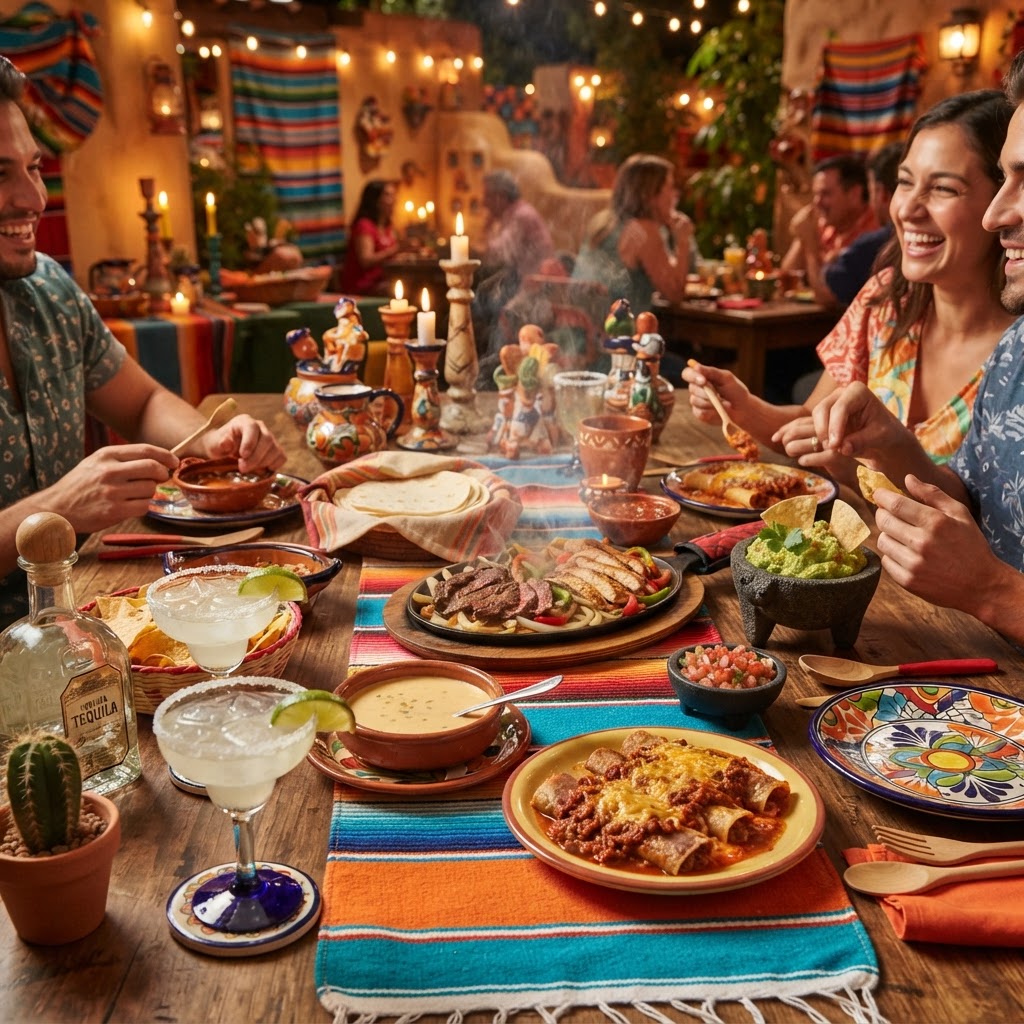
The Tex-Mex fiesta is one of the most vibrant and beloved entertaining traditions in American cuisine — a dinner party built around the bold, festive flavors of Tex-Mex cooking: sizzling fajitas, warm queso, fresh guacamole, margaritas with salt rims, and chips and salsa, all set against a backdrop of colorful textiles and warm, festive light. Tex-Mex is not merely 'Mexican food' — it is a distinct regional American cuisine, born in South Texas from the culinary traditions of the Tejano people and shaped by centuries of cross-border exchange. Hosting a Tex-Mex fiesta is an act of celebration: a colorful, abundant, and deeply social party that captures the spirit of the Southwest.
The History of Tex-Mex Cuisine
Tex-Mex cuisine — derived from 'Texas' and 'Mexico' — is a regional American cuisine that originated with the Tejano people of South Texas, inspired by Mexican culinary traditions. It is a subtype of Southwestern cuisine, found throughout the American Southwest. The cuisine originated as a mix of native Mexican and Spanish foods when Texas was part of New Spain and later Mexico. The ranching culture of South Texas and northern Mexico straddles both sides of the border, where beef, grilled food, and flour tortillas have been common for more than a century. Reference: [Wikipedia — Tex-Mex](https://en.wikipedia.org/wiki/Tex-Mex)
Several ingredients distinguish Tex-Mex from interior Mexican cuisine. The most significant is cumin, which was introduced to Texas by Spanish immigrants from the Canary Islands — a chain off the coast of Africa that was a Spanish waystation — and which is used far more heavily in Tex-Mex than in most Mexican cooking. Cheese — particularly Cheddar, Monterey Jack, and processed cheese — plays a much larger role in Tex-Mex than in mainstream Mexican cuisine, particularly in the popularity of chile con queso ('queso'), which is often served with tortilla chips or poured over enchiladas and burritos. Flour tortillas, rather than the corn tortillas of central and southern Mexico, are the Tex-Mex standard, a legacy of the wheat-growing tradition introduced by the Spanish.
The term 'Tex-Mex' itself entered popular usage in the 1970s, though the label appeared in newspapers as early as 1960. The influential food writer Diana Kennedy, in her 1972 book 'The Cuisines of Mexico,' drew a clear distinction between authentic Mexican cuisine and the Americanized Mexican food of Texas, a distinction that helped define Tex-Mex as its own category. Around the same time, the composition of popular Tex-Mex dishes changed significantly: Ninfa's, a Houston restaurant founded by Ninfa Rodríguez Laurenzo in 1973, popularized the fajita — strips of marinated grilled skirt steak served on a flour tortilla — which became one of the most iconic Tex-Mex dishes. Reference: [Ninfa's](https://en.wikipedia.org/wiki/Ninfa%27s)
The Tex-Mex Table
A Tex-Mex fiesta is built around abundance, bold flavors, and interactive, build-your-own dishes. The essential elements include:
**Fajitas** — the signature Tex-Mex dish, popularized by Ninfa's in 1973. Strips of marinated skirt steak (or chicken, or shrimp) are grilled over high heat and served sizzling on a cast-iron skillet, with warm flour tortillas, grilled onions and peppers, and a selection of toppings for each guest to assemble their own. The sizzle of the fajita platter is the auditory centerpiece of the Tex-Mex table.
**Chile con Queso** — melted cheese dip, served warm with tortilla chips. The classic Tex-Mex version uses processed American cheese or Velveeta melted with diced green chiles and tomatoes (such as Ro-Tel), though more refined versions use Cheddar, Monterey Jack, or white American cheese with onions, jalapeños, and cilantro. Queso is the most beloved Tex-Mex party food — a bowl of warm, gooey cheese is irresistible.
**Guacamole** — fresh, made at the table in a molcajete (a traditional Mexican stone mortar and pestle) if possible. Ripe avocados, lime juice, cilantro, onion, jalapeño, and salt.
**Enchiladas** — corn tortillas rolled around a filling (cheese, chicken, or beef), covered in chili sauce, and baked. The classic Tex-Mex cheese enchilada is covered in chili con carne sauce and melted cheese.
**Tacos** — the essential Tex-Mex format. Hard-shell tacos (an American invention popularized by Glen Bell's Taco Bell in the 1960s) and soft flour-tortilla tacos are both welcome.
**Chips and Salsa** — the mandatory starter. A fresh tomato salsa (pico de gallo) and a smoother, cooked salsa roja.
**Refried Beans and Mexican Rice** — the traditional side dishes.
The Margarita
The margarita is the essential Tex-Mex cocktail — a refreshing combination of tequila, orange liqueur (Cointreau or triple sec), and fresh lime juice, served in a glass with a salted rim. The origin of the margarita is disputed — claims have been made for several bartenders in Mexico and the American Southwest in the 1930s-1940s — but the drink became an American sensation in the 1950s and 1960s and is now one of the most popular cocktails in the United States. Reference: [Margarita](https://en.wikipedia.org/wiki/Margarita)
For the tequila, use a 100% agave blanco (unaged) or reposado (lightly aged) tequila. For the brunch version, the mimosa and the margarita can be combined into a 'margarita mimosa' — sparkling wine, tequila, orange juice, and lime — a festive brunch cocktail that bridges the mimosa tradition with Tex-Mex flavors.
Hosting a Tex-Mex Fiesta
Set the table with colorful serape textiles, terracotta and talavera pottery, and warm candlelight. A molcajete of guacamole at the center, a chafing dish of warm queso, and a cast-iron platter of sizzling fajitas create a visually stunning and aromatic spread. Provide warm tortillas in a cloth-lined basket, bowls of toppings (diced onions, cilantro, jalapeños, sour cream, salsa), and let guests build their own tacos and fajitas. Pour margaritas (set up a margarita bar with a blender, salt rims, and lime wedges) and offer Mexican beer (Corona, Modelo, or Dos Equis) with lime. The Tex-Mex fiesta is a party of abundance, color, and flavor — the most festive way to feed a crowd.
Reference Links:
- Tex-Mex cuisine: en.wikipedia.org/wiki/Tex-Mex
- Ninfa's and fajitas: en.wikipedia.org/wiki/Ninfa%27s
- Fajitas: en.wikipedia.org/wiki/Fajita
- Margarita: en.wikipedia.org/wiki/Margarita
- Diana Kennedy: en.wikipedia.org/wiki/Diana_Kennedy
- San Antonio tourism: visitsanantonio.com
- Texas Tourism: traveltexas.com



Continue Reading