Caribbean
Old Havana, Cuba: The 1519 Spanish City UNESCO Calls the Caribbean's Greatest Colonial Core
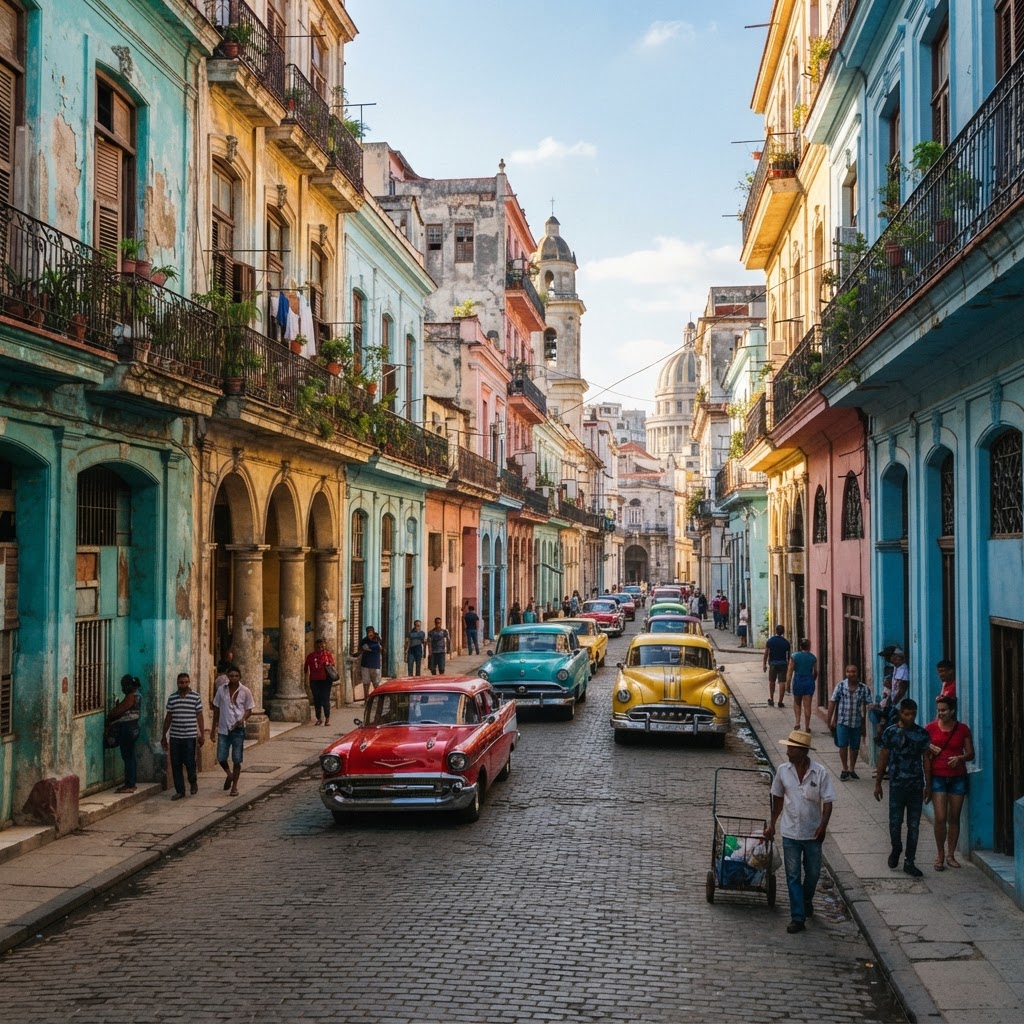
Old Havana was founded by the Spanish in 1519 on Cuba's northwest shore, and its five plazas, four fortresses, and baroque cathedrals make it one of the most complete colonial city centers in the Americas, a UNESCO World Heritage Site since 1982.
Old Havana, La Habana Vieja, was founded by the Spanish in 1519 on the northwest shore of Cuba, on a deep natural harbor that became the obligatory gathering point for the treasure fleets sailing from Mexico and Peru back to Spain. The city grew around five great plazas, each with its own architectural character, and by the seventeenth century it had become one of the Caribbean's main centers for shipbuilding, with the most complete dockyard in the New World. According to [UNESCO](https://whc.unesco.org/en/list/204/), Old Havana was founded about 1519 on Cuba's north-western shore and has maintained a remarkable unity of character through its adherence to its original urban layout, with five large plazas, each with its own architectural character: Plaza de Armas, Plaza Vieja, Plaza de San Francisco, Plaza del Cristo, and Plaza de la Catedral.
The Five Plazas
The five plazas of Old Havana are the heart of the old city, and each tells a different chapter of the colonial story. Plaza de Armas, the oldest, was the military and administrative center, where the Spanish governors had their palace and where the book vendors still sell antique volumes under the trees every day. Plaza de la Catedral is the most beautiful, a baroque square dominated by the Catedral de San Cristóbal, begun in 1748 and finished in 1777, its asymmetrical towers of coral stone the finest example of Cuban baroque. Plaza Vieja, the largest, was the residential and commercial heart of the colonial city, restored in the 1990s to its eighteenth-century grandeur after decades of neglect. Plaza de San Francisco, named for the colonial convent, opens onto the harbor where the treasure fleets once anchored, and Plaza del Cristo, the westernmost, was the gateway to the old city walls.
The Fortifications
The harbor of Havana was defended by a network of stone fortifications that includes some of the oldest and largest in the Americas. On the east side of the narrow entrance to the bay sits La Cabaña, the Fortaleza de San Carlos de la Cabaña, begun in 1763 after the British captured Havana in the Seven Years' War, and one of the largest colonial fortresses in the Americas. On the west side of the canal stands the Castillo de la Real Fuerza, begun in 1558 and one of the oldest colonial fortresses in the Americas, its tower crowned by a bronze weather vane known as La Giraldilla, the symbol of Havana. At the harbor entrance, the Castillo de los Tres Reyes del Morro (El Morro) and the Castillo de San Salvador de la Punta guard the channel, their cannon still aimed at the sea. Every night at nine o'clock, the ceremonial cannon is fired from La Cabaña, a tradition that dates to the colonial era when the cannon signaled the closing of the city gates.
Hemingway and the City
Ernest Hemingway lived in Cuba for over twenty years, from 1939 to 1960, and his presence is still felt in Old Havana. He kept a room at the Hotel Ambos Mundos, where he wrote the first chapters of *For Whom the Bell Tolls*, and he drank at La Bodeguita del Medio, the bar that claims to have invented the mojito, and at El Floridita, the restaurant that claims to have perfected the daiquiri. His Finca Vigía, the hillside house outside Havana where he lived from 1939 until his death, is now a museum, preserved exactly as he left it, with his books, his typewriter, and his cats' graves in the garden. [TripCuba](https://www.tripcuba.org/old-havana) notes that La Habana Vieja, declared a World Heritage Site by UNESCO in 1982, is the historic center of the city, formed by a harbor and the old walled city, and that Ernest Hemingway's love for Havana is part of the city's living memory.
A Mimosa for the Malecón
A morning in Old Havana, with the sound of the sea on the Malecón and the smell of strong Cuban coffee, calls for a sparkling drink that can match the colonial grandeur. A [classic Champagne mimosa](/recipes/classic-champagne-mimosa) is the natural match, the orange juice a bright companion to the baroque plazas and the bubbles lifting the humid Caribbean air. A [papaya champagne mimosa](/recipes/passionfruit-mimosa) is equally lovely, its tropical fruit a nod to the Cuban table.
**Reference Links:**
- Old Havana and its Fortification System (1519, five plazas, fortresses, UNESCO 1982): [UNESCO World Heritage Centre](https://whc.unesco.org/en/list/204/)
- Old Havana Cuba (World Heritage Site 1982, historic center, Hemingway): [TripCuba](https://www.tripcuba.org/old-havana)



Continue Reading