Home
The Wellness Room: Designing a Home Sanctuary for Calm and Recovery
More people are dedicating a room — or even a corner — to intentional rest, meditation, and recovery. Here is how to design a space that genuinely works for your wellbeing.
The concept of the dedicated wellness room — once the exclusive province of spas and retreat centres — has entered the mainstream of home design. In a cultural moment defined by chronic overstimulation, the deliberate creation of a space for intentional rest and recovery is not a luxury but a necessity.
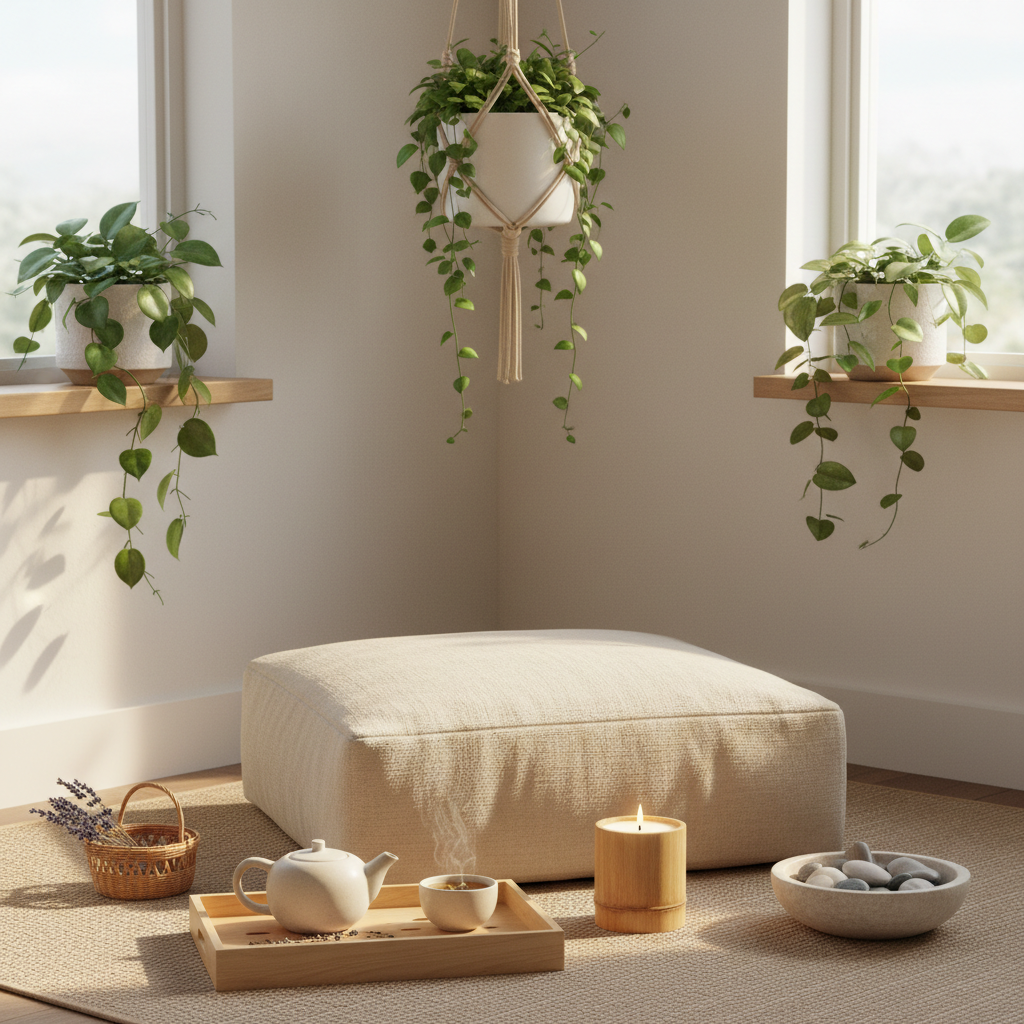
A wellness space need not be a separate room. A corner of a bedroom, a section of a study, or a cleared area of a basement can all serve the function, provided the design is sufficiently intentional to signal a clear psychological shift. The space must feel genuinely different from the rest of the home.
**The Elements of a Wellness Space**
*Floor*: The ground matters. Natural fibre — a jute or wool rug, or bare hardwood — grounds the body in a way that synthetic carpet does not. For meditation and yoga practice, a high-quality mat (Manduka PRO, manduka.com — the benchmark for serious practitioners) provides cushioning and grip.
*Seating*: A zafu meditation cushion (from samadhi-cushions.com, which has supplied Zen centres and yoga studios since 1975) or a Japanese-style floor cushion for seated practice. A reclining meditation chair (Cocoon by Svava, available through several wellness retailers) for body scan and yoga nidra practices.
*Light*: Dimmable warm light — ideally 2700K colour temperature, the approximate warmth of candlelight — on a separate circuit from the rest of the room. Salt lamps (Himalayan salt crystal lamps) produce an extraordinarily warm, amber glow that measurably reduces evening cortisol, according to research published in the Journal of Environmental Psychology. Natural beeswax candles — Beeswax candles from Big Dipper Wax Works (bigdipperwaxworks.com) burn without the toxic compounds found in paraffin candles.
*Sound*: A quality Bluetooth speaker (Bang & Olufsen A1 for aesthetic coherence) loaded with curated ambient playlists. Brain.fm (brain.fm) uses neuroscience-backed audio to induce focused, calm, or sleep states with clinical effectiveness. Tibetan singing bowls (authentically made in Nepal, available from Tibet Shop, tibetshop.com) create resonant sound frequencies used in therapeutic settings.
*Scent*: Palo santo, frankincense resin, or high-quality essential oils in a diffuser (NEOM Wellbeing (neomorganics.com) offers excellent aromatherapy products backed by clinical partnerships). Avoid synthetic fragrance — the compounds can paradoxically increase anxiety rather than reduce it.
*Technology Ban*: The wellness space should have no screens. This is the single most important design decision. A physical barrier — even simply turning a phone face-down and placing it outside the door — reinforces the psychological transition into the space.
**The Evidence for Dedicated Wellness Spaces**
Research from the University of Exeter published in the Journal of Environmental Psychology found that dedicated spaces for recovery activities — even small, symbolically distinct corners — measurably improve the effectiveness of those activities compared to practising in multipurpose spaces. The physical environment primes the neurological state.
**Completing the Practice**
A wellness space works best when the practice that follows honours the environment. Headspace (headspace.com) and Calm (calm.com) offer guided meditation programmes of demonstrated clinical effectiveness. The work of Jon Kabat-Zinn — the founder of Mindfulness-Based Stress Reduction — is available in book form (Full Catastrophe Living, published by Piatkus) and forms the evidential foundation for most modern mindfulness practice.
End every session in your wellness space the same way — perhaps a moment of stillness, a single note in a journal, or a cup of herbal tea. The ritual completion seals the space psychologically and ensures the practice compounds over time.


Continue Reading