Fashion
The Watch Collector's Guide: Investment Timepieces Worth Owning
The mechanical wristwatch is one of the few objects that combines engineering, artistry, heritage, and investment. From Patek Philippe's 1839 founding to the iconic Calatrava, here is the collector's guide.
The mechanical wristwatch is one of the few objects in modern life that combines engineering, artistry, heritage, and investment in a single wearable object. While the smartphone has rendered the watch functionally obsolete as a timekeeping device, the mechanical watch has become more coveted than ever — appreciated not for its utility but for its craftsmanship, its history, and its enduring value.
The Watch as Investment
The case for the mechanical watch as an investment rests on several factors: scarcity (many references are produced in limited numbers), heritage (the great manufactures have centuries of continuous operation), and the fact that a well-made mechanical movement can be serviced and repaired indefinitely — a watch bought today can, with proper care, be passed to the next generation in working order.
The most comprehensive data on watch investment returns comes from WatchCharts, which tracks market prices for luxury watches. The broader luxury watch market, as tracked by the WatchCharts Market Index, has shown that certain references — particularly from Rolex, Patek Philippe, and Audemars Piguet — have historically appreciated significantly, though the market is subject to cycles and individual results vary considerably.
The Founding Houses
**Patek Philippe** — Founded in Geneva in 1839 by Polish watchmakers Antoni Patek and François Czapek (later joined by French watchmaker Adrien Philippe, inventor of the keyless winding mechanism), Patek Philippe is widely regarded as the finest watchmaker in the world. The company has been family-owned since 1932, when the Stern family — who operated a dial manufacture — acquired the firm. The Stern family owns Patek Philippe to this day, making it one of the last family-owned independent watch manufactures in Geneva.
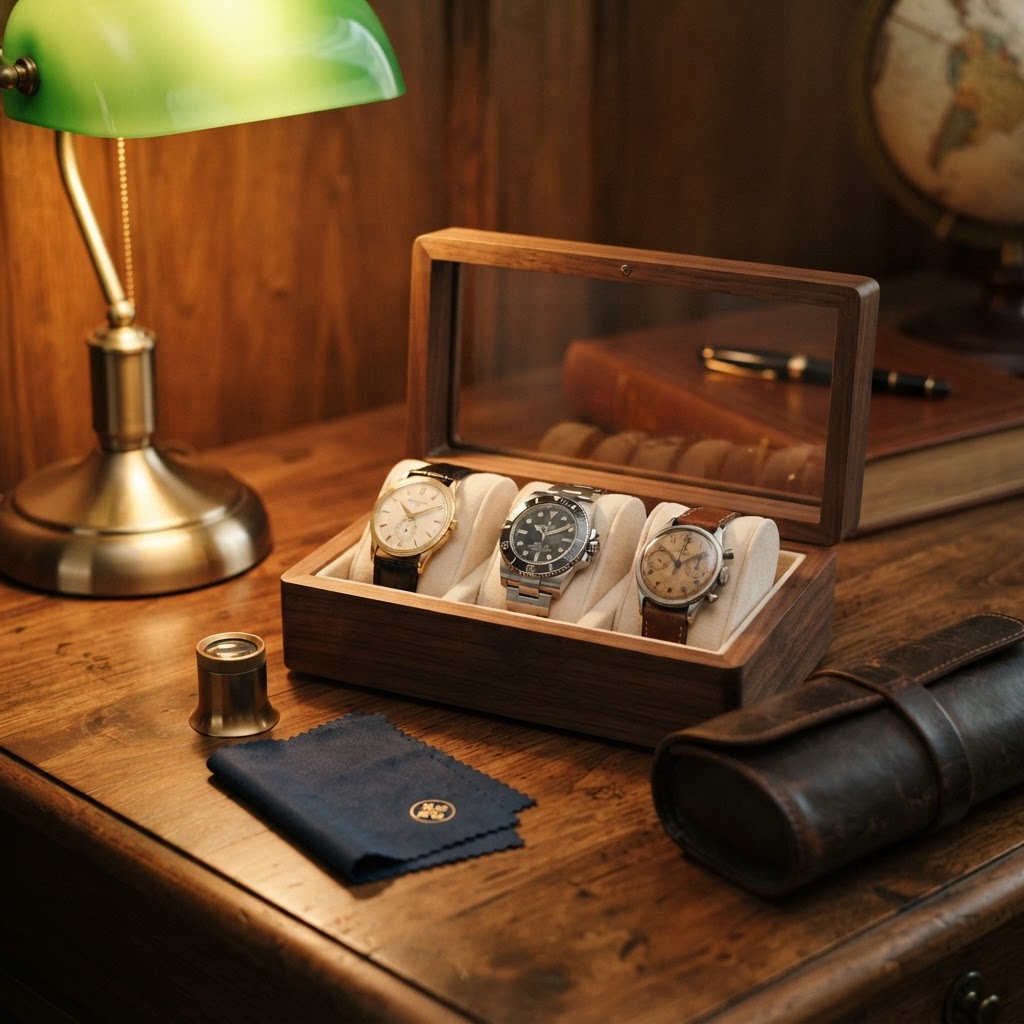
The **Patek Philippe Calatrava** — introduced in 1932 with the Reference 96 — is the archetype of the classic dress watch. The Calatrava's clean, round case and minimalist dial (often with a small seconds subdial) established the template for the modern dress watch. The name 'Calatrava' was not officially used by Patek Philippe until 1985, when it was adopted as the moniker for the line of classic time-only watches, but it has been retrospectively applied to the simple time-only models beginning with Ref. 96. The Calatrava cross — the brand's emblem — derives from the Spanish military order of Calatrava.
**Rolex** — Founded in London in 1905 by Hans Wilsdorf and his brother-in-law Alfred Davis (originally as Wilsdorf & Davis, renamed Rolex in 1908), Rolex moved to Geneva in 1919 and has become the most recognised luxury watch brand in the world. The **Rolex Submariner**, introduced in 1953 and launched at the 1954 Basel Fair, was the first divers' watch waterproof to 100 metres (330 feet). The Submariner has become the most iconic sports watch ever produced, worn by Jacques Cousteau, Steve McQueen (in legend, though McQueen actually wore a Heuer Monaco), and countless others.
**Audemars Piguet** — Founded in 1875 in the Vallée de Joux, Switzerland, Audemars Piguet is best known for the **Royal Oak**, designed by the legendary Gerald Genta and introduced in 1972. The Royal Oak was the first luxury sports watch in steel, featuring an octagonal bezel with eight hexagonal screws and an integrated bracelet. The Royal Oak revolutionised the watch industry and remains one of the most coveted watches in the world.
**Vacheron Constantin** — Founded in 1755 in Geneva by Jean-Marc Vacheron, Vacheron Constantin is the oldest continuously operating watch manufacturer in the world, with over 265 years of uninterrupted production. Together with Patek Philippe and Audemars Piguet, it forms the 'holy trinity' of watchmaking.
Practical Guidance
For those beginning a watch collection, the most important principles are: buy from authorised dealers or reputable platforms (WatchCharts, Chrono24, Sotheby's, Christie's), prioritise condition and originality over rarity, and buy the watch you love rather than the one you think will appreciate most. The mechanical watch is, above all, a personal object — one that should give pleasure every time it is worn and wound.
Reference Links:
- Patek Philippe — Calatrava Collection: patek.com/en/collection/calatrava
- Sotheby's — Patek Philippe Calatrava Guide: sothebys.com/en/articles/patek-philippe-calatrava-collecting-guide
- Rolex Official: rolex.com
- Audemars Piguet — Royal Oak: audemarspiguet.com
- Vacheron Constantin: vacheron-constantin.com
- WatchCharts: watchcharts.com
- Hodinkee: hodinkee.com
- Chrono24: chrono24.com



Continue Reading