Entertaining
The Hawaiian Luau: Polynesia's Feast of the Earth Oven
The luau is the great Hawaiian feast, built around the kalua pig cooked in the imu, the underground earth oven at the heart of Polynesian cooking for centuries — a celebration of ohana, the breaking of the old kapu, and one of the great outdoor feasts of the Pacific.
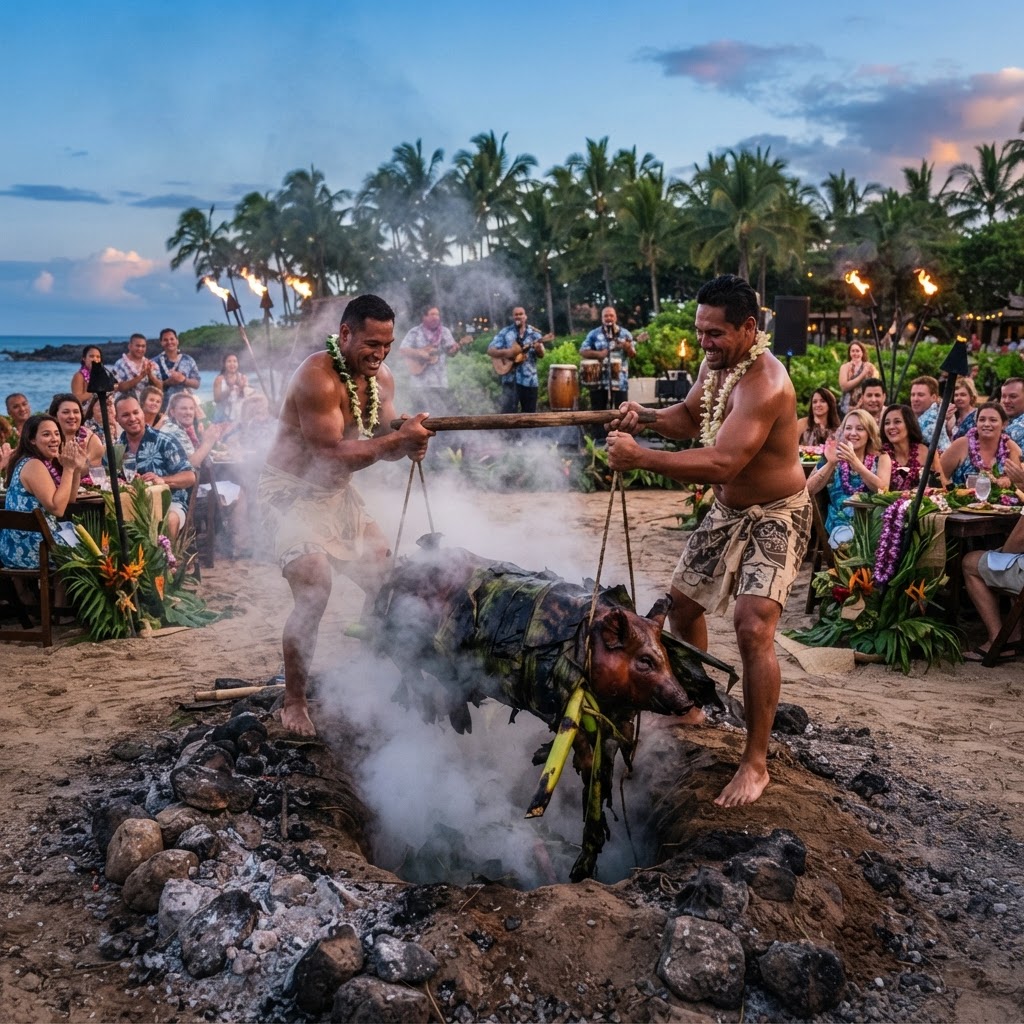
If you want to understand the Hawaiian idea of celebration, go to a luau. The luau is the great Hawaiian feast — a gathering of family and community built around the kalua pig, the whole roast pig cooked in an imu, the underground earth oven that has been at the heart of Polynesian cooking for centuries. It is one of the great outdoor entertaining traditions of the Pacific, and at its center is one of the great communal cooking methods in the world.
**The Imu and the Kalua Pig**
As Wikipedia records, kalua is a traditional Hawaiian cooking method that utilizes an imu, a type of underground oven, and the word kalua means 'to cook in the imu.' The imu is a pit dug into the ground lined with kindling and porous rocks; when the rocks are glowing hot, the food — most famously a whole pig, the pua'a — is placed on top, wrapped in ti or banana leaves, covered with wet burlap and earth, and left to steam for many hours. When it is uncovered, the kalua pig emerges fall-apart tender, smoky, and infused with the earth and the leaves — the centerpiece of the luau, traditionally shredded and served with a pinch of sea salt and cabbage.
**Origins of the Luau**
The ancient Hawaiian feast was called the aha'aina, a gathering with deep religious and social meaning, and it was governed by the kapu — the strict system of taboos that, among other things, forbade men and women from eating together. In 1819, King Kamehameha II and Queen Ka'ahumanu famously broke the kapu by eating together in public, an act that ended the old restrictions and opened the way for the communal feast. The word 'luau' itself came later, from the taro leaf used to wrap food, and by the 1850s the term had come to describe the feast. The modern tourist luau — with hula, music, and the imu ceremony — developed in the 20th century, but its roots are the communal feasts of old Hawaii.
**The Table**
Beyond the kalua pig, the luau table is a survey of Hawaiian and Polynesian food. Poi — the pounded taro root that is the sacred staple of the Hawaiian diet — is the essential accompaniment. Lomi salmon (salted salmon massaged with tomato and onion), poke (raw marinated fish), laulau (pork and fish wrapped in taro leaves and steamed), chicken long rice, haupia (coconut pudding), and fresh tropical fruit round out the feast. The meal is eaten with the hands in the old way, and it is accompanied by hula, by the slack-key guitar and the ukulele, and, at the great luaus, by the fire knife dancing of Samoa.
**How to Host One**
To host a luau, the imu is the heart of the event. Dig a pit, line it with rocks and kindling, heat the rocks until glowing, layer the wrapped pig and the food, cover with wet banana leaves and burlap and earth, and let it steam for six to eight hours while the party gathers. If you cannot dig an imu, a kalua pig can be approximated in a slow oven with banana leaves, liquid smoke, and sea salt, and the rest of the spread — poi, poke, lomi salmon, haupia, tropical fruit — can be set out in abundance. Decorate with ti leaves and tropical flowers, light the tiki torches at dusk, and let the meal unfold outdoors. The genius of the luau is the cooking itself: the slow work of the imu becomes the occasion for the gathering.
**Why It Matters**
The luau is the great feast of Polynesia — a celebration built on one of the oldest cooking methods in the Pacific, on the breaking of the old kapu that allowed Hawaiians to gather as one, and on the conviction that the most important meals are the ones shared by a whole community. To attend a luau is to understand the Hawaiian idea of ohana, the family that extends beyond blood to the whole gathering.
**References**
- Wikipedia: Kalua (Hawaiian cooking method) — https://en.wikipedia.org/wiki/K%C4%81lua
- Wikipedia: Luau (Hawaiian feast) — https://en.wikipedia.org/wiki/Luau
- Polynesian Cultural Center: From imu to the table — https://www.polynesia.com/luau



Continue Reading