Entertaining
The Argentine Asado: Hosting a Fire-Driven South American Feast
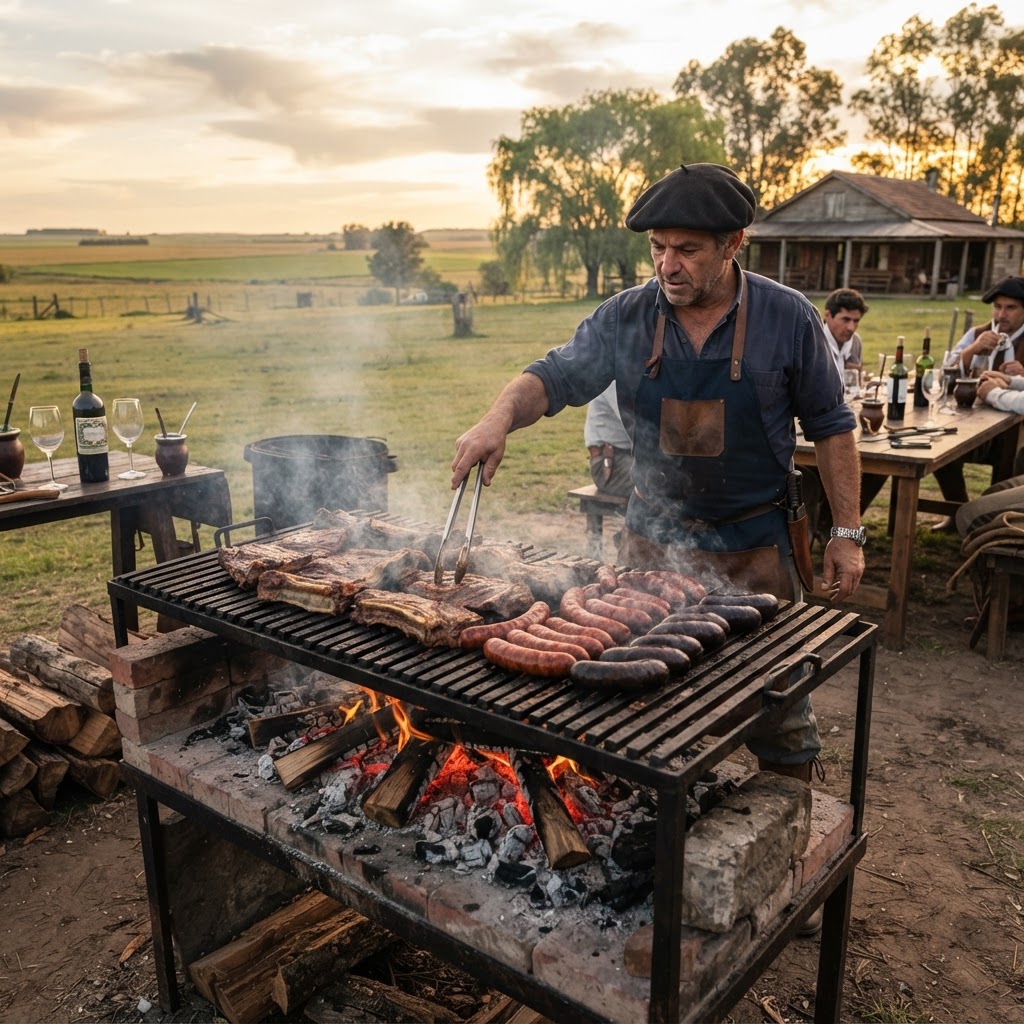
The asado is the great Argentine barbecue, a gathering built around meat grilled over wood embers on a parrilla, born of the gauchos of the Pampas and refined into the national Sunday ritual of Argentina — one of the great fire-cooking traditions of the world.
If you want to understand the social life of Argentina, go to an asado. The asado is the great Argentine barbecue — a gathering built around the grilling of meat over wood embers on a parrilla, the cross-grate grill that is the heart of every Argentine home. It is the national ritual of the country, the Sunday gathering of family and friends, and one of the great fire-cooking traditions of the world.
**Origins**
As Wikipedia records, the asado traces back to the gauchos of the Pampas, the horsemen of the Argentine plains who roasted meat over open fires on the open range. The asador — the man or woman in charge of the fire — is the central figure, and the asado is built on patience, fire management, and time shared with family and friends. The fire is built separately, with quebracho or espinillo wood, and the embers are moved under the parrilla so the meat cooks slowly over moderate, even heat — never over open flame. It is a method that prizes the cook as much as the cut, and it produces the smoky, deeply flavored meat that defines Argentine cooking.
**The Meat**
An asado is a survey of the Argentine table. The cuts are grilled in their variety: asado de tira (beef short ribs), vacio (flank), entraña (skirt steak), and the offal and sausages the Argentines call achuras — chorizo (pork sausage), morcilla (blood sausage), mollejas (sweetbreads), and chinchulines (intestines). The meats are seasoned simply, with coarse sal parrillera (grill salt), and served with chimichurri, the sauce of parsley, garlic, oregano, oil, and vinegar that is the great condiment of the country. The meal is eaten with red wine — Malbec, the national grape — and accompanied by bread to soak up the juices. In the asado con cuero, the whole animal is stretched on an iron cross, the asado criollo, and roasted slowly over the embers for hours.
**The Ritual**
The asado is a social ritual as much as a meal. As the Yerba Crew records, it is a near-weekly ritual in Argentina, a social gathering built around patience, fire management, and time shared with family and friends. The asador works the fire and the grill while the guests gather, drink, and talk; the cooking unfolds over hours, and the eating unfolds in waves, the achuras and sausages first, the larger cuts following. There is no rushing an asado — the slowness is the point, and the fire is the occasion for the gathering.
**How to Host One**
To host an asado, build a wood fire and let it burn down to embers; never cook over flame. Set a parrilla over the embers and season the grates. Salt the meat generously with coarse salt and lay on the cuts — start with the sausages and offal, add the short ribs and the larger cuts, and cook slowly, managing the heat by moving embers beneath the grill. Serve with chimichurri (parsley, garlic, oregano, red wine vinegar, olive oil, a little chili), crusty bread, and a bottle of Malbec. The host tends the fire; the guests gather around it; the meal emerges over the afternoon and into the evening.
**Why It Matters**
The asado is the great communal feast of South America — a tradition born of the gaucho, refined in every Argentine backyard, and built on the conviction that the best meals are cooked slowly over a real fire and shared by a crowd. To host an asado is to understand that in Argentina, the cooking is the party.
**References**
- Wikipedia: Asado — https://en.wikipedia.org/wiki/Asado
- Yerba Crew: The History and Culture of the Asado in Argentina — https://yerbacrew.com/blogs/yerba-mate-culture/history-culture-asado-argentina
- Wikipedia: Chimichurri — https://en.wikipedia.org/wiki/Chimichurri



Continue Reading