Food & Drink
The Argentine Asado: Fire, Meat, and the Gaucho Tradition
An asado isn't just a barbecue. In Argentina, it's the national ritual — a celebration of fire, meat, and community that descends from the gaucho cowboys of the Pampas and is governed by a code of patience, respect, and shared time.
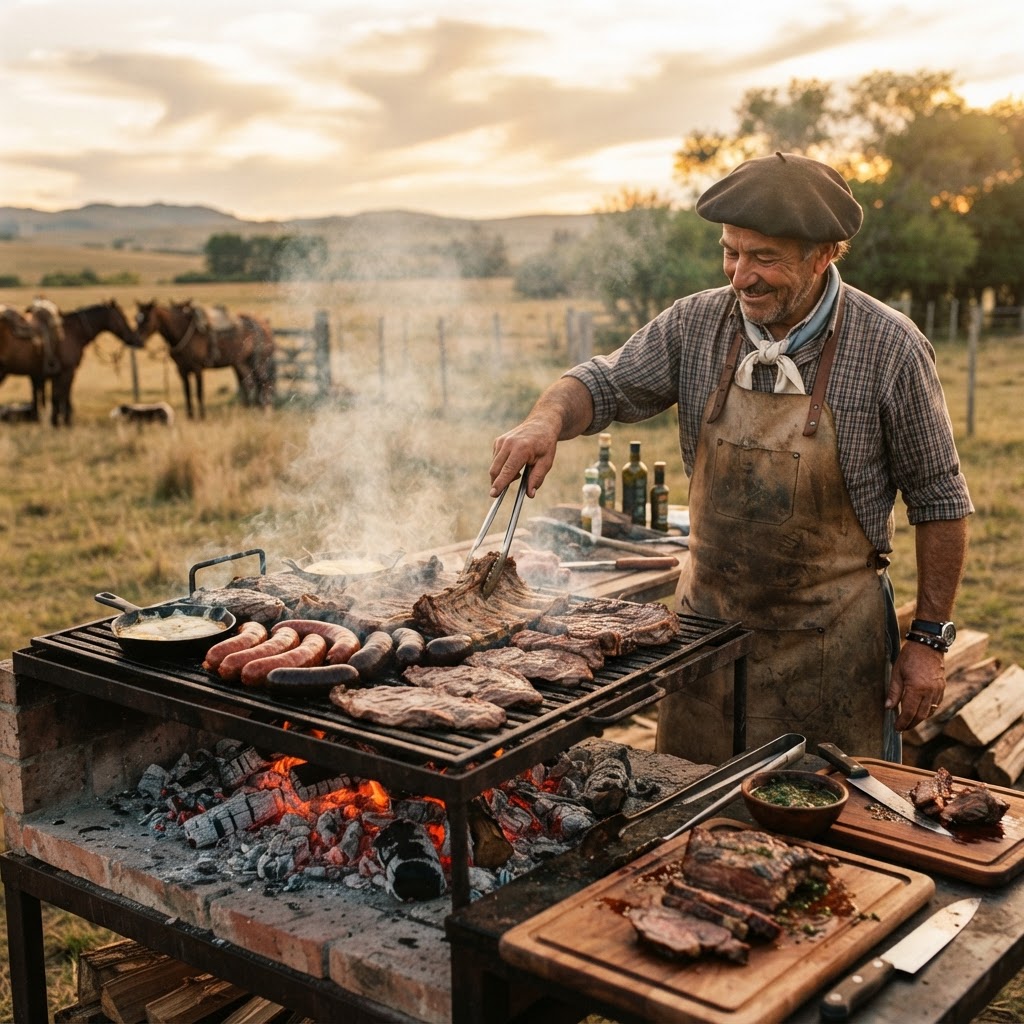
An asado isn't just a barbecue. In Argentina, it's the national ritual — a celebration of fire, meat, and community that descends from the gaucho cowboys of the 18th and 19th centuries and is governed by a code of patience, respect, and shared time. To attend an asado in Argentina is to participate in a social institution, not merely to eat a meal. The *asador* who tends the fire is both cook and host, and the gathering that unfolds around the *parrilla* is as important as the meat itself.
**The Gaucho Origins**
The asado traces its origins to the gauchos, the nomadic horsemen of the Argentine Pampas who lived on the open plains and cooked their meat over open fires during long cattle drives. The gaucho tradition of cooking whole animals and large cuts of beef over wood embers became, over the centuries, the defining culinary ritual of Argentina. Today, Argentina has one of the highest per-capita rates of beef consumption in the world, and the asado is the centerpiece of that culture.
The word "asado" refers both to the cooking technique and to the social event. The *asador* is the designated cook, sometimes also called the *parrillero*. The meat is cooked on a *parrilla*, a grill set over a fire, or on an *asador*, a metal cross that holds a whole animal splayed open to receive the heat from the fire beside it.
**The Fire and the Wood**
The heart of the asado is the fire. The asador begins by igniting the charcoal, which is often made from native Argentine trees such as *quebracho* or *algarrobo*, chosen for their dense, slow-burning, fragrant properties. Pine and eucalyptus are avoided because their resins impart a harsh flavor to the meat. In more traditional asados, especially in the countryside, the charcoal is made from the wood burned in the fire itself, and the meat is cooked over the embers rather than over open flame.
In Uruguay, charcoal is not typically used — the asado is grilled directly over embers or hot coals from wood. In Patagonia, a traditional form called *asado al palo* roasts a whole animal, often lamb or pork, on a wooden stake driven into the ground, exposed to the heat of live coals for several hours.
The key principle is slow, patient cooking. The heat and the distance from the coals are controlled to provide a gentle, even cook, and it usually takes around two hours for a full asado. The grease from the meat is not allowed to drip onto the coals, as the smoke would adversely flavor the meat — in some asados, the area directly beneath the meat is kept clear of coals.
**The Cuts of Meat**
An asado is not a single cut but a procession of meats, each with its own character.
- **Asado de tira:** Short ribs, cut across the bone, the backbone of any asado.
- **Entraña:** Skirt steak, thin and flavorful, often the first cut ready and the first to be eaten.
- **Vacío:** Flank steak, a loose-textured, flavorful cut that is a specialty of the Argentine asado.
- **Chorizo and morcilla:** Pork sausage and blood sausage, cooked alongside the beef and served early to stave off hunger.
- **Mollejas:** Sweetbreads, a delicacy grilled until crisp on the outside and creamy within.
- **Provoleta:** A disk of provolone cheese, dusted with oregano and chili flakes and grilled until melted and blistered, served as a starter while the meat continues to cook.
The meat is not marinated. The only preparation is salt — applied before or during cooking — and the asado philosophy holds that good meat needs nothing more than fire and salt. The accompaniments are simple: a mixed salad of lettuce, tomato, and onion, grilled vegetables, and chimichurri or salsa criolla for those who want a sauce.
**The Social Ritual**
The asado is, above all, a social event. The asador is honored, and it's considered poor form to rush the cook or to comment on the timing. The gathering unfolds slowly — guests arrive, share wine and appetizers, and wait for the asador to declare the meat ready. When the first cuts are served, often the chorizo and morcilla on bread, the meal begins. The asado is not a course-by-course meal but a continuous offering, with cuts brought to the table as they are ready and shared among all.
Red wine is the traditional accompaniment, particularly Malbec, Argentina's signature grape. The combination of grilled beef and Malbec has become one of the world's great pairings.
**The Brunch Connection**
The smoky, rich flavors of an asado find a bright, refreshing companion in a citrus-forward mimosa. A Classic Champagne Mimosa or a Grapefruit Rosemary Mimosa cuts through the richness of the grilled meats, while a Blood Orange Mimosa echoes the smoky, caramelized flavors of the fire. For a brunch asado, a Peach Ginger Mimosa offers a warm, spicy counterpoint to the grilled sausages and provoleta.
**References**
- Wikipedia: Asado — https://en.wikipedia.org/wiki/Asado
- Serious Eats: The Argentine Asado — https://www.seriouseats.com/argentine-asado-guide
- Asado Argentina: The Complete Guide — https://www.asadoargentina.com/
- National Geographic: Argentina's Asado Tradition — https://www.nationalgeographic.com/travel/article/argentina-asado-barbecue-tradition



Continue Reading