Food & Drink
The Sazerac: New Orleans' Official Cocktail and the Birth of the American Bar
Walk into any proper bar in the French Quarter and order a Sazerac, and you'll understand why New Orleans claims it as their own — a drink that began in a Creole apothecary's pharmacy and became, by legislative decree, the official cocktail of the city.
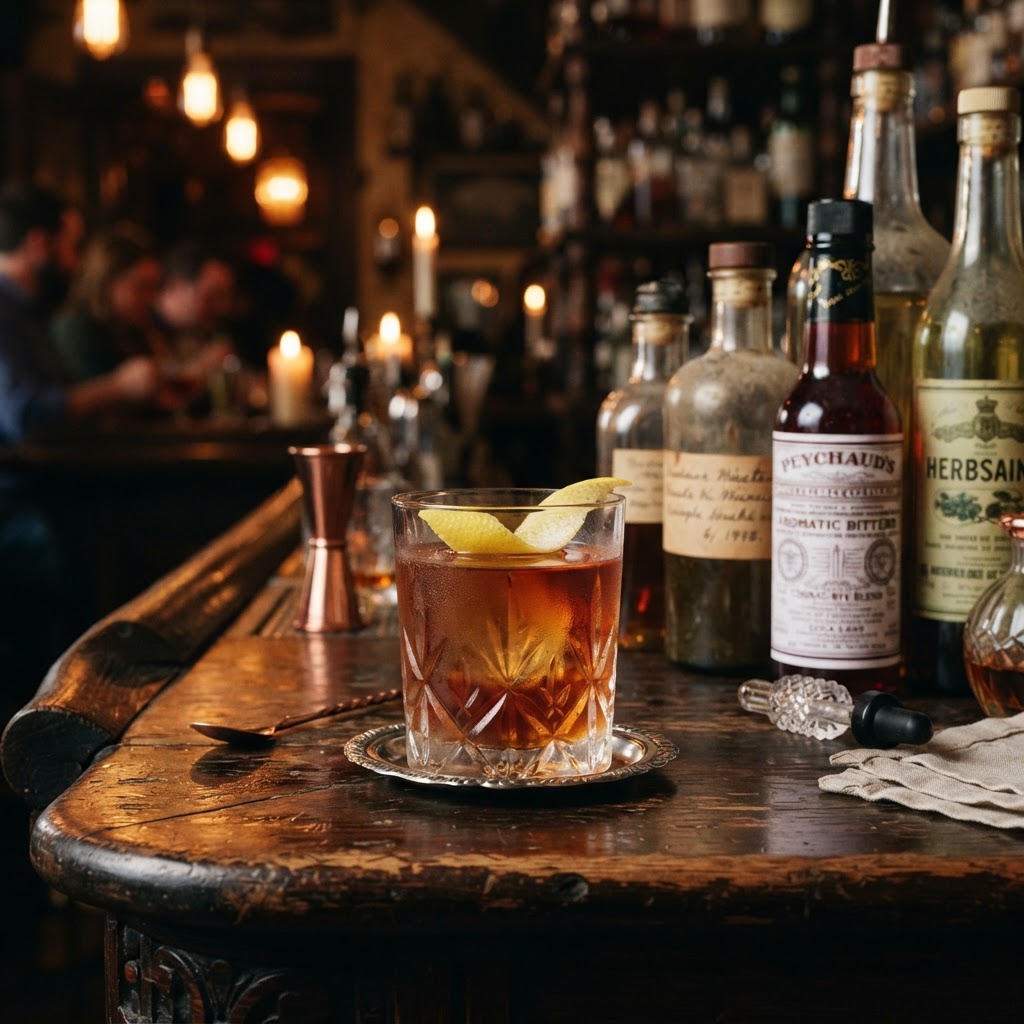
Walk into any proper bar in the French Quarter and order a Sazerac, and you'll understand why New Orleans claims it as their own. It arrives in a chilled glass, lightly perfumed with absinthe, the rye whiskey glowing amber beneath a curl of lemon peel. One sip and you taste anise, herb, citrus, and the warm spice of rye — the flavor of a city that has been perfecting the art of the cocktail for nearly two centuries.
In 2008, the Louisiana Legislature made it official: the Sazerac is the official cocktail of New Orleans. But the story begins long before that, in a pharmacy on Royal Street.
**The Apothecary and the Bitters**
Antoine Amédée Peychaud was a Creole apothecary who arrived in New Orleans in the early 1800s, likely as a refugee from Saint-Domingue (modern-day Haiti). Around 1838, he set up his pharmacy at 437 Royal Street in the French Quarter, where he made his own aromatic bitters from anise, gentian, and other botanicals. The story goes that he served these bitters mixed with brandy to his fellow Freemasons in small egg cups called *coquetiers* — a word that some linguists think evolved into the English term "cocktail." The etymology is debated, but the drink is not.
**The Sazerac Coffee House**
The drink took its name from Sazerac de Forge et Fils, a French cognac and Peychaud's favorite brandy. By the 1850s, the Sazerac Coffee House on Exchange Alley in the French Quarter had become the drink's spiritual home, serving the brandy-and-bitters combination that would eventually become world-famous.
Over time, American rye whiskey replaced the French cognac — rye was more available and more popular in the States. Around 1873, a bartender named Leon Lamothe added the finishing touch: a rinse of absinthe. That anise-scented coating on the glass transformed the drink into the Sazerac we recognize today.
**Prohibition and the Bitters**
When absinthe was banned in the United States in 1912 — accused, perhaps unfairly, of causing hallucinations and madness — bartenders leaned on Peychaud's anise-forward bitters to preserve something of the original aromatic character. Today, with absinthe legal again, the classic Sazerac uses an absinthe rinse, Peychaud's bitters, rye whiskey, and a twist of lemon peel.
**The Classic Recipe**
Chill a rocks glass with crushed ice. In a second glass, muddle a sugar cube with a few dashes of Peychaud's bitters and a splash of water. Add 2 ounces of rye whiskey and ice, and stir until well chilled. Dump the ice from the first glass and rinse it with absinthe, coating the interior. Strain the whiskey mixture into the absinthe-rinsed glass. Garnish with a twist of lemon peel, expressing the oils over the surface.
**The Sazerac Bar at the Roosevelt**
The Sazerac Bar at the Roosevelt New Orleans Hotel on Baronne Street is the drink's modern home. With its African walnut paneling and murals by the artist Paul Ninas, it's been a New Orleans institution since the 1930s. It survived Hurricane Katrina and the hotel's four-year closure, reopening in 2009 after a $145 million restoration. It's also the home of the Ramos Gin Fizz — Governor Huey P. Long once flew one of the hotel's bartenders to New York just to teach the city's bar staff how to make the drink correctly.
**The Brunch Connection**
The Sazerac's anise and rye spice profile pairs beautifully with the rich, Creole flavors of New Orleans cuisine. At a brunch table, it finds a natural companion in a bright, citrus-forward mimosa. A Classic Champagne Mimosa or a Grapefruit Rosemary Mimosa offers a refreshing counterpoint to the cocktail's aromatic intensity, while a St. Germain Mimosa echoes the drink's floral complexity.
**References**
- New Orleans & Company: Sazerac Recipe and History — https://www.neworleans.com/drink/cocktails/sazerac/
- Sazerac House: How the Sazerac Became the Official Cocktail of New Orleans — https://www.sazerachouse.com/inspiration/stories/how-the-sazerac-became-the-official-cocktail-of-new-orleans/
- Wikipedia: Sazerac — https://en.wikipedia.org/wiki/Sazerac
- Distillery Trail: The History of the Sazerac Cocktail and its Apothecary Roots — https://www.distillerytrail.com/blog/the-history-of-the-sazerac-cocktail-and-its-apothecary-roots/



Continue Reading