Food & Drink
Saffron: The World's Most Expensive Spice & Its Golden Legacy
At up to $5,000 per pound, saffron is worth more than gold by weight. It takes 75,000 flowers and an extraordinary harvest ritual to produce a single pound — and the result is one of the world's most transformative culinary ingredients.
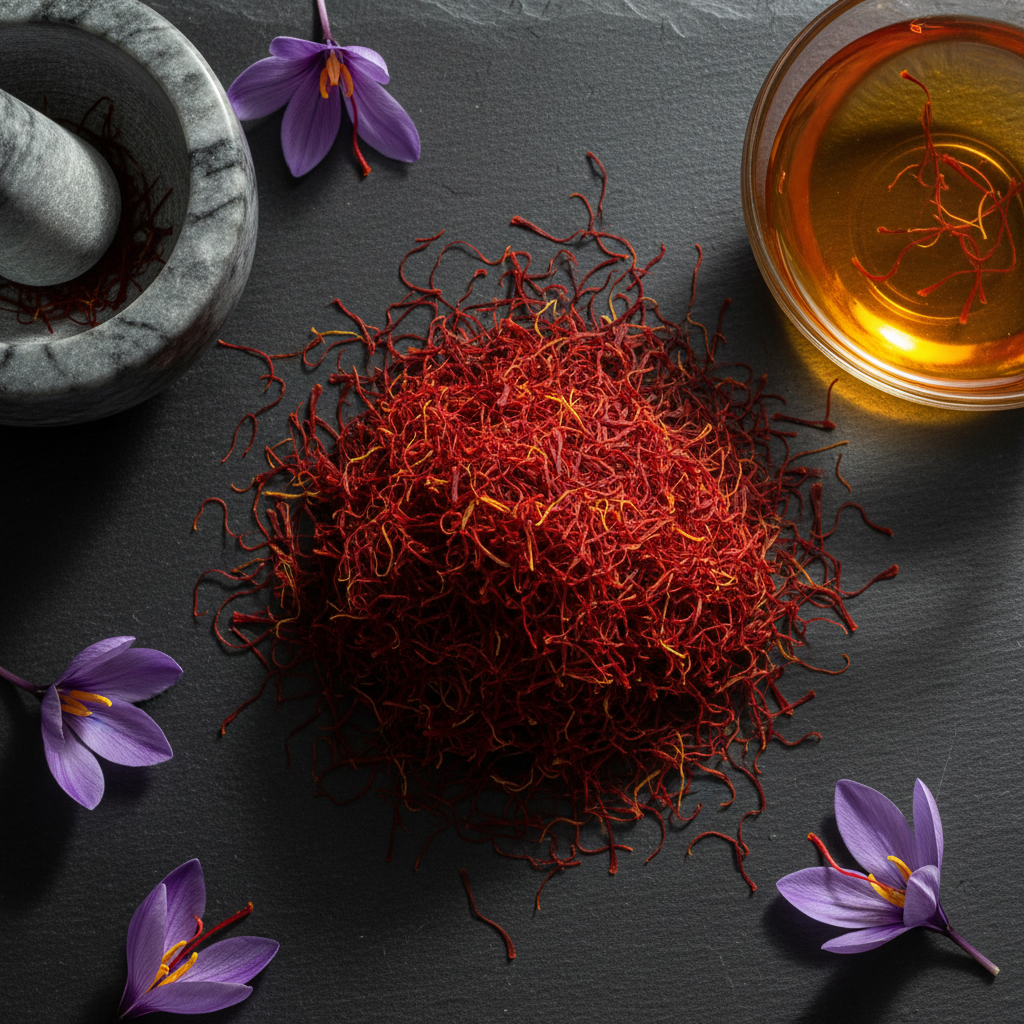
They call it red gold — and not without reason. Saffron (Crocus sativus) is the world's most expensive spice by weight, commanding prices between $1,000 and $5,000 per pound depending on quality and origin. The reason is entirely practical: each saffron crocus produces just three crimson stigmas. They must be hand-harvested within hours of the flower opening, in the early morning before the sun damages the delicate strands. It takes approximately 75,000 flowers — and 400 hours of human labour — to yield a single pound of dried saffron.
The spice's origins are ancient and deeply Persian. The Crocus sativus is believed to have been cultivated first in the region of Greater Persia (modern-day Iran) as far back as 3,000 years ago, though some botanists point to Bronze Age Greek Minoan frescoes as early evidence of saffron use. What is not disputed is that Iran today produces approximately 90% of the world's saffron supply, primarily from the Khorasan region in the country's northeast, where the dry climate and high altitude create ideal growing conditions. The town of Torbat-e Heydarieh is considered the saffron capital of the world.
The harvest is a fleeting annual event. Saffron crocus flowers bloom for just one to two weeks in late October and early November. Harvesting families — often working multigenerational plots — begin work before dawn, picking flowers by hand before laying them out for immediate processing. The three stigmas are then separated (a process called 'stigma separation' or 'tipping') and dried, often over charcoal or in heated rooms, within hours of harvest to preserve their volatile aromatic compounds.
Quality is graded by ISO standards (ISO 3632), which measure colouring strength (crocin), aroma (safranal), and bitterness (picrocrocin). 'Sargol' — the deep crimson all-stigma grade from Iran — is among the finest available. Spanish 'La Mancha' saffron, grown in Castilla-La Mancha, carries a Denomination of Origin and is Spain's most celebrated production, with a slightly milder flavour profile than its Persian equivalent.
In the kitchen, saffron's power lies in its unique trinity of colour, aroma, and flavour. The golden hue it imparts — from the water-soluble pigment crocin — is unmistakeable. The aroma is floral, hay-like, and faintly metallic. The flavour is honeyed but with an underlying bitter edge that makes it complex rather than simply sweet.
The cardinal rule of cooking with saffron is to always bloom it first. Crumble the strands into a small dish, add two to three tablespoons of warm (not boiling) water, white wine, or broth, and allow the liquid to extract for at least 15–20 minutes before adding to your dish. This step is non-negotiable: dry saffron added directly to a dish releases only a fraction of its colour and flavour.
The world's great saffron dishes each use the spice in different ways. Persian tachin (saffron rice cake with yoghurt and chicken) and chelow (plain buttered rice with a golden saffron crust) use it to perfume the rice. Spanish paella relies on saffron for both colour and the unmistakable socarrat — the caramelised crust at the base of the pan. Italian risotto Milanese, by Milanese tradition, includes saffron as its defining ingredient. And Bouillabaisse, the great Provençal fish stew, is as much about saffron as it is about seafood.
For sourcing, quality matters enormously. Avoid powder saffron, which is easily adulterated. Look for whole threads with a deep crimson colour and a golden-yellow tip — an indicator that the entire stigma is present. Reputable sources include Zaran Saffron (https://www.zarancaviar.com) and The Spice House (https://www.thespicehouse.com), both of which source traceable, properly graded saffron.
A little goes a very long way. A quarter teaspoon of quality saffron (roughly 30–50 threads) is enough to flavour and colour a dish serving six. Store in an airtight container away from light and heat; saffron's volatile compounds degrade with exposure to both.
For all its grandeur, saffron is also among the most democratic of luxury ingredients — a pinch transforms an ordinary risotto, a simple broth, or a custard into something that tastes unmistakably of celebration.


Continue Reading