Fashion
The Perfume Guide: Investing in a Signature Scent
Perfume is the most invisible and intimate of luxuries. From Coco Chanel and Ernest Beaux's 1921 revolution with No. 5 to the four fragrance families, here is the guide to investing in a signature scent.
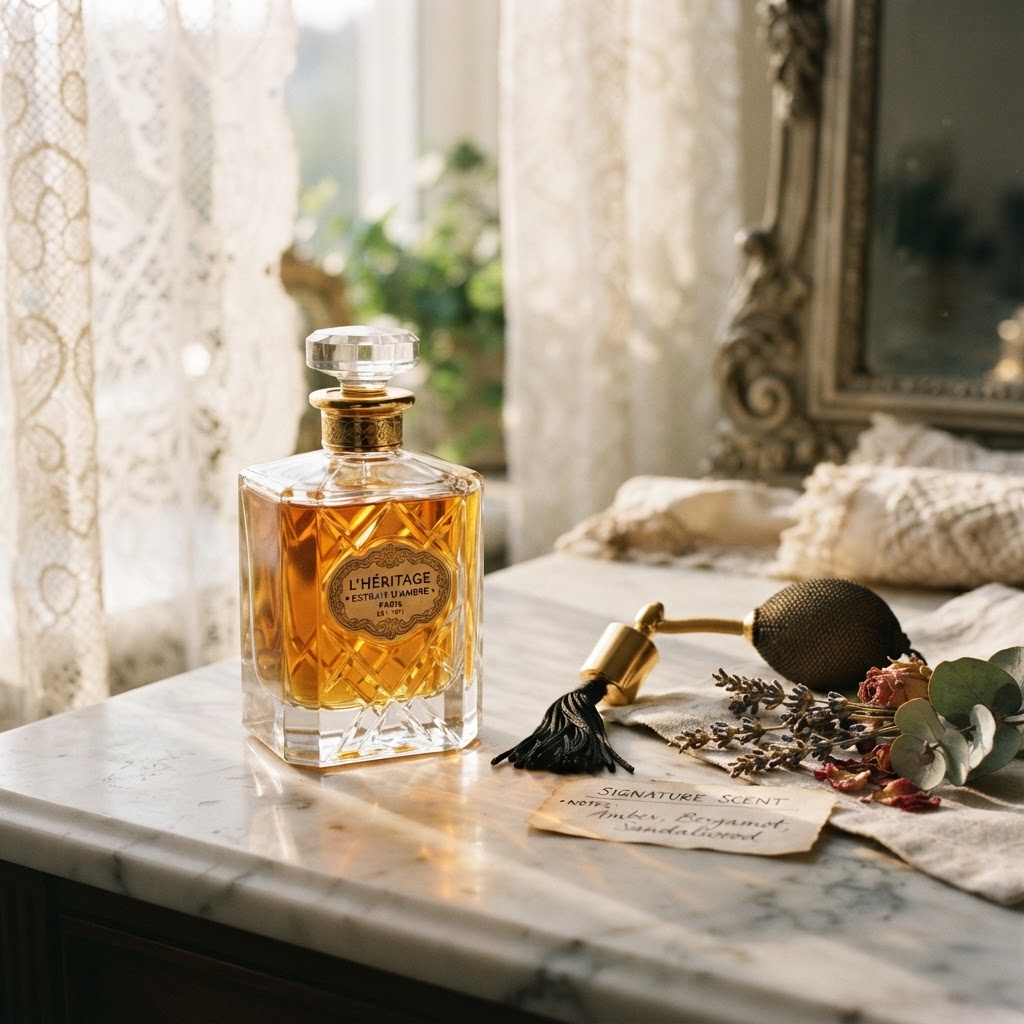
Perfume is the most invisible and the most intimate of luxuries. It is the one thing you wear that others cannot see but cannot ignore — it precedes you into a room, lingers after you leave, and has the power to evoke memories and emotions more powerfully than any image or sound. Choosing a signature scent is, therefore, one of the most personal decisions in the realm of luxury.
The Revolution of Chanel No. 5
The modern perfume industry begins with a single fragrance: **Chanel No. 5**, launched in 1921. Created by **Ernest Beaux**, a French-Russian perfumer working in Grasse (the historic centre of perfumery in the south of France), No. 5 was revolutionary in several ways. It was the first perfume to feature a high concentration of **aldehydes** — synthetic compounds that gave the fragrance an abstract, soapy, almost metallic brightness that no natural flower could produce. Beaux had discovered the aldehydes accidentally, when a colleague had used an overdose of aldehydes in a formula; rather than discarding the result, Beaux recognised its potential.
Gabrielle 'Coco' Chanel chose the fifth sample from a series of ten that Beaux presented to her (numbered 1 through 5 and 20 through 24), and the fragrance was launched on the fifth day of the fifth month (May 5, 1921). Chanel's decision to put her own name on the bottle — and to sell it as a luxury item rather than a functional one — was itself revolutionary. Before No. 5, perfumes were associated with courtesans or with single-flower soliflores; Chanel made perfume respectable for respectable women, and she made it modern.
The bottle — a simple, geometric, laboratory-inspired flacon designed by Chanel herself — was as revolutionary as the scent. In an era of ornate, crystal perfume bottles, Chanel's minimalist vessel was a statement: the luxury was in the liquid, not the vessel.
Fragrance Families
All perfumes can be classified into four principal families, a system developed by the Société Française des Parfumeurs and widely used in the industry:
**Floral** — The largest and most popular family, built around flower notes (rose, jasmine, tuberose, lily). Floral fragrances range from single-flower soliflores (such as Frédéric Malle's Une Rose) to complex bouquets (such as Chanel No. 5, which, despite its aldehydes, is fundamentally a floral).
**Oriental (Amber)** — Warm, spicy, and resinous, built around notes of amber, vanilla, musk, and spices (cinnamon, clove, cardamom). Oriental fragrances are sensual and enveloping (such as Tom Ford's Black Orchid or Shalimar by Guerlain, the original oriental, launched in 1925).
**Woody** — Built around notes of sandalwood, cedar, vetiver, and patchouli. Woody fragrances are sophisticated and grounding, favoured by both men and women (such as Le Labo's Santal 33, one of the defining fragrances of the 2010s).
**Fresh** — Citrus, aquatic, and green fragrances built around notes of lemon, bergamot, sea spray, and cut grass. Fresh fragrances are light and energising (such as Acqua di Parma Colonia, the Italian classic, or Jo Malone's Lime Basil & Mandarin).
Concentrations
The strength and longevity of a perfume is determined by the concentration of aromatic oils in the alcohol base:
**Parfum (Extrait)** — 20–30% concentration. The most concentrated and expensive form, typically lasting 6–8 hours. Applied in small dabs.
**Eau de Parfum (EDP)** — 15–20% concentration. The most common concentration for modern fine fragrances, lasting 4–6 hours.
**Eau de Toilette (EDT)** — 5–15% concentration. Lighter and more appropriate for daytime, lasting 3–4 hours.
**Eau de Cologne (EDC)** — 2–4% concentration. The lightest form, traditionally citrus-based, lasting 1–2 hours.
The Art of Choosing
A signature scent should be chosen slowly and personally. Never buy a perfume on first encounter — spray it on your skin (not on paper, as skin chemistry changes the scent), wear it for a full day, and notice how it develops through its top, heart, and base notes. Visit the great perfumeries — **Frédéric Malle** (Editions de Parfums, where the perfumer is credited by name), **Le Labo** (where fragrances are hand-blended in-store), and the historic houses of **Guerlain** (founded 1828), **Creed** (founded 1760), and **Diptyque** (founded 1961) — and allow the experts to guide you. A perfume, chosen well, becomes as much a part of your identity as your voice.
Reference Links:
- Chanel — No. 5 History: chanel.com/us/about-chanel/the-house-of-chanel/1920
- Wikipedia — Chanel No. 5: en.wikipedia.org/wiki/Chanel_No._5
- The Perfume Society — Chanel: perfumesociety.org/perfume-house/chanel
- Frédéric Malle: fredericmalle.com
- Le Labo: lelabofragrances.com
- Guerlain: guerlain.com
- Creed: creedboutique.com
- Fragrantica (fragrance database): fragrantica.com
- BBC News — Chanel No. 5 Story: bbc.com/news/world-13565155
Continue Reading