Food & Drink
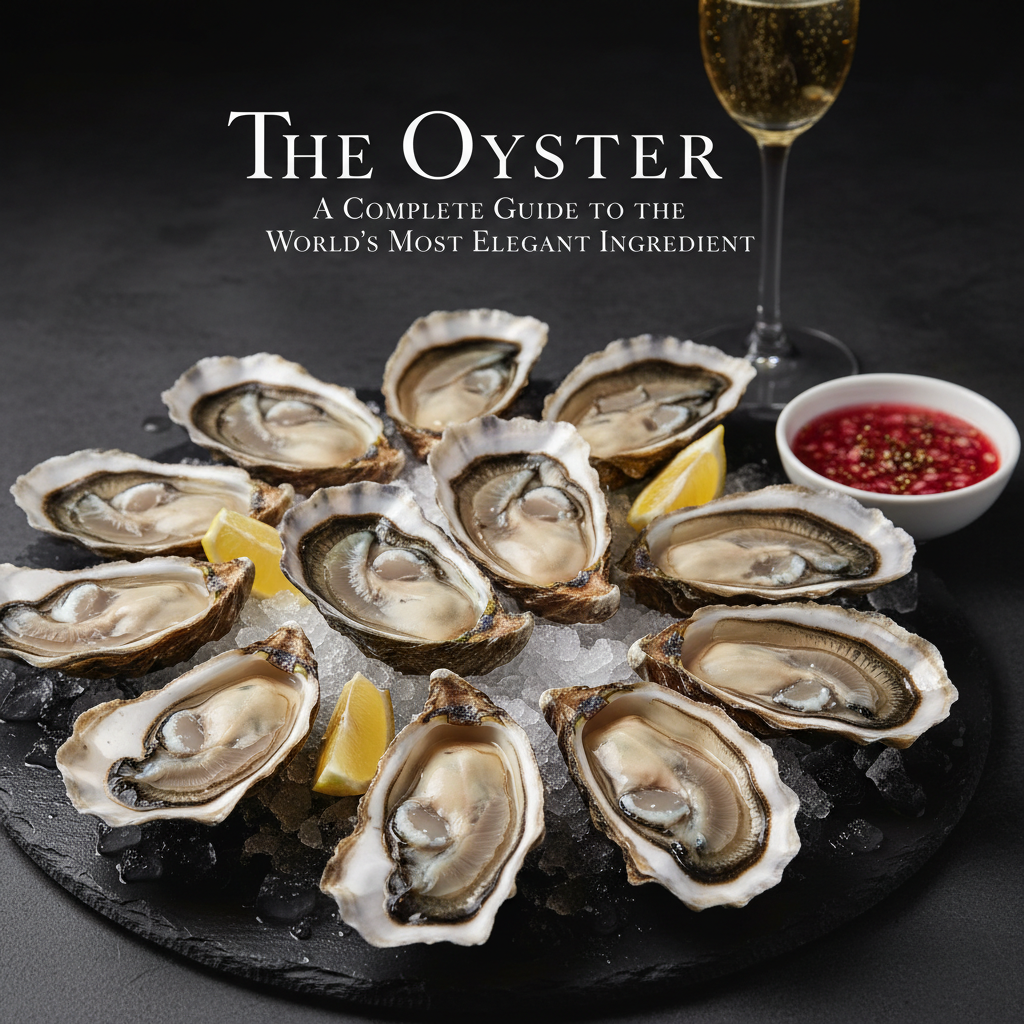
The Oyster: A Complete Guide to the World's Most Elegant Ingredient
Raw, gratinated, with mignonette, with Champagne — the oyster is the world's most perfect food, and one of its oldest. Everything you need to know.
The oyster has been eaten for at least 164,000 years — archaeologists discovered the earliest-known shellfish middens on the southern tip of Africa, evidence that Homo sapiens has been enjoying these extraordinary creatures since before recorded history. In ancient Rome, oyster beds were cultivated and traded across the empire. In 19th-century London and New York, they were cheap street food, sold by the barrel to the working poor. Today they are the world's most elegant appetiser and among its most environmentally responsible foods.
**Understanding the varieties**: All European oysters (Ostrea edulis) are round and metallic; all Pacific oysters (Crassostrea gigas) are elongated and generally milder. Climate, salinity, current, and the particular mineral composition of the water in which they grow — their 'meroir', by analogy with wine's terroir — makes each oyster from each bed distinct.
Fine de Claire oysters from the Marennes-Oléron region of France — finished in natural clay ponds called claires — are considered the benchmark for French oysters, with their distinctive iodine richness and clean, mineral finish. Gillardeau (gillardeau.fr) is the most celebrated producer. From the British Isles, Jersey Royals and Loch Fyne (lochfyne.com) oysters are outstanding. From the US, Kumamoto and Blue Point are classic East Coast varieties; the oyster beds of Washington State's Willapa Bay produce extraordinary Pacific oysters.
**Serving**: Oysters should be served very cold, on crushed ice, within hours of opening. Classic accompaniments: mignonette (red wine vinegar, finely minced shallot, cracked pepper), Tabasco, lemon, and brown bread with good butter.
**The Pairing**: Champagne and oysters is one of the great absolute pairings in gastronomy — the wine's acidity and minerality amplifying the sea-salinity of the oyster in a partnership that feels almost fated. A Blanc de Blancs Champagne (100% Chardonnay) is the classical choice: Ruinart (ruinart.com) Blanc de Blancs is perfect, or a grower Champagne from the Cote des Blancs.



Continue Reading