Food & Drink
Noma and the New Nordic Revolution: How a Copenhagen Restaurant Changed the World
When René Redzepi opened Noma in 2003, he had no idea he was about to launch the most influential culinary movement of the 21st century. Twenty years later, the legacy is everywhere.
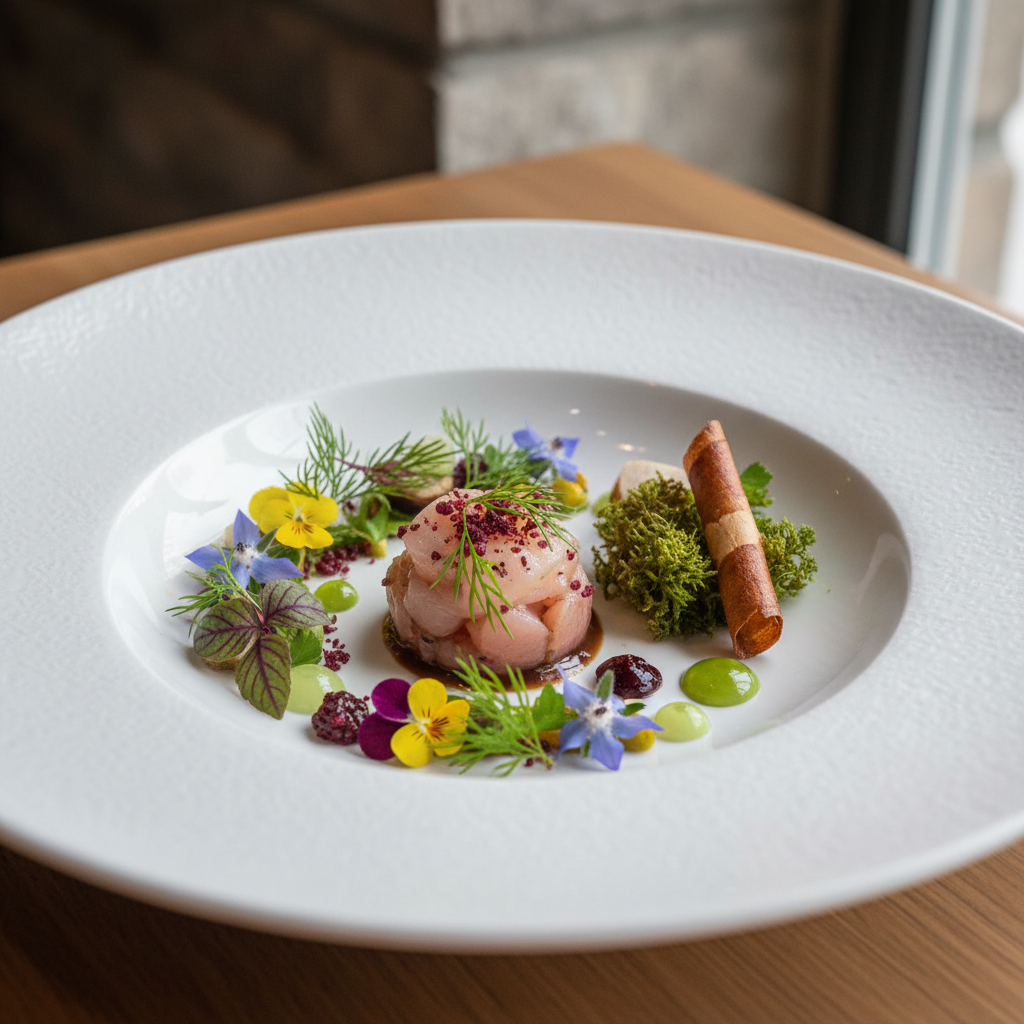
On a cold December morning in 2003, a 25-year-old Danish chef named René Redzepi opened a restaurant in a converted 18th-century warehouse on the Copenhagen harbourfront. Noma — the name combining the Danish words 'nordisk' (Nordic) and 'mad' (food) — had 12 tables, a bare-bones kitchen, and a menu built almost entirely from ingredients foraged or sourced within a few hundred kilometres of Copenhagen: sea buckthorn, wood sorrel, dried reindeer moss, pine shoots, malt, butter, and the fish and shellfish of the North Atlantic.
Within three years, it had two Michelin stars. By 2010, it was voted the World's Best Restaurant by Restaurant magazine (theworlds50best.com) — a ranking it would hold for four of the next five years. By the early 2010s, the New Nordic philosophy it embodied — hyperlocal sourcing, fermentation as a primary technique, foraging, and the elevation of humble or unfashionable ingredients through technique and vision — had been adopted, adapted, and interpreted by restaurants from São Paulo to Seoul. Redzepi had, without particularly intending to, launched the most influential culinary movement since nouvelle cuisine.
Noma announced in January 2023 that it would close its restaurant operation at the end of that year, transitioning to a food laboratory (nomaprojects.com) focused on research, fermentation, and publishing. The final service was held on 22 January 2024. Reference: noma.dk
**The Philosophy**
The New Nordic manifesto — co-authored by Redzepi, Claus Meyer, and 12 other Nordic chefs and food thinkers at a symposium in 2004 — articulated ten principles that would define the movement: purity, freshness, simplicity, and ethics; the reflection of the seasons; the use of local products; the expression of a distinctly Nordic culinary character; and the combination of the best Nordic traditions with impulses from outside. Reference: noma.dk/vision
The fermentation programme that Noma developed — documented in the landmark *Noma Guide to Fermentation* (2018, workman.com), co-authored by Redzepi and food scientist David Zilber — explored garum (fermented protein sauce), lacto-fermented vegetables, misos made from Nordic grains, and koji applications far beyond anything previously documented in Western culinary literature. The book fundamentally changed how professional and home cooks around the world understood the role of fermentation in flavour development.
**The Legacy Restaurants**
The alumni network of Noma constitutes the most influential culinary diaspora of the 21st century. Chefs who cooked at Noma have opened restaurants that now hold Michelin stars across 30+ countries:
Geranium (Copenhagen) — Rasmus Kofoed's three-Michelin-star restaurant, consistently ranked among the top five restaurants in the world, represents the most refined expression of New Nordic cuisine. Currently holds the #1 position on the World's 50 Best list. Reference: restaurant-geranium.dk
Alchemist (Copenhagen) — Rasmus Munk's 50-course immersive dining experience in a converted shipyard blends gastronomy with performance art, addressing social and environmental themes through food. Two Michelin stars and among the most ambitious restaurants in existence. Reference: alchemist.dk
Odst (Copenhagen) — opened 2024 by former Noma chef Blaine Wetzel, it continues the Noma philosophy with an emphasis on coastal Danish ingredients.
Single Thread (Healdsburg, California) — Kyle Connaughton trained under Heston Blumenthal and in Japan before bringing New Nordic principles to California's wine country. Three Michelin stars. Reference: singlethreadfarms.com
Jun Tanaka's The Ninth (London) and Ana Roš's Hiša Franko (Slovenia) similarly reflect the global reach of the New Nordic's influence on technique and philosophy.
**What It Taught Us**
The New Nordic movement's most enduring contribution is not a specific technique or ingredient but a philosophy: that the most sophisticated cuisine possible is one rooted in a specific place and time — that local, seasonal, and ethically produced food, treated with the most rigorous technical attention, can produce the most profound gastronomic experience. It is a philosophy that has outlasted the restaurant that invented it, and will continue to shape cooking for generations.



Continue Reading