Food & Drink
The New Orleans Café au Lait and Beignet: A Morning Ritual at Café du Monde
There is no morning in New Orleans quite like the one that begins with a mountain of powdered sugar, a cup of dark chicory coffee cut with hot milk, and the slow hum of the French Quarter waking up around you.
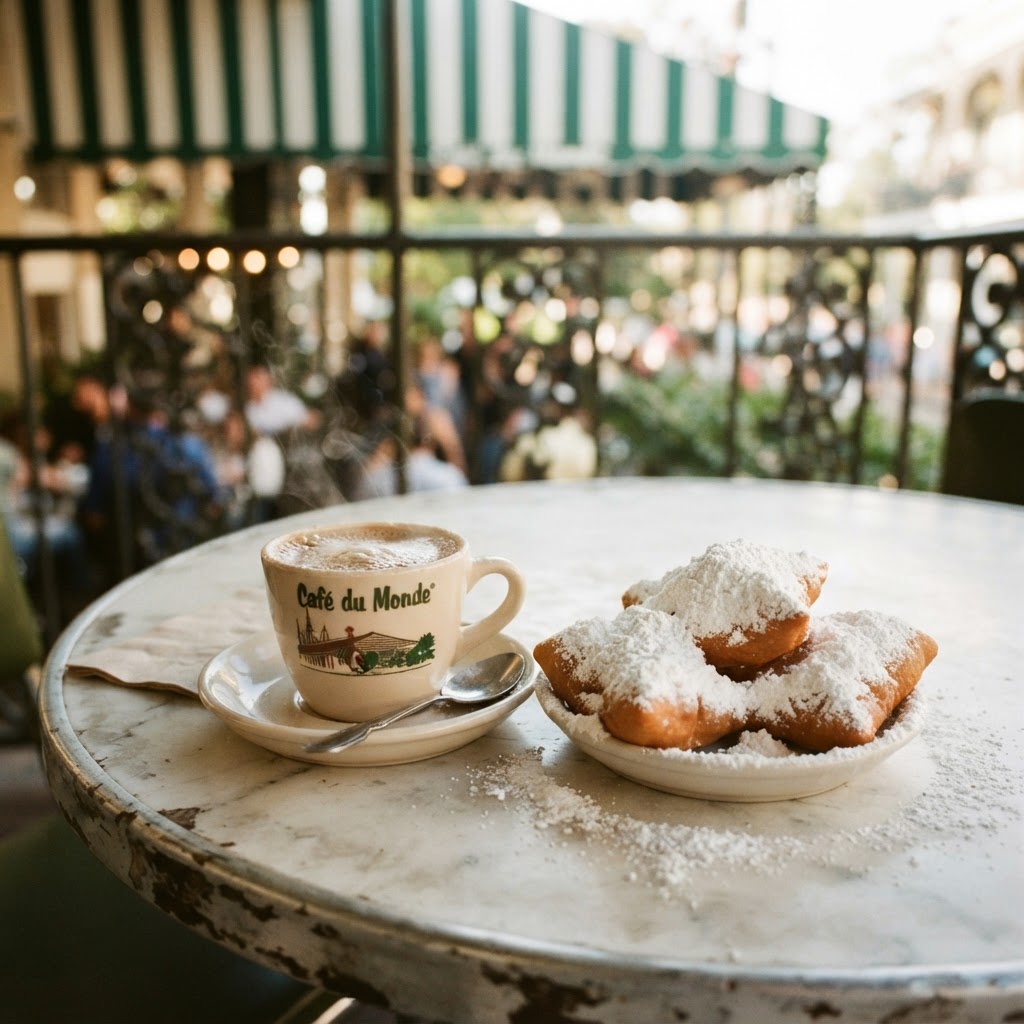
There is no morning in New Orleans quite like the one that begins with a mountain of powdered sugar, a cup of dark chicory coffee cut with hot milk, and the slow hum of the French Quarter waking up around you. At Café du Monde, the ritual has hardly changed in more than 160 years. The beignets arrive three to a plate, hot from the fryer, buried under a snowdrift of sugar; the café au lait comes in a thick ceramic cup, half chicory coffee and half scalded milk. You eat slowly. You drink slowly. The city does the rest.
**A Stand in the French Market**
Café du Monde was established in 1862 in the French Market of New Orleans, where coffee had been traded and brewed since the city's earliest days under French and Spanish rule. The original stand served café au lait and beignets to dockworkers, market vendors, and travelers, and it has stood on the same spot ever since — today open around the clock, closing only for Christmas and the occasional hurricane. The menu, famously short, has barely budged: beignets, café au lait, iced coffee, and a handful of extras. In a city that reinvents its menus nightly, Café du Monde's stubbornness is the point.
**The Chicory Coffee Tradition**
The dark, slightly bitter coffee that defines the New Orleans cup owes its character to chicory root. During the American Civil War, the Union naval blockade of the Port of New Orleans choked off the city's coffee supply, and residents stretched their dwindling stores of beans with roasted, ground chicory root, a practice brought by Acadian settlers who had learned it in France. The blockade eventually lifted, but the taste did not. New Orleanians kept the chicory in their coffee long after it was necessary, and the brew became a signature of the city — earthy, dark, and unmistakable.
At Café du Monde, the café au lait is traditionally half coffee-and-chicory and half hot milk, which softens the bitterness into something round and almost sweet. It is one of the great coffee rituals of the Americas, and it pairs beautifully with the sweetness of the beignet.
**The Beignet, Louisiana's State Doughnut**
A beignet is, at its core, a square of enriched dough, fried until puffed and golden and then drowned in powdered sugar. The tradition reaches back through French culinary heritage — the word comes from the Old French for "bump" — but the New Orleans beignet is its own creature: square, pillow-soft, and served so hot that the sugar melts into a glaze on contact. In 1986, the Louisiana legislature declared the beignet the official state doughnut, a recognition of its place in the daily life of the city.
Eating one is a slightly chaotic act. The sugar coats your fingers, your lips, the front of your shirt. Locals and tourists alike accept this as the cost of participation. The trick is to tear, dip into the pooled sugar, and bite before the pastry cools.
**The Brunch Connection**
The New Orleans café au lait morning is, in spirit, the original American brunch — a leisurely, social, sweet-and-bitter interlude that bridges morning and midday. It pairs naturally with the mimosa family: a Classic Champagne Mimosa echoes the citrus of the orange and the sparkle of the morning, while a Blood Orange Mimosa nods to the deep, slightly bitter notes of the chicory. For a true New Orleans brunch, pour the mimosa alongside the beignets and let the sugar, the citrus, and the coffee do their slow work together.
**References**
- Wikipedia: Café du Monde — https://en.wikipedia.org/wiki/Caf%C3%A9_du_Monde
- Wikipedia: Beignet — https://en.wikipedia.org/wiki/Beignet
- Wikipedia: New Orleans cuisine — https://en.wikipedia.org/wiki/New_Orleans_cuisine
- Café du Monde (official) — https://www.cafedumonde.com
Continue Reading