Food & Drink
New England Clam Chowder: The Creamy Debate That Divides a Coast
If you want to start a fight in New England, ask someone how they make their clam chowder. Along the coast, it's not a matter of taste but of identity — a culinary fault line that has divided neighbors and even inspired legislation.
If you want to start a fight in New England, ask someone how they make their clam chowder. I'm only half joking. Along the coast from Maine to Rhode Island, the question of how a proper chowder should be made is not a matter of taste but of identity — a culinary fault line that has divided neighbors, inspired legislation, and defined what it means to eat like a New Englander for more than a century.
**Where Chowder Comes From**
The word "chowder" probably comes from the French *chaudière*, the large cauldron fishermen used to cook their catch aboard ship. The earliest chowders in New England were hearty, rustic stews made with whatever the day's catch provided, thickened not with cream or tomatoes but with crushed crackers or hardtack dissolved into the broth. A recipe from the 18th century, recorded in the cookbooks of Lydia Maria Child and others, describes a chowder of salt pork, onions, potatoes, and clams layered with ship biscuit and simmered until the crackers thickened everything into something that could sustain a man through a cold day on the water.
It wasn't until the 19th century that the two great regional styles began to diverge.
**New England Clam Chowder: The White Standard**
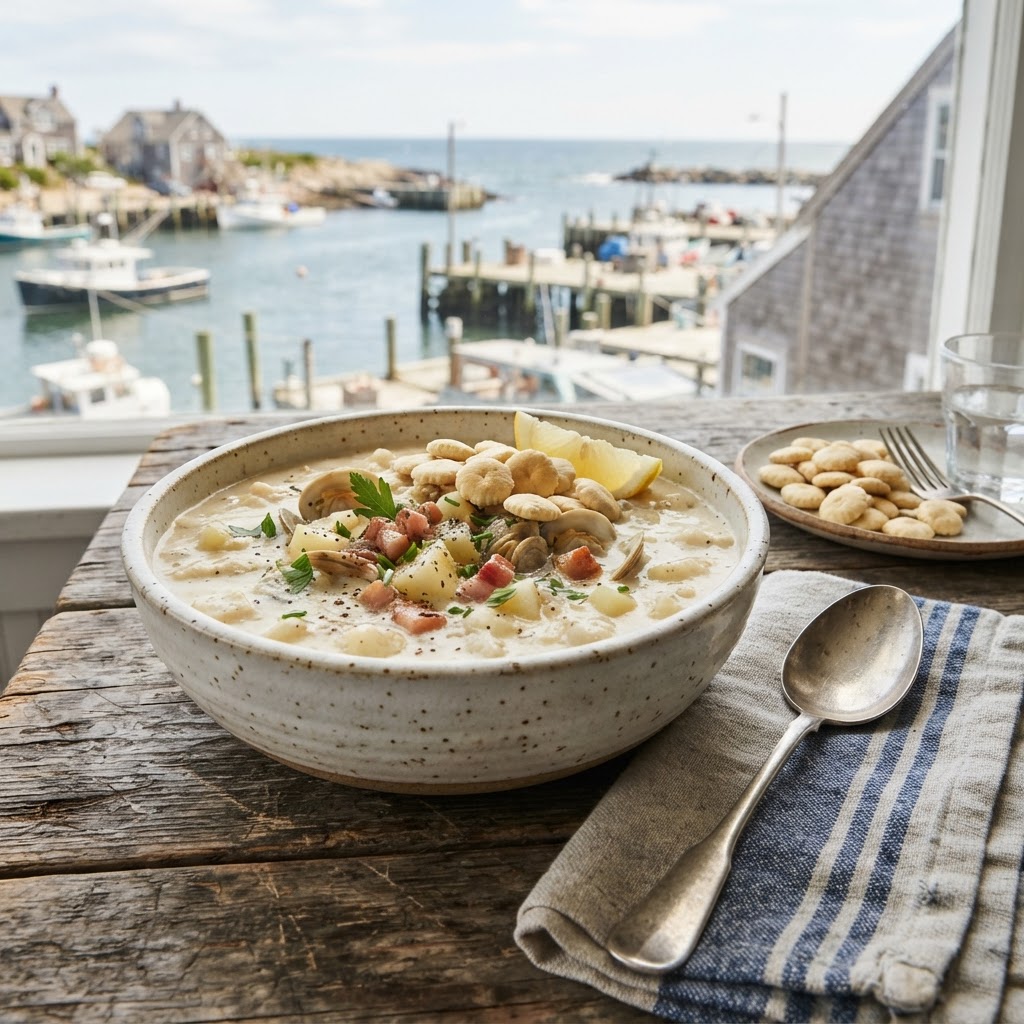
New England clam chowder — sometimes called Boston-style — is a milk- or cream-based chowder, thick and milky-white, made with clams, potatoes, salt pork, onion, and butter. Flour or, historically, crushed hardtack may be added as a thickener. It's served with oyster crackers, which you can crush and stir in or scatter on top.
The cream-based version became the dominant style along the coast of Maine, Massachusetts, and Rhode Island, where dairy farming was well established and clams were harvested in abundance from the region's mudflats and tidal estuaries. Its richness and warmth made it a natural companion to the cold, bracing climate of coastal New England. There's a reason a bowl of it on a foggy afternoon in Portland feels like the most right thing in the world.
**Manhattan Clam Chowder: The Tomato Heresy**
Manhattan clam chowder is the red, tomato-based rival — a brothy, clear soup made with clams, tomatoes, and a mirepoix of celery, carrots, and onions, seasoned with thyme. The Manhattan name was first attested in a 1934 cookbook, though tomato-based clam chowders had been published earlier, appearing in Victor Hirtzler's Hotel St. Francis Cookbook (1919) and The Delmonico Cook Book (1890).
Many sources attribute the tomato-based style to the Portuguese fishing communities of Rhode Island, who were known for their traditional tomato stews and frequently traveled to New York City's Fulton Fish Market in the mid-1800s. In Rhode Island, this style was also associated with the Rocky Point Amusement Park Shore Dinner Hall, where it was a popular menu item from the park's opening in 1847.
**The Rivalry**
The rivalry is not merely playful. In 1939, a state legislator from Maine introduced a bill that would have made it illegal to put tomatoes in clam chowder. The bill did not pass, but it remains a famous monument to the passions the debate arouses. Among New Englanders, the Manhattan version is often dismissed as chowder in name only — a tomato soup with clams, an interloper from outside the region's dairy tradition.
**The Classic New England Recipe**
- 4 cups clams, shucked and chopped, with their liquor reserved
- 4 slices salt pork or bacon, diced
- 1 large onion, diced
- 2 cups diced potatoes
- 2 cups whole milk
- 1 cup heavy cream
- 2 tablespoons butter
- 2 tablespoons flour
- Salt and white pepper to taste
- Oyster crackers for serving
Render the salt pork in a heavy pot until crisp. Add the onion and cook until softened. Add the potatoes and enough clam liquor and water to cover, and simmer until the potatoes are tender. In a separate saucepan, make a roux with the butter and flour, then whisk in the milk and cream to make a smooth béchamel. Combine the béchamel with the potato mixture, add the clams, and heat gently until the clams are just cooked. Season carefully — too much salt will overwhelm the delicate clam flavor. Serve with oyster crackers.
**The Brunch Connection**
The briny, creamy richness of New England clam chowder pairs beautifully with a crisp, acidic mimosa. A Classic Champagne Mimosa or a Grapefruit Rosemary Mimosa cuts through the dairy richness and echoes the briny freshness of the clams, while the effervescence cleanses the palate between spoonfuls. For a more aromatic pairing, a Cucumber Mint Mimosa offers a cool, herbal counterpoint to the soup's savory depth.
**References**
- Wikipedia: Clam Chowder — https://en.wikipedia.org/wiki/Clam_chowder
- Eater: A Brief History of Clam Chowder — https://www.eater.com/2016/1/31/10810568/clam-chowder-manhattan-hatteras-new-england-rhode-island-minorcan-new-jersey
- AllRecipes: New England vs Manhattan Clam Chowder — https://www.allrecipes.com/article/new-england-vs-manhattan-clam-chowder/



Continue Reading