Food & Drink
Mole Negro: The Art and Science of Mexico's Most Complex Sauce
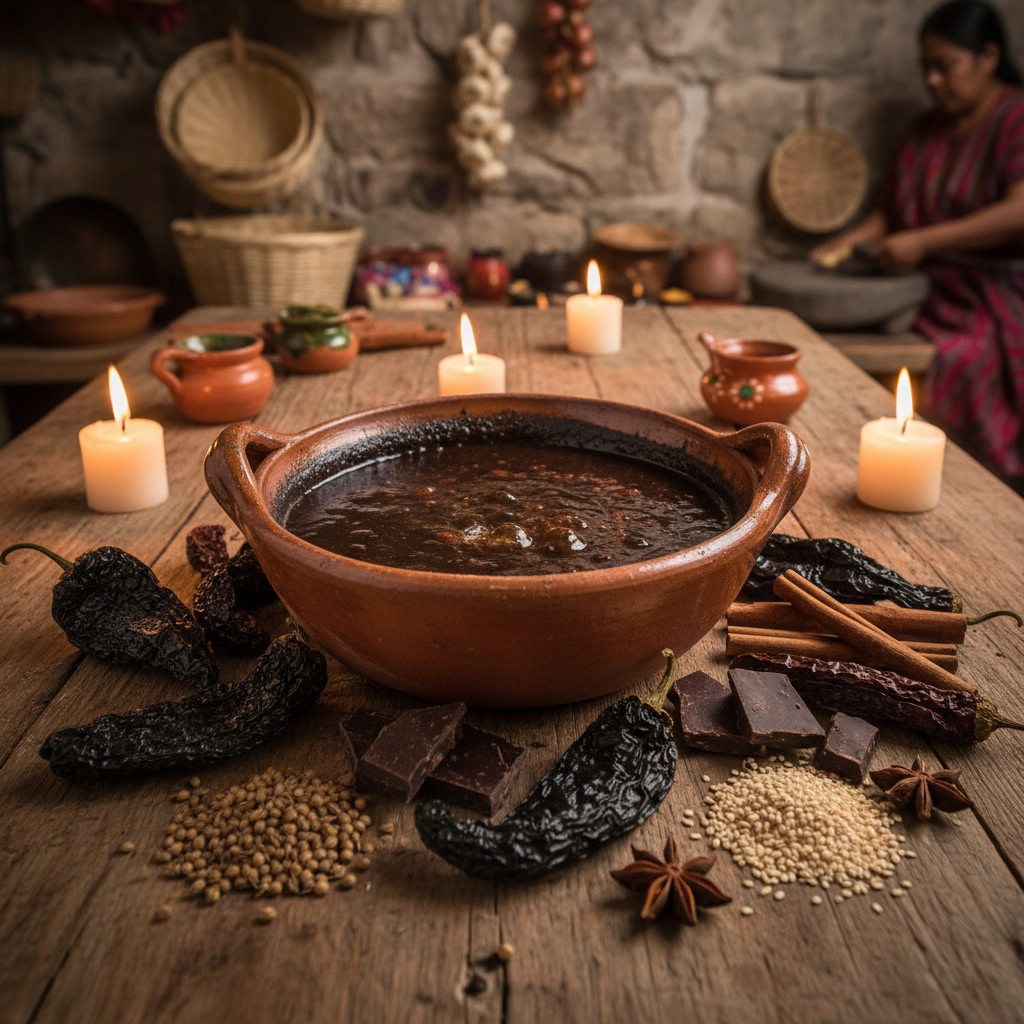
Up to 36 ingredients. Days of preparation. Dried chiles, dark chocolate, charred tortilla, spices, and time. Mole negro is the most complex sauce in world cuisine — and it is inseparable from the culture that created it.
The word 'mole' (from the Nahuatl molli, meaning sauce or mixture) encompasses a vast family of Mexican sauces — from the bright green pipián verde to the rust-red mole colorado — but when cooks speak of mole with reverence, they typically mean mole negro: the deep, dark, extraordinarily complex sauce of Oaxaca and, in its Poblano variant, of Puebla. A great mole negro may contain 36 or more distinct ingredients: at least six varieties of dried chile (mulato, ancho, pasilla negro, chihuacle negro, and mulato, among others), dark chocolate, plantain, sesame seeds, peanuts, charred dried tortilla (which serves as a thickener), almonds, raisins, cinnamon, black pepper, cumin, cloves, Mexican cinnamon (canela), avocado leaves, thyme, marjoram, and a charred onion and tomato base — all roasted, ground, and slowly simmered together for two to three days, with turkey or chicken stock added in stages as the sauce reduces and deepens.
The result is a sauce of extraordinary depth: simultaneously bitter (from the dark chocolate and charred ingredients), sweet (from the dried fruit and raisins), spicy (from the chiles, though not overwhelmingly hot), smoky (from the charring), earthy, and complex with aromatic spice. No two moles negro are identical — every family and every cook has their own inherited combination of proportions, toasting levels, and added ingredients.
**The History**
Mole's origins are pre-Columbian: the basic formula of ground seeds, dried chiles, and liquid was a foundation of Aztec and Mayan cuisine long before Spanish contact. The introduction of New World ingredients to Old World cooking (and vice versa) after 1521 dramatically expanded the sauce's vocabulary: chocolate, originally consumed as a drink in Aztec ceremony, was integrated into savoury preparations; almonds, sesame, cinnamon, and black pepper from Spain and the Silk Road routes entered the canon. The result was a fusion sauce of unprecedented complexity.
The legendary origin story — disputed by food historians but beloved in Mexican culinary culture — attributes mole negro to the nuns of the Convent of Santa Catalina de Siena in Oaxaca (or, in the Poblano variant, the Convent of Santa Rosa in Puebla), who created the elaborate sauce in honour of a visiting viceroy or archbishop in the colonial period. Whatever its precise origins, mole is now recognised by UNESCO as an Intangible Cultural Heritage of Humanity, inscribed on Mexico's behalf in 2010. Reference: ich.unesco.org
**The Seven Moles of Oaxaca**
Oaxaca is celebrated as the 'Land of Seven Moles' — a designation referring to the seven classic mole preparations of Oaxacan cuisine:
Mole Negro: The most complex and darkest — chocolate-coloured, with charred chile and chocolate characteristics predominating. Served with turkey (guajolote) traditionally; also with chicken.
Mole Coloradito: Lighter red, made primarily from ancho and pasilla chiles with less complexity than negro — a more everyday preparation.
Mole Rojo: Spicy, brick-red, typically made with mulato and ancho chiles, tomatoes, and peanuts.
Mole Amarillo: The most accessible — a yellow-orange sauce made with guajillo chiles, cumin, and Mexican oregano, often served over green beans and chayote.
Mole Verde: Herb-forward, made from fresh tomatillos, green chiles, herbs, and pumpkin seeds — the brightest and freshest of the family.
Chichilo: A rarely made Oaxacan mole that uses the charred seeds of dried chiles and the chilhuacle chile, producing a sauce of extraordinary depth.
Manchamanteles ('tablecloth stainer'): Bright red-orange, fruit-forward — containing pineapple, plantain, or both, alongside ancho chiles and almonds.
**Where to Experience the Definitive Mole**
In Oaxaca City, Casa Oaxaca (casaoaxaca.com.mx) — chef Alejandro Ruiz's flagship restaurant in the Jalatlaco neighbourhood — serves a mole negro of remarkable fidelity to traditional technique, alongside a mezcal list of extraordinary depth. Restaurante Los Pacos on Avenida Morelos serves one of the most authentic family-style moles in the city. The Mercado Benito Juárez and the 20 de Noviembre Market offer comedor (market stall) moles served over turkey or chicken for a fraction of restaurant prices — and frequently of equal or greater quality.
For the Mole Poblano — the Puebla variant, which typically includes a greater proportion of mulato and pasilla chiles alongside dark chocolate and is served specifically with guajolote (turkey) — the town of Puebla's historic centro is the pilgrimage destination. Fonda de Santa Clara (fondasantaclara.com) has served mole Poblano since 1965 and is considered the most reliable traditional address.



Continue Reading