Entertaining
The Mezze Spread: Levantine Hospitality at the Table
The mezze spread is the defining expression of Levantine hospitality — a table of abundant small dishes that makes every guest feel like family. In the Levant, hospitality is a sacred obligation, and the mezze table is its highest expression: generosity, abundance, and warmth.
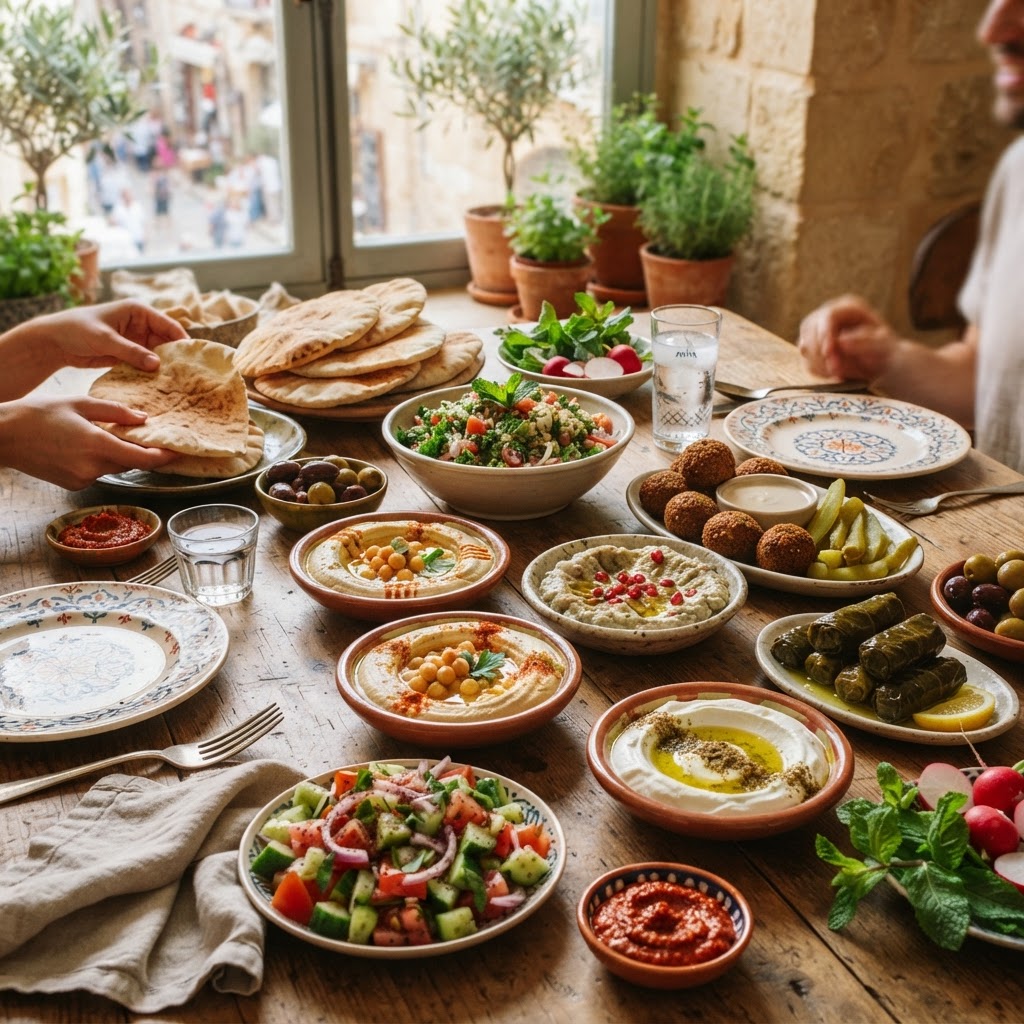
The mezze spread is the defining expression of Levantine hospitality — a table covered with an abundant array of small dishes, each one a celebration of the fresh, sun-ripened ingredients of the eastern Mediterranean. Mezze is not a course or an appetizer; it is the meal itself, a communal feast where dozens of small plates are shared, passed, and savored over hours of conversation. In the Levant — the region encompassing Lebanon, Syria, Jordan, Palestine, and Israel — hospitality is not a virtue but a sacred obligation, and the mezze table is its highest expression: a display of generosity, abundance, and warmth that makes every guest feel like family.
The Levantine Tradition
Levantine cuisine is one of the world's oldest and most celebrated food traditions, built around the agricultural bounty of a region where wheat, olives, grapes, chickpeas, and figs have been cultivated for millennia. The ancient cultures of the Levant developed complex agricultural systems producing grains, legumes, fruits, and vegetables that would become the staples of the Levantine diet. These foods were traditionally preserved using pickling, fermentation, and drying — techniques that gave rise to many of the dishes we now consider mezze. Reference: [Wikipedia — Levantine Cuisine](https://en.wikipedia.org/wiki/Levantine_cuisine)
In the Levant, hospitality is a heartfelt expression of warmth and abundance. Guests are treated like family, and hosts often prepare far more food than needed — the overflow is a sign of generosity. The Arabic word for hospitality, diyafa, implies not just welcoming a guest but overwhelming them with care and food. The mezze table is the physical manifestation of this philosophy: the more dishes, the greater the honor shown to the guest. Reference: [SHMS — Middle Eastern Hospitality](https://www.shms.com/en/news/middle-eastern-hospitality/)
The Mezze Table
A proper mezze spread offers a balance of textures, temperatures, and flavors — creamy and crunchy, hot and cold, tangy and sweet. The essential dishes include:
**Hummus** — the most famous mezze, a creamy purée of chickpeas, tahini (sesame paste), lemon juice, garlic, and olive oil. The quality of the tahini and the olive oil determines the quality of the hummus. Reference: [7 Spices — Mezze Journey](https://www.7spices.us/post/the-mediterranean-mezze-journey-savoring-history-through-every-bite-of-mediterranean-food)
**Baba Ganoush** — smoky roasted eggplant puréed with tahini, garlic, and lemon. The eggplant should be charred over an open flame until the skin is blackened, giving the dish its characteristic smokiness.
**Tabbouleh** — a vibrant parsley salad with bulgur wheat, tomato, cucumber, mint, lemon, and olive oil. In the authentic Lebanese version, parsley dominates — the bulgur is a garnish, not the base.
**Falafel** — deep-fried balls or patties of ground chickpeas or fava beans with herbs and spices. In Egypt and some parts of the Levant, falafel is made entirely from fava beans; in most of the Levant, chickpeas are used.
**Labneh** — strained yogurt cheese, drizzled with olive oil and sprinkled with dried mint or za'atar.
**Stuffed Grape Leaves (Warak Enab)** — grape leaves rolled around a filling of rice, herbs, and sometimes ground meat.
**Muhammara** — a roasted red pepper and walnut dip from Aleppo, Syria, with pomegranate molasses and chili.
**Fattoush** — a salad of mixed greens, tomato, cucumber, radish, and crisp pieces of pita, dressed with a sumac and lemon vinaigrette.
**Olives and Pickled Vegetables (Mukhalal)** — marinated olives and pickled turnips, cucumbers, and peppers.
**Pita Bread** — warm, fresh pita, the essential vessel for scooping and dipping.
The Beverages
**Arak** — the traditional anise-flavored spirit of the Levant, distilled from grapes and flavored with anise seeds. Arak is served with water and ice, which turns the clear spirit milky white (the 'louche' effect). It is the classic accompaniment to a mezze table. Reference: [Arak](https://en.wikipedia.org/wiki/Arak_(drink))
**Lebanese Wine** — Lebanon has one of the oldest wine traditions in the world, dating to the Phoenicians. A Lebanese red — such as a Château Musar from the Bekaa Valley — is an excellent pairing. Reference: [Château Musar](https://www.chateau-musar.com)
**Mint Lemonade (Limonada)** — fresh lemonade with crushed mint, a refreshing non-alcoholic option.
For a brunch-appropriate version, a sparkling mimosa — particularly one with floral or citrus notes — echoes the bright, fresh flavors of the mezze table and provides a celebratory effervescence.
Hosting a Mezze Party
The mezze table is inherently generous — the goal is abundance, not precision. Set a large table with small bowls and plates distributed across it, each holding a different dish. Provide warm pita in baskets, replenished throughout the meal. The mezze is served all at once, family-style, and guests help themselves. The meal unfolds slowly — mezze is not a race but a leisurely grazing over hours of conversation. Pour arak or wine, and let the table do the entertaining.
Reference Links:
- Levantine cuisine: en.wikipedia.org/wiki/Levantine_cuisine
- Mezze history: 7spices.us/post/the-mediterranean-mezze-journey-savoring-history-through-every-bite-of-mediterranean-food
- Middle Eastern hospitality: shms.com/en/news/middle-eastern-hospitality
- Hummus: en.wikipedia.org/wiki/Hummus
- Arak: en.wikipedia.org/wiki/Arak_(drink)
- Château Musar: chateau-musar.com
- Lebanese tourism: discoverlebanon.com



Continue Reading