Food & Drink
Mezcal & the Artisanal Spirits of Oaxaca: A Guide to Mexico's Most Complex Drink
Before tequila, there was mezcal — the original agave spirit, still made in small batches in the mountains of Oaxaca using methods unchanged for centuries. This is the guide to understanding it.
All tequila is mezcal, but not all mezcal is tequila. This is the essential distinction: mezcal is the broader category — any distilled spirit made from agave — while tequila is a protected designation of origin requiring production from Blue Weber agave (Agave tequilana) in specific Mexican states. Mezcal, by contrast, may be produced from any of approximately 40+ agave varieties across nine Mexican states, though Oaxaca accounts for roughly 85% of all certified mezcal production. The result is a category of extraordinary diversity: from the relatively mild and approachable to the intensely smoky, minerally complex expressions that have made mezcal the defining craft spirit of the past decade.
**The Production Process**
The character that most distinguishes mezcal from tequila is the roasting of the agave piña (heart) before fermentation. In traditional production, piñas are cooked in conical earthen pits (palenques) lined with hot rocks and covered with agave fibre and earth — a process lasting three to five days that imparts the characteristic smoky, earthy quality to the spirit. After roasting, the piñas are crushed (traditionally by a horse-drawn tahona stone mill), fermented in open wooden or clay vessels using wild airborne yeasts, and distilled in clay or copper pot stills.
The Consejo Regulador del Mezcal (CRM, crm.org.mx) governs certification and classification. Mezcal is classified as Artesanal (traditional methods), Ancestral (most traditional — clay pot distillation, stone mills), or Industrial. Virtually all mezcal of serious quality falls into Artesanal or Ancestral categories.
**The Agave Varieties**
The agave plant takes 7 to 30+ years to mature before harvest — at which point the plant dies, producing a single lifetime's worth of fermentable sugars. Different varieties produce dramatically different spirits:
Espadín (Agave angustifolia) is the most cultivated variety — accounting for approximately 90% of mezcal production — producing accessible, moderately smoky spirits that represent the gateway to the category. Excellent Espadín mezcal is produced by Vago (mezcalvago.com), whose single-palenquero bottlings are benchmarks of transparency and quality.
Tobalá (Agave potatorum) grows wild in the mountains of Oaxaca at high elevations, matures over 12–15 years, and produces a delicate, floral, mineral spirit that is among the most sought-after expressions in the category. Tosba (tosba.com.mx) and Real Minero (realminero.com.mx) produce exceptional Tobalá.
Tepeztate (Agave marmorata) requires 25 or more years to mature and produces a profoundly complex, herbal, and almost vegetal spirit — rare, expensive, and considered by experts one of the most distinctive spirits produced anywhere in the world.
Madre Cuixe, Arroqueño, Mexicano, and Jabalí represent further wild-harvest varieties of extraordinary character, produced in very small quantities by specialist producers.
**The Best Producers**
El Silencio (elsilenciomezcal.com) offers an approachable, widely available entry point. Los Danzantes (losdanzantes.com) in Oaxaca City operates both a distillery and restaurant, offering tours and tastings. Alipús (alipus.com), a collaboration with renowned producer El Señorío, produces consistent, well-priced Espadín. At the premium end: Koch el Mezcal (kochmezcal.com),Putaendo, and the single-batch expressions from Wahaka Mezcal (wahakamezcal.com) — particularly their Madre Cuixe — represent the category at its most complex and terroir-driven.
**How to Drink It**
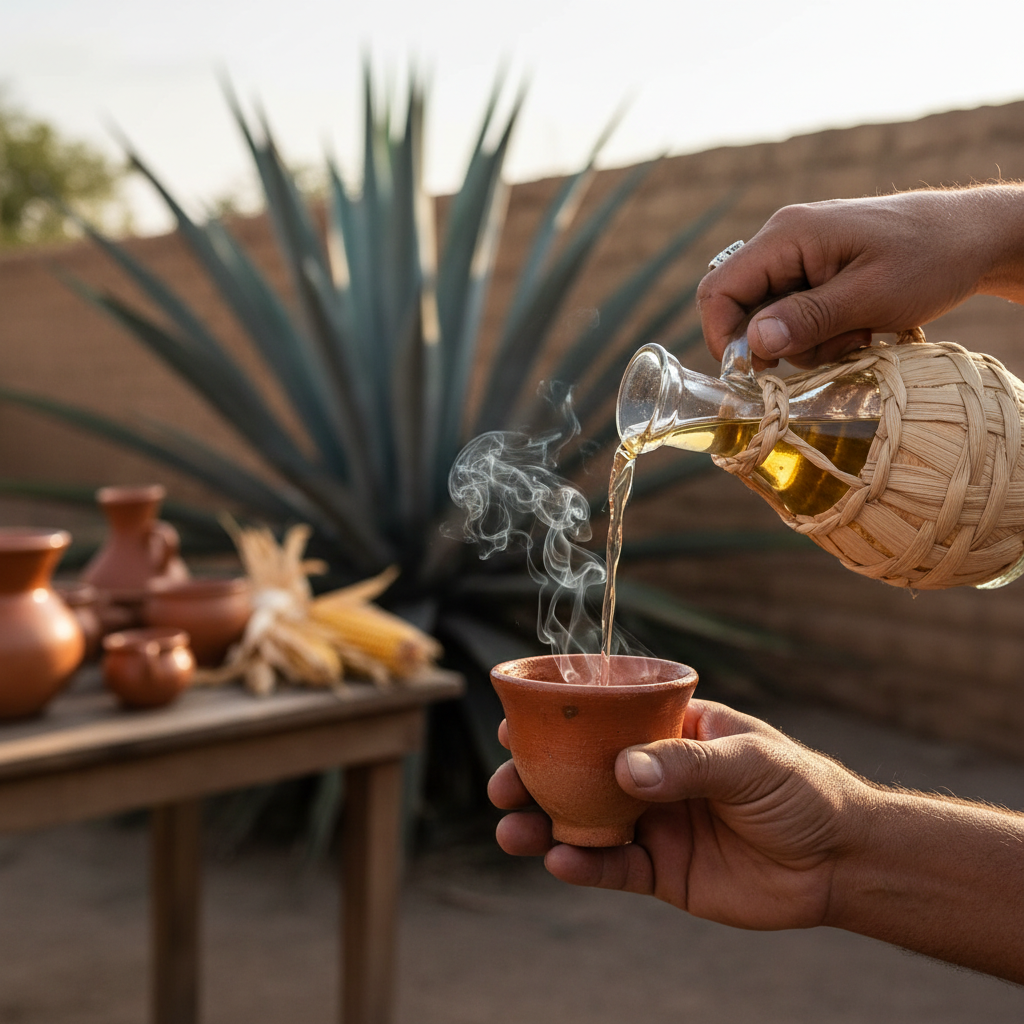
Mezcal should be sipped from a clay copita or a wide-mouthed glass — never a shot, which wastes the aromatics. Serve at room temperature. Traditional accompaniments: sal de gusano (worm salt — dried moth larvae mixed with salt and chili, providing an umami counterpoint to the smoke) and orange slices. Water alongside is appropriate; ice is optional in cocktail applications.
**In Oaxaca**
The Zócalo and adjacent streets of Oaxaca City are lined with mezcalerías offering flights of rare expressions: El Destilado (eldestilado.com) on Calle Constitución is among the most knowledgeable. In-Situ on Calle Murguía offers over 200 expressions from micro-producers. The surrounding villages — Matatlán (the self-proclaimed 'World Mezcal Capital'), Miahuatlán, and Santa Catarina Minas — are accessible for distillery visits with advance arrangement.



Continue Reading