Entertaining
The Lowcountry Boil: A Southern Coastal Feast Born in South Carolina
The Lowcountry Boil — also known as Frogmore Stew or Beaufort Stew — is the quintessential one-pot Southern coastal feast. Born in the Gullah-Geechee tradition of the South Carolina Lowcountry in the 1960s, this communal meal of shrimp, sausage, corn, and potatoes is the easiest and most convivial way to feed a crowd.
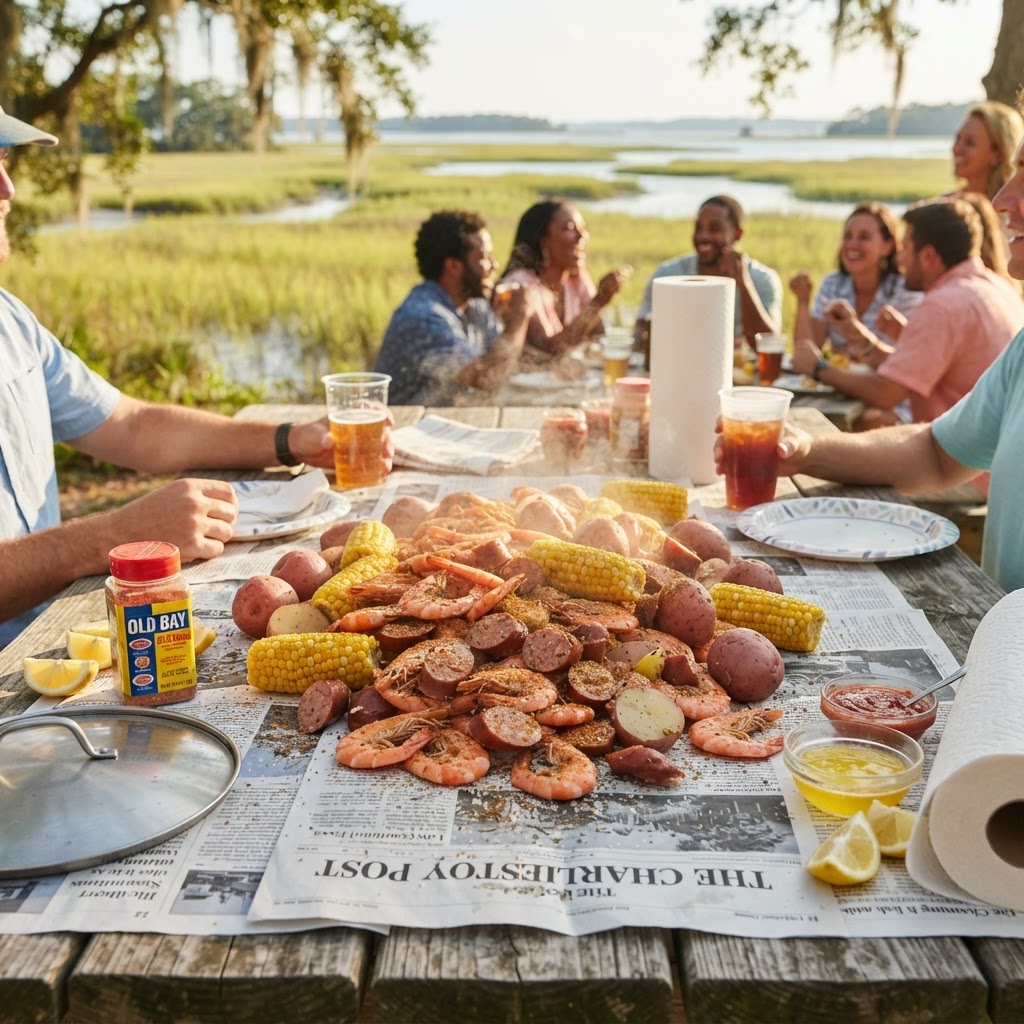
The Lowcountry Boil — also known as Frogmore Stew or Beaufort Stew — is the quintessential one-pot meal of the South Carolina and Georgia coast. A communal feast of shrimp, smoked sausage, corn on the cob, and red potatoes, all boiled together in a single large pot with a generous dose of Old Bay or crab boil seasoning, the Lowcountry Boil is the easiest, most convivial, and most deeply Southern way to feed a crowd. Served dumped directly onto a newspaper-covered table, it is a meal that brings people together in the most literal sense — everyone gathers around the same pile of food, peeling shrimp and breaking corn together.
The Origins: Frogmore Stew
The dish's original name, Frogmore Stew, comes from the community of Frogmore on St. Helena Island in Beaufort County, South Carolina — part of the Sea Islands that form the heart of the Gullah-Geechee cultural corridor. According to the most widely accepted origin story, the dish was created in the 1960s by Richard Gay, a National Guard member who was looking for a way to cook a large meal for his fellow guardsmen. He combined shrimp, local sausage, sweet corn, and red potatoes in a single pot, and the dish was an immediate hit. The Gay family owned the Gay Fish Company, a seafood market and restaurant on St. Helena Island, where the dish was served to locals and visitors. Reference: [Kiawah River — History of Frogmore Stew](https://kiawahriver.com/southern-palate-the-history-of-frogmore-stew/)
The name 'Frogmore Stew' is a registered trademark, which is why the dish is more commonly called 'Lowcountry Boil' on restaurant menus and in general usage. The community of Frogmore was later renamed to 'Frogmore' and is part of the Penn Center National Historic Landmark District, one of the first schools for formerly enslaved people, established in 1862. Reference: [Levine Museum — Frogmore Stew](https://www.museumofthenewsouth.org/southern-tables/frogmore-stew/)
The Gullah-Geechee Connection
The Lowcountry Boil has deep roots in the foodways of the Gullah-Geechee people — the descendants of enslaved West Africans who worked the rice plantations of the South Carolina and Georgia Lowcountry. The Gullah-Geechee developed a distinct cuisine based on rice, seafood (especially shrimp and crab), and one-pot cooking methods that trace directly to West African culinary traditions. The Lowcountry Boil is a direct descendant of these traditions — a simple, communal meal built around the abundant seafood of the coastal waters. Reference: [Local Life SC — Palmetto State Dishes](https://www.locallifesc.com/the-stories-behind-the-palmetto-states-most-beloved-dishes/)
The Ingredients
The beauty of the Lowcountry Boil lies in its simplicity. The ingredients are few, but each plays an essential role:
**Shrimp** — the star of the dish. Use head-on, shell-on wild-caught Georgia or South Carolina white or brown shrimp if possible. The shells add flavor to the broth, and the heads (if you can find them) add an extraordinary richness. Reference: [Georgia Shrimp](https://www.wildgeorgianshrimp.com)
**Smoked Sausage** — Andouille sausage is traditional, reflecting the French and Spanish influences on Southern cuisine. A good smoked kielbasa is an acceptable substitute. The sausage should be cut into 2-inch pieces.
**Corn on the Cob** — sweet corn, snapped in half. The corn absorbs the seasoning and the shrimp flavor.
**Red Potatoes** — small red potatoes, halved. They are added first because they need the longest cooking time.
**Seasoning** — Old Bay Seasoning (the classic Maryland crab boil blend) or Zatarain's Crab & Shrimp Boil. The seasoning gives the boil its characteristic spicy, savory flavor.
**Optional additions** — crawfish, crab legs, or lobster tails can be added for a more elaborate feast. Some versions include onions, garlic, and lemons.
The Method
The Lowcountry Boil is cooked in a single large pot — ideally a 20-quart or larger stockpot with a drain basket, or an outdoor propane-fired boiler (turkey fryer setups work well). The order of cooking is essential: potatoes go in first (they need 15-20 minutes), then sausage (10 minutes), then corn (5 minutes), then shrimp (2-3 minutes, just until they turn pink). Overcooked shrimp are rubbery and ruin the dish.
Once everything is cooked, the drain basket is lifted out and the entire contents are dumped onto a table covered with several layers of newspaper. No plates — everyone gathers around, peels their own shrimp, and eats with their hands. Cocktail sauce, melted butter, hot sauce, and crusty bread are the only accompaniments needed.
Hosting a Lowcountry Boil Party
The Lowcountry Boil is the ideal outdoor party food. Set up the cooking station outdoors on a propane burner. Cover a long folding table with newspaper (several layers thick — the paper absorbs the liquid and can be rolled up and discarded at the end). Provide large bowls for shells, small bowls of melted butter and cocktail sauce, rolls of paper towels, and plenty of cold drinks.
The beverage pairings for a Lowcountry Boil are simple: cold beer (a crisp lager like Budweiser or a local Southern craft beer), iced tea (sweet tea, of course), and — for a brunch-appropriate option — mimosas. The acidity and effervescence of a classic Champagne mimosa is an excellent counterpoint to the spicy, savory richness of the boil.
Reference Links:
- Frogmore Stew history: museumofthenewsouth.org/southern-tables/frogmore-stew
- History of Frogmore Stew: kiawahriver.com/southern-palate-the-history-of-frogmore-stew
- South Carolina dishes: locallifesc.com/the-stories-behind-the-palmetto-states-most-beloved-dishes
- Gullah Geechee Cultural Heritage Corridor: gullahgeecheecorridor.org
- Old Bay Seasoning: mccormick.com/old-bay
- Penn Center: penncenter.com
- South Carolina Tourism: visitsouthcarolina.com



Continue Reading