Entertaining
How to Build the Perfect Cheese and Charcuterie Board
The charcuterie board has become the defining centerpiece of modern entertaining — a generous, beautiful spread that requires no cooking, scales effortlessly from two to twenty guests, and rewards every investment in quality ingredients.
The charcuterie board — or cheese board, grazing board, or antipasto platter, depending on emphasis — is the modern host's most versatile tool: a self-contained, no-heat-required spread that communicates abundance, thoughtfulness, and a genuine knowledge of ingredients. At its finest, it is a miniature course of serious gastronomy. At its most casual, it is the best possible accompaniment to a glass of wine and good conversation.
The Fundamentals: The Rule of Three, Three, Three
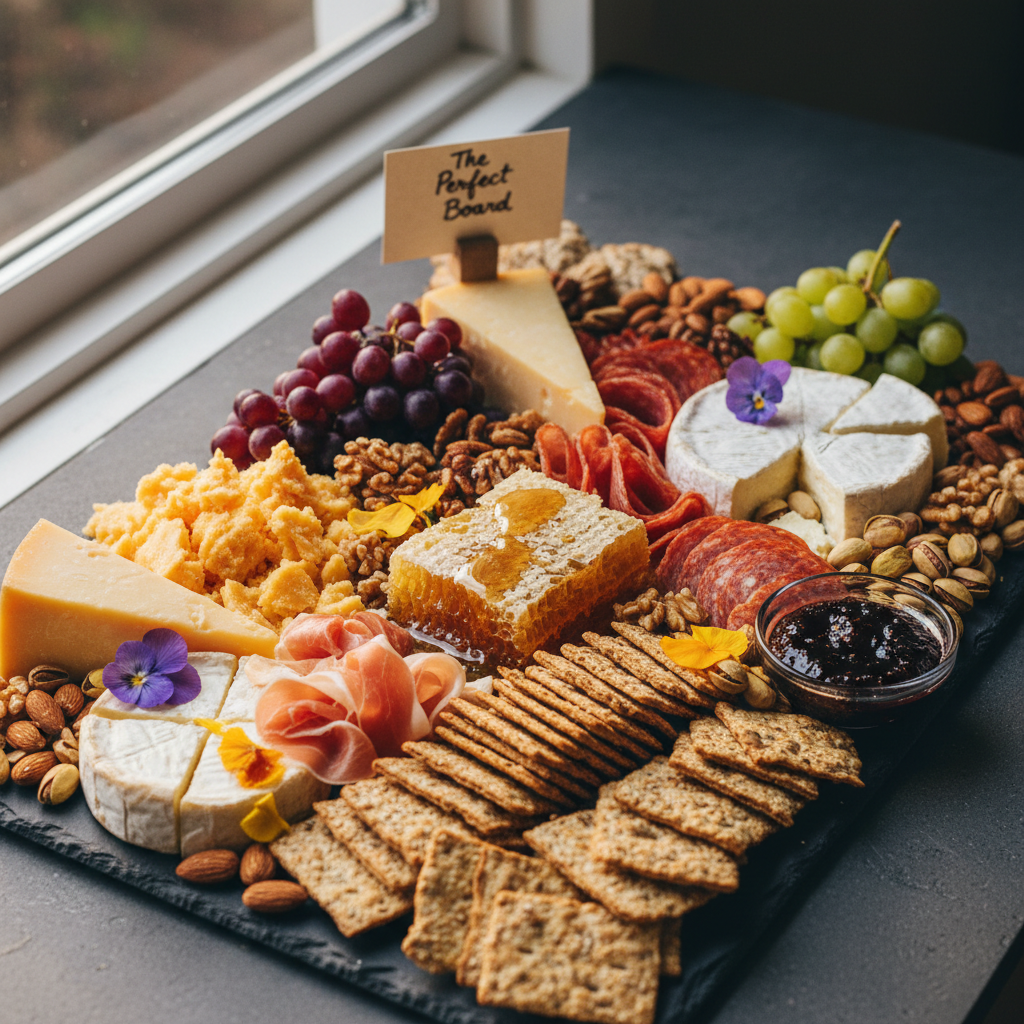
The most reliable formula for an excellent board is three cheeses, three charcuterie items, and three accompaniments — a framework that ensures variety without overwhelming.
For cheese, cover the three key textures: soft (brie, camembert, burrata), semi-firm (comté, manchego, gruyère), and aged/firm (aged cheddar, parmesan, pecorino). A blue (gorgonzola, stilton, roquefort) is optional but adds dramatic flavor contrast. Murray's Cheese (murrayscheese.com) in New York and Cowgirl Creamery (cowgirlcreamery.com) in California are the two most celebrated specialty cheese retailers in the US, offering exceptional selections with online delivery. The best cheese is always bought from a counter, not pre-wrapped.
For charcuterie, the classic Italian trinity works universally: prosciutto di Parma (sweet, delicate, paper-thin — fold into rosettes for visual elegance), salami (soppressata, finocchiona, or the Venetian soppressa are ideal), and coppa or bresaola (cured beef, leaner, with a different textural counterpoint). Eataly (eataly.com) and Salumeria Biellese (salumeriabiellese.com) are the finest US sources for authentic Italian salumi.
For accompaniments, think contrast: sweet (honeycomb, fig jam, membrillo/quince paste), acidic (cornichons, pickled grapes, mostarda), and crunchy (crackers, toasted walnuts, marcona almonds). The Sweet Farm (thesweetfarm.com) and Marin French Cheese (marinfrenchcheese.com) offer extraordinary American artisan products.
The Board Itself
A large wooden board (olive wood, walnut, or acacia) or a slate tile is the ideal base. For a party of 6–8, a 18×24 inch board is the practical minimum. The arrangement should feel generous but not chaotic: place cheeses first (one per corner and one in the centre), then fill gaps with charcuterie, then scatter accompaniments into remaining spaces. Edible flowers (viola, nasturtium, or borage — available from specialty grocers or Whole Foods) add colour and a note of refinement that photographs beautifully.
The Pairing: What to Drink
The classic board pairing is wine — a dry white (Sancerre, Chablis, Vermentino) with soft cheeses; a medium-bodied red (Beaujolais cru, Barbera d'Asti) with aged charcuterie; a sweet wine (Sauternes, Moscato d'Asti) with blue cheese. For a mimosa-forward brunch board, a Champagne Brut NV bridges every component: its acidity cuts through fat, its mineral character amplifies the cheese's complexity, and its effervescence provides constant textural counterpoint.
Scaling for Large Groups
For a gathering grazing board of 12–15 guests, multiply the rule of three to five cheeses, five charcuterie items, and five accompaniments. Arrange across a butcher-block kitchen island or a long table runner rather than a single board. Pre-label cheeses with small cards (wax paper name tags or slate markers from Williams-Sonoma, williams-sonoma.com) — guests appreciate knowing what they are eating.
Reference Links:
- Murray's Cheese: murrayscheese.com
- Cowgirl Creamery: cowgirlcreamery.com
- Eataly charcuterie and salumi: eataly.com
- Williams-Sonoma cheese markers: williams-sonoma.com
- Wine and cheese pairing guide: Wine Folly winefolly.com
- Whole Foods Market cheese counter: wholefoodsmarket.com



Continue Reading