Entertaining
Hanami: The Japanese Art of the Cherry Blossom Picnic
Hanami — literally 'flower viewing' — is the ancient Japanese tradition of picnicking beneath the blooming cherry blossoms, a practice that began in the Nara period, was elevated by Heian court poets, and remains one of the great outdoor entertaining rituals of the world.
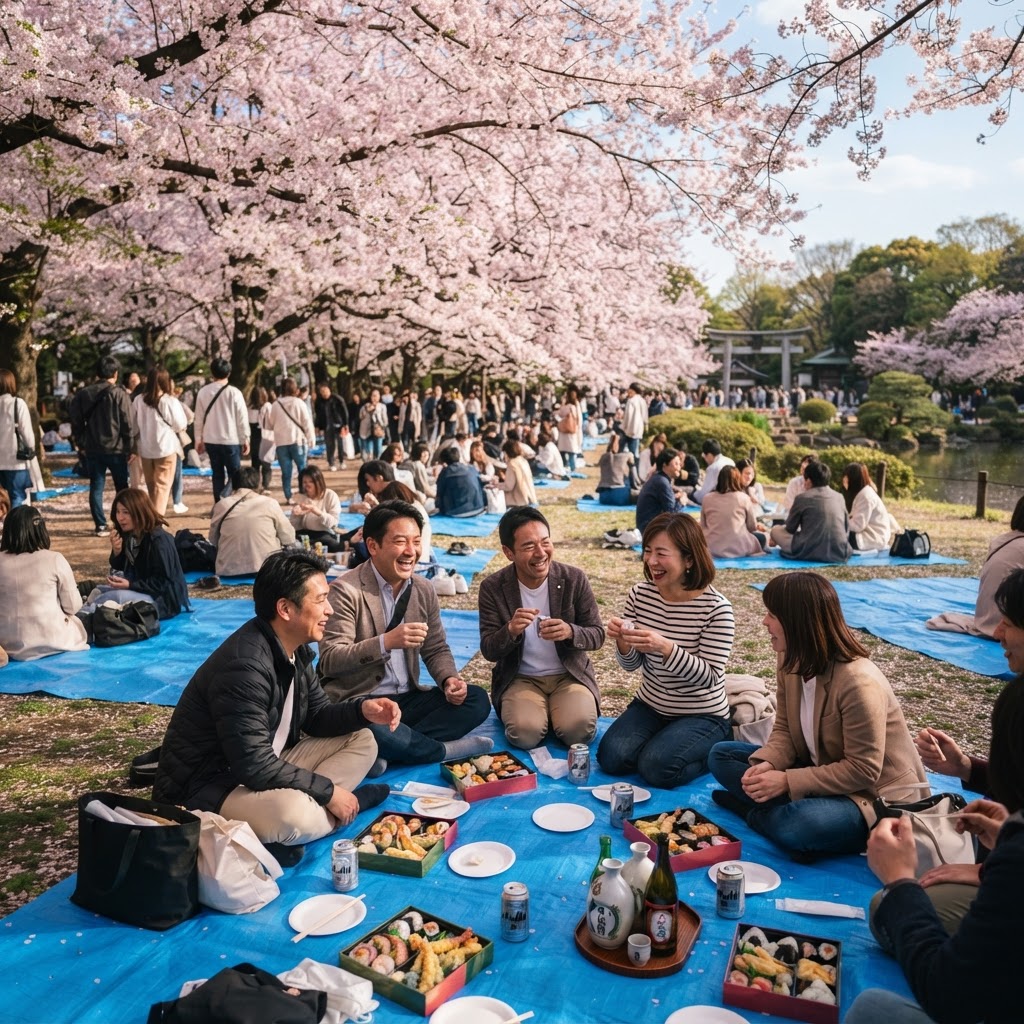
If you want to understand the Japanese genius for finding beauty in brevity, go in spring to a park in Tokyo or Kyoto and sit under the cherry trees. Hanami — literally 'flower viewing' — is the ancient Japanese tradition of gathering beneath the blooming cherry blossoms (sakura) to picnic, to drink, and to mark the arrival of spring. It is one of the great outdoor entertaining rituals of the world, and its meaning runs far deeper than its beauty.
**Origins**
As the Brooklyn Botanic Garden records, the practice of cherry blossom viewing dates to the Nara period (710-794 CE), when people in Japan celebrated the arrival of spring with cherry and plum blossom-viewing parties, and the imperial court gathered to appreciate the fleeting beauty of the delicate pink and white sakura. The custom was elevated in the Heian period (794-1185), when aristocrats wrote waka poetry beneath the blooms and the court made hanami an annual ritual. In time the practice spread from the aristocracy to the samurai and townspeople, and today people from across Japanese society congregate under the cherry trees to informally enjoy food, drink, and company with family, friends, or coworkers.
**The Picnic**
The hanami picnic is the heart of the tradition. As the Japanese Cultural Center of Hawaii notes, families and friends gather under the blooming sakura to enjoy food and drink together. The customary foods include bento box lunches, hanami dango — the three skewered rice dumplings in pink, white, and green that are the iconic sweet of the season — and sakura mochi, a pink sticky rice cake filled with sweet red bean paste and wrapped in a pickled cherry leaf. Kamaboko, the pink and white fish cake, appears for its color. College students and office workers bring sake and beer, and by evening the picnic often becomes a livelier party. In some places the trees are lit with floodlights and lanterns after dark — yozakura, the 'night sakura' — and the party goes on well into the night.
**The Ritual of the Spot**
Hanami has its own social choreography. Many workplaces send a new employee or intern to stake out a good location early in the morning or even the day before; some companies offer a half day off to reserve a spot. Families and friends arrive with plastic sheets or picnic mats spread upon the ground, and the best displays are in parks, on riverbanks, and on the grounds of medieval Japanese castles — Himeji, Ueno Park in Tokyo, the Philosopher's Path in Kyoto. Each year the cherry blossom front, the sakura-zensen, forecasts and maps the progress of the first March blooms in Okinawa, in southern Japan, northward to Hokkaido in May, and the whole country follows the forecast to plan its party.
**How to Host One**
To host a hanami picnic of your own, you need a blanket, a bento, something to drink, and cherry trees in bloom. Pack inarizushi (tofu pouches stuffed with sushi rice), tamagoyaki (rolled omelet), spring vegetables, and the season's sweets — hanami dango and sakura mochi. Bring sake or tea. The point is not the elaborateness of the spread but the act of gathering under the blossoms and the acknowledgment that the season is brief. The cherry blossoms last only a week or two before the petals fall — and it is precisely their ephemerality, the Japanese understanding that beauty is inseparable from its passing, that gives hanami its meaning.
**Why It Matters**
Hanami is the great outdoor entertaining ritual of Japan, and it encodes a worldview: that the most beautiful things are the most fleeting, that gathering to witness them is a duty, and that the changing of the seasons is the calendar by which a life is measured. To sit under the sakura is to understand one of the deepest convictions of Japanese culture.
**References**
- Wikipedia: Hanami — https://en.wikipedia.org/wiki/Hanami
- Brooklyn Botanic Garden: Hanami — Cherry Blossom Culture in Japan — https://www.bbg.org/article/hanami_cherry_blossom_culture_in_Japan
- Japanese Cultural Center of Hawaii: Japanese Traditions — Hanami — https://www.jcchawaii.org/resources/hanami
Continue Reading