Entertaining
The Fondue Party: A Convivial Swiss Tradition for Modern Entertaining
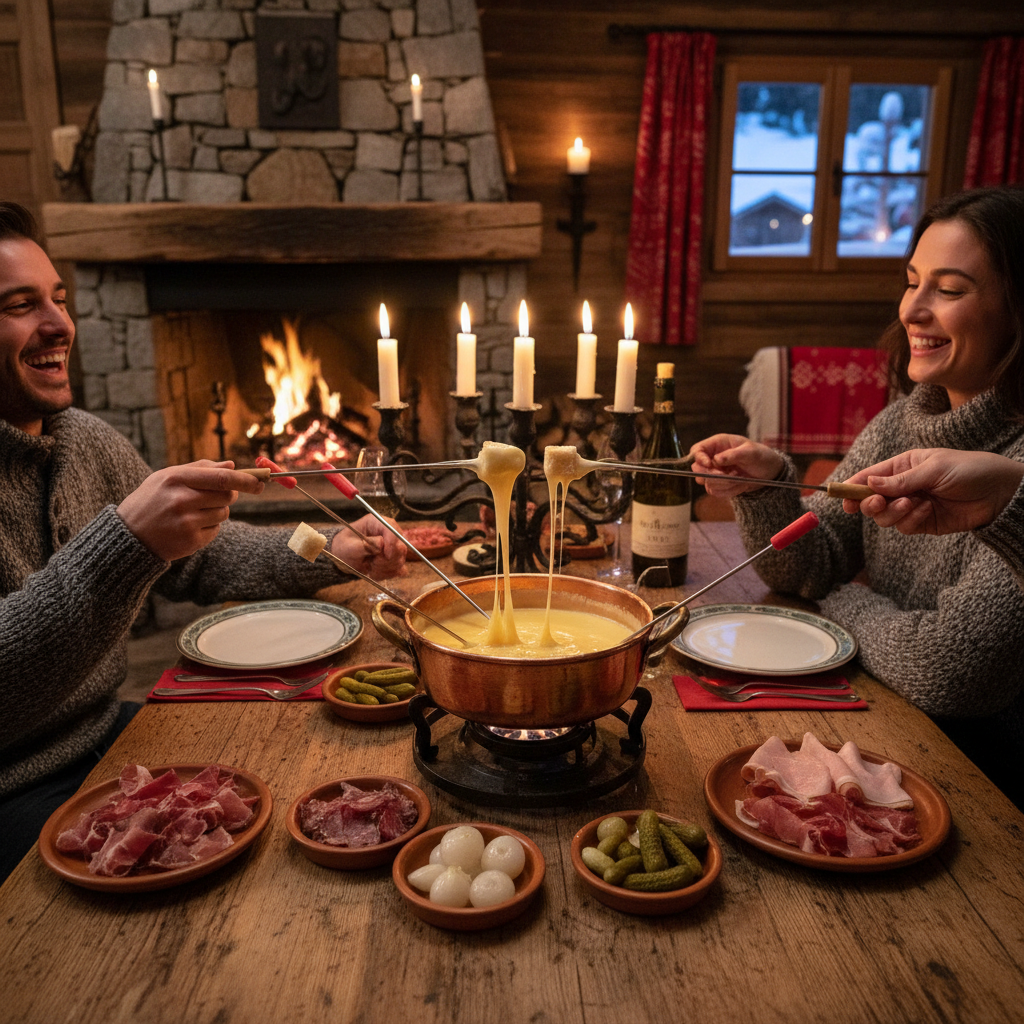
A single pot of bubbling melted cheese, long forks, and a basket of bread — fondue is, by design, the most communal of meals. It is also one of the easiest to host at home.
Few foods create the convivial atmosphere of fondue. A single pot of bubbling melted cheese at the centre of the table, long forks, a basket of bread, and a circle of guests who must all participate — fondue is, by design, the most communal of meals. It is also one of the easiest: the preparation is nearly all ahead, the cooking happens at the table, and the format demands lingering.
**The History**
Fondue's origins are Swiss and practical — a way to use hardened cheese and stale bread through the winter. The first known recipe for cheese fondue under that name appeared in a 1699 Zurich cookbook, Käss mit Wein zu kochen ("to cook cheese with wine"). The Swissmar fondue guide (swissmarshop.com) traces the evolution of the dish, and the term "fondue" — from the French fondre, to melt — was applied later, becoming a national symbol of Switzerland in the 20th century. Wikipedia's entry on fondue (en.wikipedia.org/wiki/Fondue) documents its full journey from a peasant necessity to an emblem of convivial dining.
**The Cheese**
The classic Swiss fondue combines Gruyère and Emmental (often in a roughly 50/50 ratio, or weighted toward Gruyère), grated and melted with white wine and a splash of kirsch. Food52's fondue party guide (food52.com) stresses the importance of tossing the grated cheese with a little cornstarch before melting — it stabilises the emulsion and prevents the cheese from separating into oil and solids. The pot is rubbed with a cut garlic clove before melting begins, imparting a subtle aroma without garlic pieces in the fondue itself.
**The Ritual and the Rules**
Fondue has its traditions — many of them playful. A piece of bread lost in the pot, according to the old Swiss custom, means the guest buys the next round of drinks. More practically: stir figure-eights to keep the fondue smooth, never let the pot boil, and keep the flame moderate — too hot and the cheese burns; too cool and it seizes.
**Reference Links:**
- Fondue history and tradition: Wikipedia (en.wikipedia.org/wiki/Fondue)
- History of fondue: Swissmar (swissmarshop.com)
- The ultimate guide to hosting a fondue party: Food52 (food52.com)
**Pro Tips:**
Use day-old bread — fresh bread falls off the fork. Keep a little extra warm white wine on hand to thin the fondue if it thickens. And serve dry white wine (a Fendant/Chasselas or a crisp Sauvignon Blanc) and black tea alongside — tradition holds that water with fondue causes the cheese to ball in the stomach, a folk belief that gives the pairing its logic.


Continue Reading