Fashion
The Designer Handbag Investment Guide: Which Bags Are Worth Every Penny
From the Hermès Birkin to the Bottega Veneta Andiamo, a definitive guide to the luxury handbags that hold — and grow — their value.
Few purchases in fashion straddle the line between pleasure and portfolio quite like a great handbag. In an era where stock markets fluctuate and currencies waver, a small selection of iconic bags has quietly and consistently appreciated in value — sometimes dramatically. This is your definitive guide to the bags that earn their keep.
**Why Some Bags Appreciate in Value**
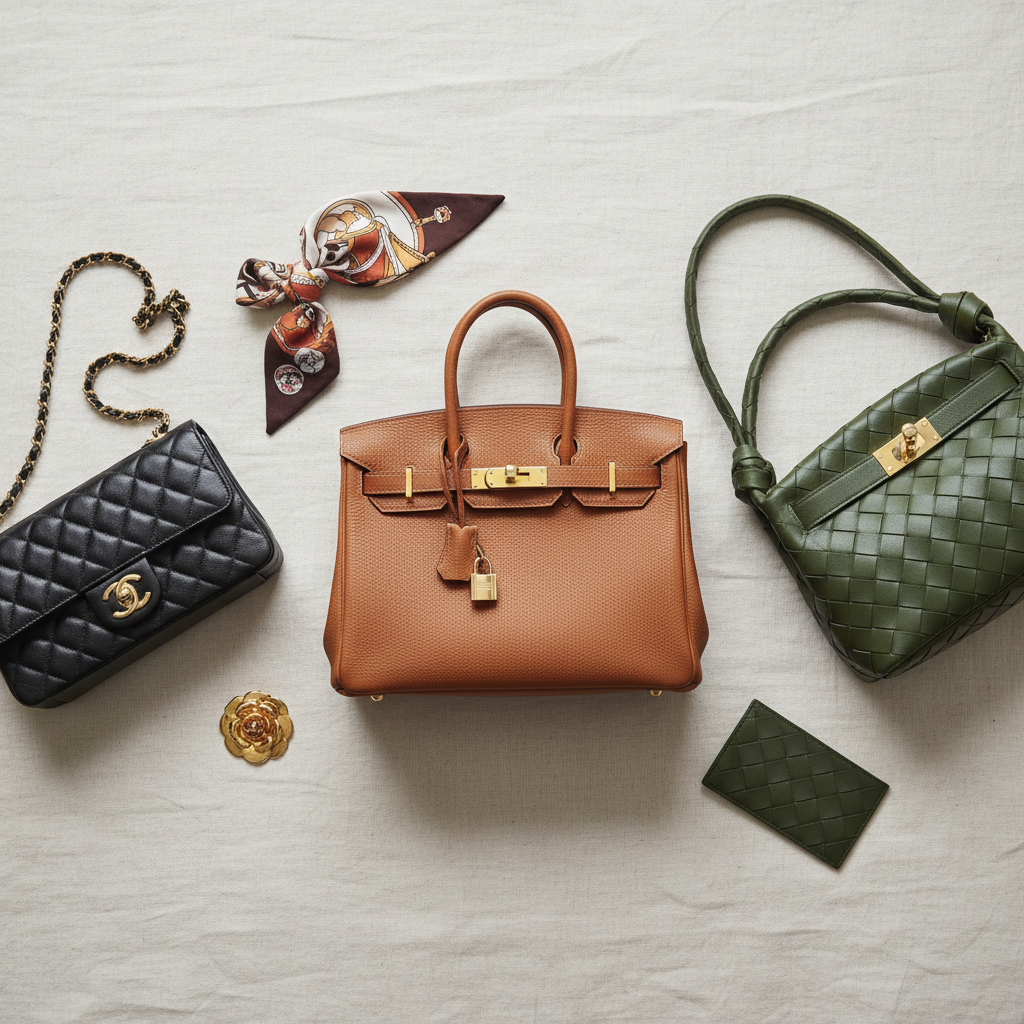
The mechanics of handbag investment are rooted in scarcity, craftsmanship, and cultural cachet. The Hermès Birkin, for instance, routinely outperforms the S&P 500 and gold on a ten-year basis — not because of speculation, but because Hermès deliberately limits production and does not discount. The result: a bag that new buyers wait years to acquire while secondary market prices compound steadily.
According to data compiled by Sotheby's and Vestiaire Collective, the top-performing handbag categories over the past decade are: Hermès (Birkin, Kelly, Constance), Chanel (Classic Flap, 2.55, Boy Bag), and a rising tier that now includes Bottega Veneta, The Row, and Loewe.
**Tier One: The Hermès Holy Trinity**
The Birkin and Kelly are the benchmark. A standard 11 ¾ in Birkin in Togo leather with palladium hardware — the 'entry-level' — starts at around $10,500 retail but trades at $20,000–$30,000 on the secondary market. Exotic skin variants (crocodile, ostrich) regularly sell at auction for $100,000+. The Constance, slimmer and more wear-everyday, is increasingly sought-after and commands 50–80% above retail in top conditions.
Buying Hermès at retail requires a relationship with a boutique and significant 'spend history' — Hermès does not simply sell Birkins to walk-in customers. If you're starting your investment journey, begin with Hermès accessories: silk scarves, belts, and small leather goods build your profile and introduce you to the maison's world. Reference: hermes.com
**The Chanel Classic Flap: Fashion's Most Reliable Store of Value**
Created in February 1955 by Gabrielle Chanel herself — hence the name the '2.55' — the Classic Flap has been repriced upward by Chanel no fewer than 27 times since 2019. A medium Classic Flap in caviar leather that cost $4,900 in 2019 now retails for approximately $10,800 in 2026. Secondary market prices track retail closely, meaning ownership cost is minimal if you buy wisely and care for the bag.
The Boy Bag, introduced by Karl Lagerfeld in 2011, is more modern and has appreciated more modestly — but its distinctive quilted-chain silhouette has proven culturally durable. The 22, the newest icon in the Chanel stable, is worth watching. Reference: chanel.com
**The Bottega Veneta Andiamo: The New-Guard Investment**
Designer Daniel Lee's tenure at Bottega Veneta — and his successor Matthieu Blazy's continuation of that vision — elevated the Italian house from beloved-by-insiders to globally coveted. The Jodie, the Sardine, and most recently the Andiamo have all commanded waiting lists and secondary market premiums. The Andiamo in particular — a structured, architectural bag in buttery intrecciato leather — is the defining investment bag of the mid-2020s. Retail: approximately $4,200; secondary market: up to $5,800 for new-with-tags examples. Reference: bottegaveneta.com
**The Row and Loewe: The Quiet Luxury Tier**
For those who prefer their investments understated, The Row's Margaux and Sofia bags have become shorthand for a particular kind of aesthetic intelligence. Prices have been rising steadily. The Row does not hold sales, does not produce look books, and guards its brand equity with the same rigour as Hermès.
Loewe under Jonathan Anderson has followed a similar trajectory: the Puzzle Bag, the Flamenco, the Squeeze — each has developed its own devoted following and secondary market. The Puzzle in smooth calfskin is particularly collectible. Reference: loewe.com
**Practical Buying Advice**
Buy new from the brand where possible — provenance and condition are everything in the resale market. Keep all authentication cards, dust bags, boxes, and receipts. Store bags stuffed with tissue paper in their dust bag, away from direct light. Avoid silicone-based conditioners, which can damage leather finishes. For authentication and resale, platforms including Vestiaire Collective (vestiairecollective.com), The RealReal (therealreal.com), and Rebag (rebag.com) offer authentication guarantees and strong buyer communities.
A final note: the best handbag investment is one you will genuinely use and love. The bags that hold their value tend to be the ones that have earned cultural permanence — which means they are, by definition, worth owning for their own sake. The financial upside is a fortunate bonus.



Continue Reading