Home
Cultivating a Living Kitchen Garden
Growing herbs, edible flowers, and seasonal vegetables at home is both grounding and extraordinarily practical — particularly for those who care about what they eat and how they entertain.
There is a particular satisfaction in snipping fresh herbs from your own garden into a dish you're cooking, or floating a sprig of your own lavender in a champagne glass. The kitchen garden — however modest, however urban — reconnects us to the rhythms of growth and season that most modern living has severed.
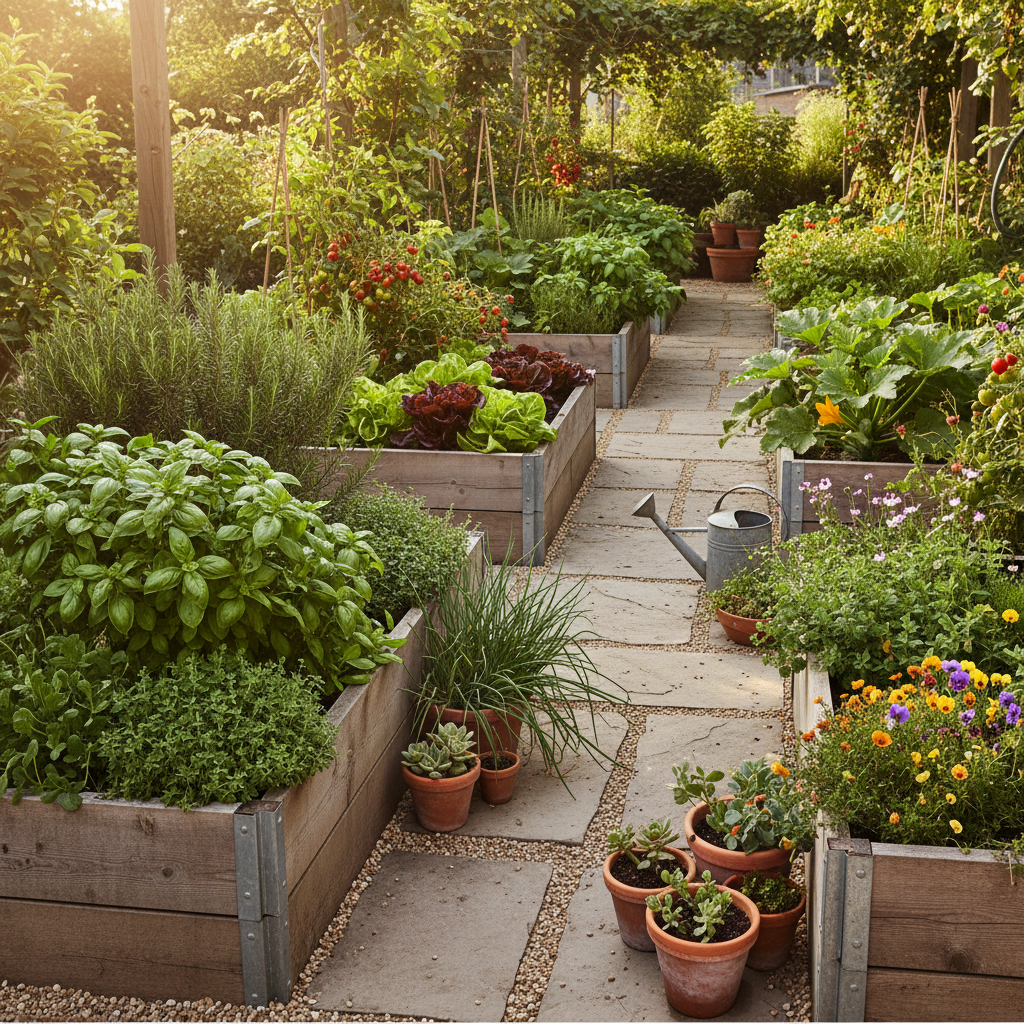
A kitchen garden need not require a garden. A sunny windowsill, a south-facing balcony, or a small terrace are all sufficient. What matters is sunlight — most herbs and many edible flowers require 4–6 hours of direct sun per day — and a commitment to regular watering.
**Essentials to grow**: Rosemary (perennial, almost indestructible), thyme, mint (always in its own pot — it will take over anything else), flat-leaf parsley, and chives form a useful flavour foundation. Add edible flowers — nasturtiums, pansies, viola, borage — for garnishes that elevate both food and cocktails. Borage flowers, with their delicate blue starshape and cucumber flavour, are particularly beautiful floating in a champagne flute.
**Seasonal vegetables**: Salad leaves (rocket, Little Gem, watercress) are the highest-reward, lowest-effort kitchen garden vegetables — cut and come again, ready in weeks. Cherry tomatoes in summer, kale in winter.
**For deeper learning**: The Royal Horticultural Society (rhs.org.uk) is an incomparable resource for UK gardeners. For those in the US, the American Horticultural Society (ahsgardening.org) provides region-specific guidance. Monty Don's 'My Garden World' (published by Two Roads) is a beautiful accompanying read.
**The Mimosa Garden Cocktail**: Grow lemon verbena and use its leaves to make a simple syrup; add fresh lemon verbena syrup, good gin or Cointreau, and champagne for a sophisticated garden-to-glass mimosa variation.



Continue Reading