Food & Drink
The Champagne Region: A Pilgrimage for the Curious Palate
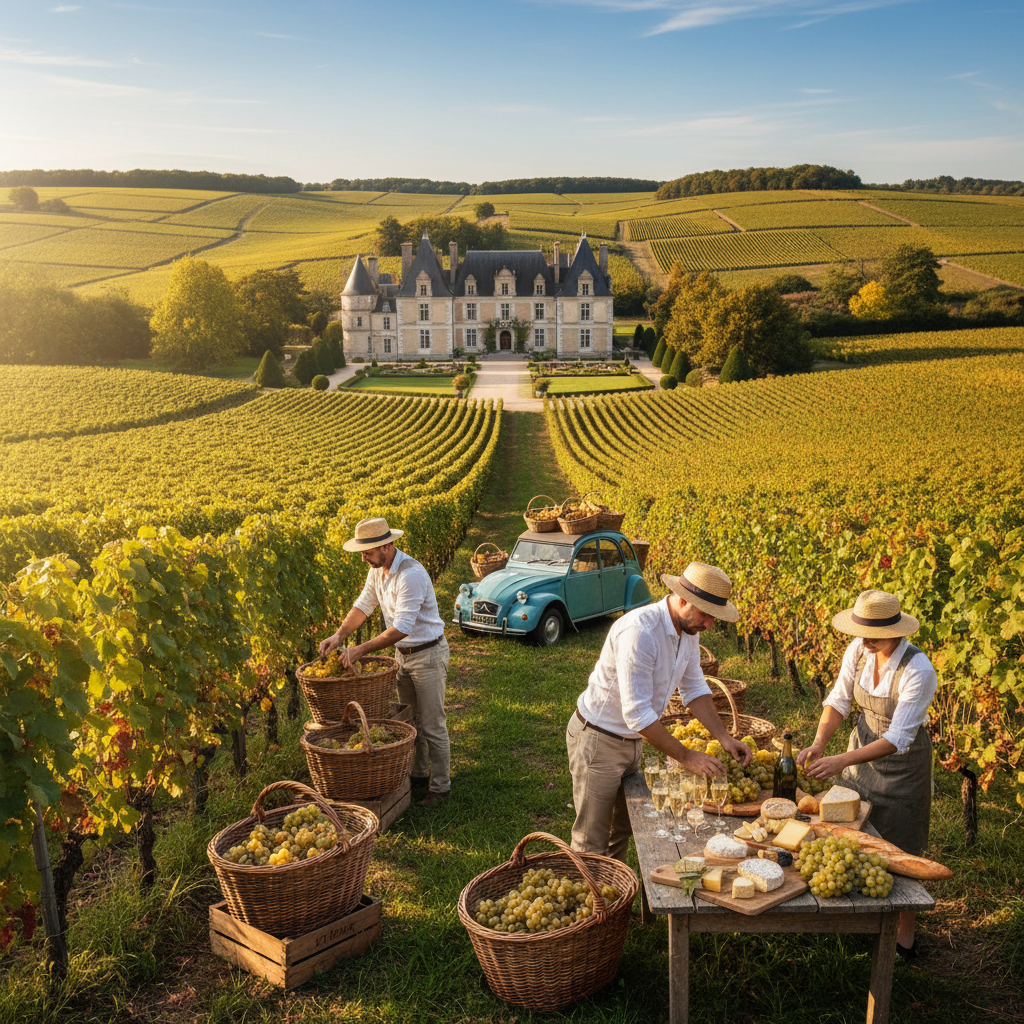
An hour east of Paris, the rolling chalk hills of the Champagne region produce the world's most celebrated wine. A guide to visiting the houses, the villages, and the vineyards.
Champagne, the region, is not merely the origin of Champagne, the wine — it is the wine's entire raison d'être. The region's unique combination of cool climate, exceptional chalk subsoil (which provides both drainage and the reflection of warmth), and centuries of accumulated technical knowledge create conditions that cannot be replicated elsewhere on earth. This is why, legally, no wine produced outside the 35,000-hectare Champagne Appellation d'Origine Contrôlée may carry the name.
**Reims and Epernay** are the two poles of any Champagne visit. Reims, with its magnificent Gothic cathedral where French kings were crowned, houses many of the great Champagne maisons — Taittinger (taittinger.com), Pommery (pommery.com), and Veuve Clicquot (veuve-clicquot.com) all offer cellar tours of extraordinary depth and atmosphere. The Taittinger tour descends into the original chalk cellars of Saint-Nicaise Abbey — a subterranean experience of extraordinary atmosphere.
Epernay's Avenue de Champagne is arguably the most extraordinary kilometre of road in the wine world — the entire street lined on both sides by the great Champagne houses: Moët & Chandon (moet.com), Perrier-Jouët (perrier-jouet.com), Pol Roger. Most offer tours and tastings.
**The Villages**: Beyond the grandes maisons, the Champagne villages — Hautvillers, where Dom Pérignon is buried; Bouzy, famous for its pinot noir still wine; the Grand Cru villages of Épergny and Verzy — offer a quieter, more personal encounter with the wine. Small-grower champagnes (Recoltant-Manipulant) from producers like Egly-Ouriet and Bereche et Fils are among the most thrilling wines in the world.
**Where to Stay**: Les Avises (champagne-selosse.com) — the hotel and restaurant operated by the legendary Jacques Selosse — is the most coveted address in the region. For a more accessible option, the Villa Eugene (villa-eugene.com) in Epernay occupies a beautiful 19th-century mansion with exceptional hospitality.
**The Mimosa in Champagne Country**: Order a mimosa in a Champagne village and you may receive a puzzled look — the locals simply drink the real thing, unembellished. But a Champagne mimosa made with locally pressed apple juice and a glass of grower Champagne is a quietly perfect act of regional synthesis.



Continue Reading