Entertaining
The Art of the Wine and Cheese Evening: A Host's Guide to the Perfect Pairing Night
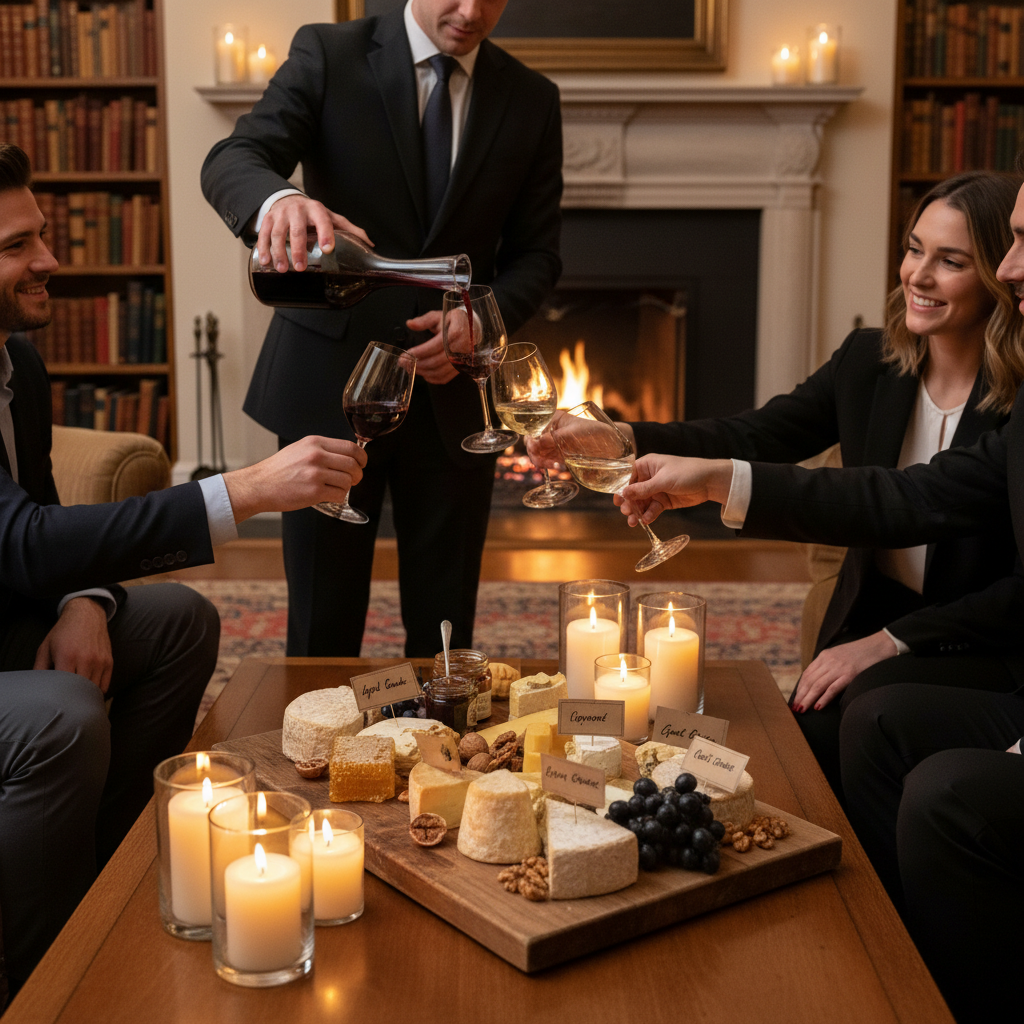
A wine and cheese evening is one of the most elegant and most accessible forms of sophisticated home entertaining — a structured exploration of flavour that doubles as one of the finest conversations a group of friends can have.
The wine and cheese evening is a masterclass in the pleasure of contrast and harmony — an event that simultaneously educates, delights, and creates the particular intimacy that comes from sharing a sensory experience with people you care about. It requires no cooking, minimal equipment, and an investment of principally time and curiosity. Done well, it is among the most memorable things you can offer your guests.
The Concept: Structured Exploration vs. Informal Abundance
There are two valid approaches to the wine and cheese evening:
The Structured Tasting: Six to eight carefully chosen pairings, presented in a specific order (light to full-bodied wines, fresh to aged cheeses), with brief notes on each pairing provided to guests. This format — modeled on professional wine education from WSET (wset.co.uk) and Court of Master Sommeliers (mastersommeliers.org) events — creates genuine learning and memorable discussion. Provide printed tasting cards (simple cards with wine name, producer, and cheese name, from Minted, minted.com) and ask guests to rate each pairing.
The Informal Abundance: A generous spread of cheeses and charcuterie accompanied by an open selection of wines, with guidance from the host but no formal structure. Relaxed, flexible, and entirely appropriate for a casual gathering.
The Classic Pairings: A Reference Guide
The foundational principle of wine and cheese pairing is regional affinity: wines and cheeses from the same place have evolved to complement each other. Beyond this, the secondary principle is textural contrast: rich, fatty cheeses are amplified by acidic wines; tangy, sharp cheeses are softened by sweet wines.
Fresh Goat Cheese (Chèvre) + Sancerre or Pouilly-Fumé: The classic Loire Valley pairing. The Sauvignon Blanc's citrus acidity and mineral character cut through the fresh chèvre's lactic richness perfectly. Henry Pellé Sancerre (henrypelle.com) is a consistently excellent producer.
Aged Comté + White Burgundy (Chardonnay): The Jura cheese with a wine from the adjacent Burgundy region — both express similar earthy, nutty, mushroom-like terroir notes. Comté aged 24 months + Meursault is among the great cheese and wine pairings on earth.
Stilton + Vintage Port: The English classic. The blue cheese's pungent, salty intensity is tempered and amplified by the Port's sweetness and dried fruit complexity. Graham's 20 Year Old Tawny Port (grahams-port.com) is the standard recommendation.
Brie de Meaux + Champagne: Champagne's acidity and effervescence cut through the brie's creamy richness while the brioche-yeast notes of a good Champagne mirror the cheese's secondary fermentation character. Comté Fromager (comtefromager.com) is the finest US source for imported French raw milk cheeses.
Manchego + Tempranillo (Rioja Reserva): The Spanish pairing — nutty, firm manchego from La Mancha with a Rioja of sufficient structure and age. Pago de los Capellanes Roble (pagodeeloscapellanes.com) is a superb, food-friendly example.
Aged Cheddar + Barolo or Amarone: The powerful, tannic Italian reds stand up to the concentrated intensity of a well-aged cheddar (Grafton Village 4-Year, graftonvillagecheese.com) in a pairing of great assertiveness and mutual enhancement.
The Setup and Service
Wine should be served in proper varietal glasses — not generic all-purpose stems. Riedel (riedel.com) and Zalto (zalto.com) both produce varietal-specific glasses that genuinely improve the wine's expression. Temperature matters: serve whites at 10–54°F (50–54°F), lighter reds at 14–61°F (57–61°F), fuller reds at 17–66°F (63–66°F).
Cheeses should be brought to room temperature 45–60 minutes before service. Cold cheese has significantly muted flavour. Remove from refrigerator, keep under a dome or damp cloth, and allow to come up to 64°F for optimal expression.
Reference Links:
- WSET wine education: wset.co.uk
- Court of Master Sommeliers: mastersommeliers.org
- Riedel wine glasses: riedel.com
- Zalto wine glasses: zalto.com
- Murray's Cheese: murrayscheese.com
- Graham's Port: grahams-port.com
- Grafton Village Cheese: graftonvillagecheese.com
- Wine Folly pairing guide: winefolly.com



Continue Reading