Entertaining
The Art of the Champagne Tower: A Guide to the Most Spectacular Party Statement
Few gestures in the art of entertaining are as theatrical, as joyful, or as instantly memorable as the champagne tower — a tiered cascade of crystal coupes that transforms any celebration into an occasion.
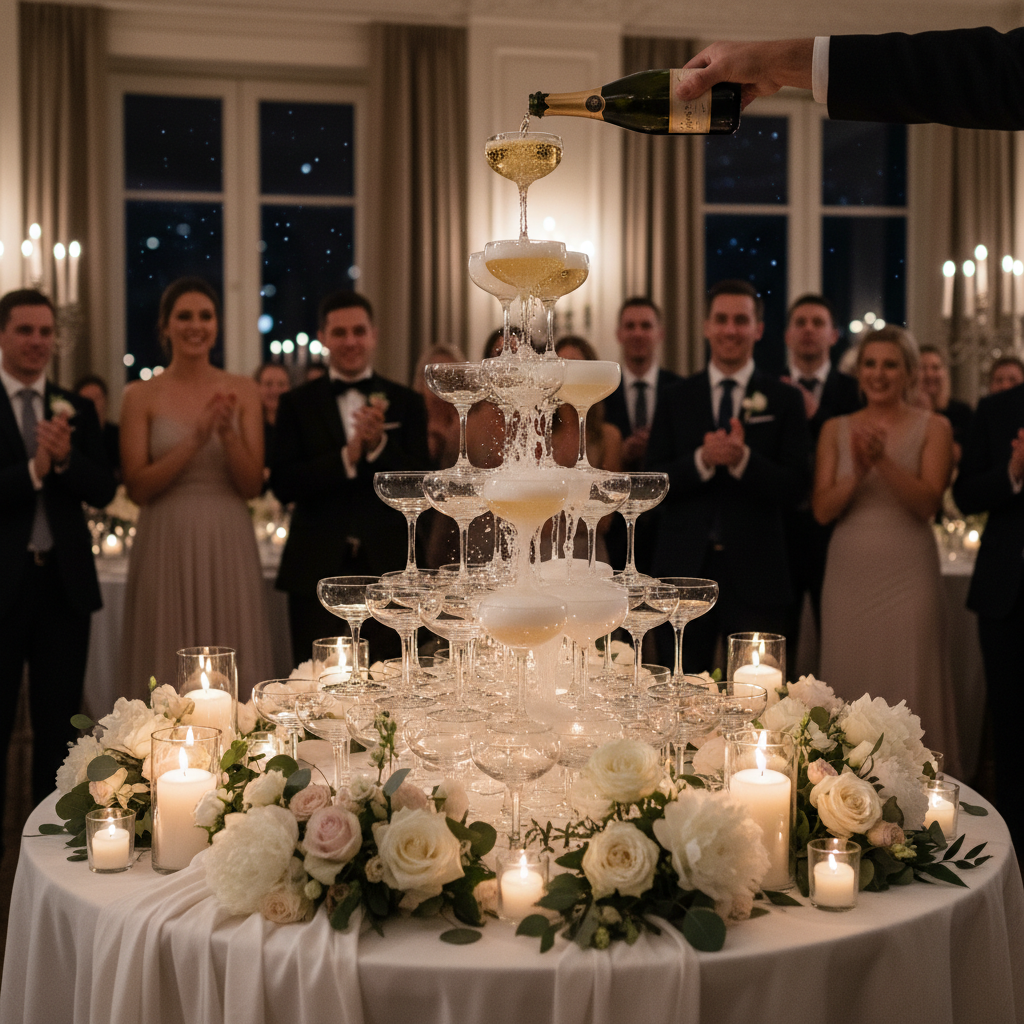
The champagne tower — a pyramid of stacked coupe glasses filled by pouring from the top — is one of the most theatrical gestures in the entire history of entertaining. Associated with the Roaring Twenties, the glamour of Hollywood's golden age, and every great celebration from royal weddings to New Year's galas, it has an enduring power that no other drinks service can match. Done correctly, it is breathtaking. Done incorrectly, it is a very expensive mess.
The History of the Champagne Tower
The champagne tower's origins are murky and contested. The coupe glass itself — the wide, shallow bowl now synonymous with the tower — is often attributed to a mould cast from Marie Antoinette's breast at Versailles in the 1780s, a story almost certainly apocryphal but too good to entirely dismiss. The tower format became popular in the United States during Prohibition — precisely because the champagne (or rather sparkling wine, since real Champagne was unavailable) was often of dubious quality, and the theatrical spectacle distracted from the taste. It reached its cultural peak at the Savoy Hotel's New Year's Eve celebrations in London during the 1930s and at Las Vegas casino openings of the 1950s and 60s.
Today, the champagne tower has been fully rehabilitated — a genuine tradition rather than a kitsch throwback, practiced at the world's finest weddings, restaurant openings, and private celebrations. The Ritz Paris (ritzparis.com), Claridge's (claridges.co.uk), and the Savoy (fairmont.com/savoy-london) all offer bespoke champagne tower services for private events.
How to Build a Champagne Tower
The mathematics are simple: a tower of N tiers requires N × (N+1) × (2N+1) / 6 glasses. In practice: a 5-tier tower (the standard impressive-but-manageable size) requires 55 coupe glasses. A 7-tier tower (the grand statement) requires 140 glasses. The glasses must be identical — coupes, not flutes, which do not stack safely — and ideally crystal rather than glass for visual clarity and light refraction.
For a 5-tier tower serving approximately 30 guests:
- Tier 1 (base): 25 coupes in a 5×5 grid
- Tier 2: 16 coupes (4×4)
- Tier 3: 9 coupes (3×3)
- Tier 4: 4 coupes (2×2)
- Tier 5: 1 coupe
Stack each tier carefully, centering each glass over the four below. A level surface is essential — marble, granite, or a dedicated champagne tower table. Practice the build-out with empty glasses before the event. Pour from the top: a slow, steady stream from one bottle into the uppermost coupe; the champagne will overflow evenly into the tier below, and cascade down through the structure. Use 3 ⅛ cups bottles rather than magnums for easier pouring control.
The Champagne to Use
For a tower, the champagne's quality matters less than its consistency and value — this is not the occasion for a vintage bottle. Nicolas Feuillatte Brut Réserve (feuillatte.com), Moët & Chandon Impérial (moet.com), and Perrier-Jouët Grand Brut (perrier-jouet.com) all perform excellently and are available in case quantities at reasonable prices. For the tower's ceremonial first pour, a more prestigious cuvée adds theatre. Budget approximately one bottle per ten guests for the tower fill, plus the regular service thereafter.
Equipment and Sourcing
Coupe glass rentals for large quantities are available from most event rental companies. Crate & Barrel (crateandbarrel.com) stocks the Champagne Coupe in crystal for individual purchase. For a permanently owned tower set, the Riedel Superleggero Champagne Coupe (riedel.com) is the finest available in individual sale quantities. Pour-aid funnels designed specifically for champagne towers are available on Amazon and from specialist event supply companies.
Pro Tips
Chill the glasses before stacking — the cold surface slows the champagne's loss of carbonation during the pour. Have a second person standing by during the pour in case of instability. Never use flavoured or coloured sparkling wines in a tower — they stain the glasses and create unsightly residue. Add edible flowers or a single orchid to the top coupe for a visual finishing touch.
Reference Links:
- Ritz Paris private events: ritzparis.com/en-GB/private-events
- Claridge's events: claridges.co.uk/events
- Nicolas Feuillatte Brut: feuillatte.com
- Moët & Chandon Impérial: moet.com
- Riedel champagne glasses: riedel.com
- The Savoy London: fairmont.com/savoy-london



Continue Reading