Food & Drink
Aceto Balsamico Tradizionale: The World's Most Patient Condiment
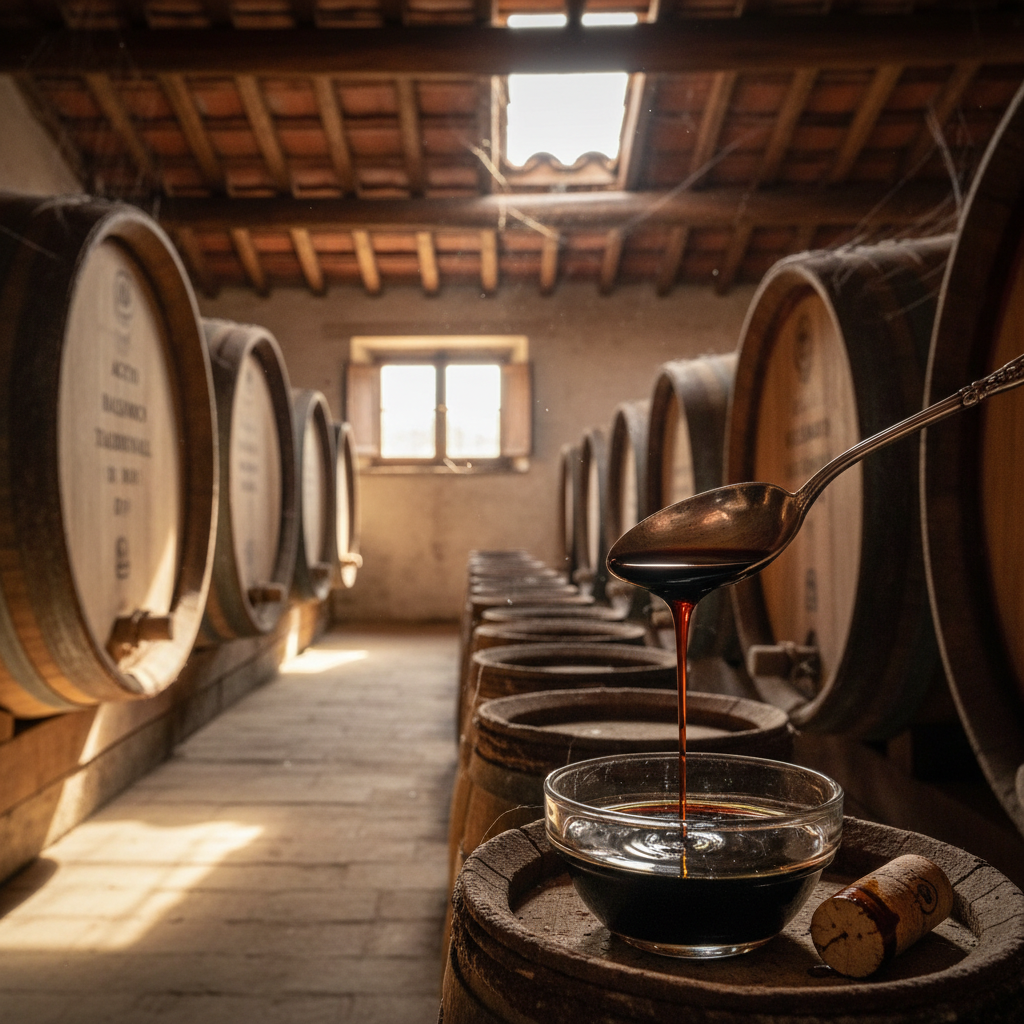
A minimum of 12 years. Up to 100. Reduced through successive oak, cherry, chestnut, mulberry, and juniper barrels until a few precious drops remain. Traditional Balsamic Vinegar of Modena is one of the most extraordinary food products on earth.
There are two entirely different products that carry the name 'balsamic vinegar.' The first — the dark, glossy, viscous condiment sold in supermarkets globally for a few dollars per bottle — is Aceto Balsamico di Modena IGP: a product made primarily from wine vinegar with added grape must concentrate and caramel colouring, produced at industrial scale and aged for as little as 60 days. It is a perfectly acceptable pantry ingredient for salad dressings and marinades.
The second is Aceto Balsamico Tradizionale di Modena DOP: an entirely different product, bearing the same words but representing a different world entirely. It is produced from the cooked must (mosto cotto) of specific grape varieties — primarily Trebbiano and Lambrusco — grown within the province of Modena, slowly reduced through a system of progressively smaller wooden barrels of different species over a minimum of 12 years, and bottled in a distinctive ½ cup round-bottomed bottle designed by Giorgetto Giugiaro (designer of the Volkswagen Golf and the Ferrari Panda concept). A 12-year Tradizionale sells for approximately €80–€150 per ½ cup bottle. A 25-year Extra Vecchio — the highest designation — sells for €200–€500 per ½ cup. And the most aged examples — family heirlooms of 50, 75, or 100+ years — are effectively priceless, passed between generations like fine wine.
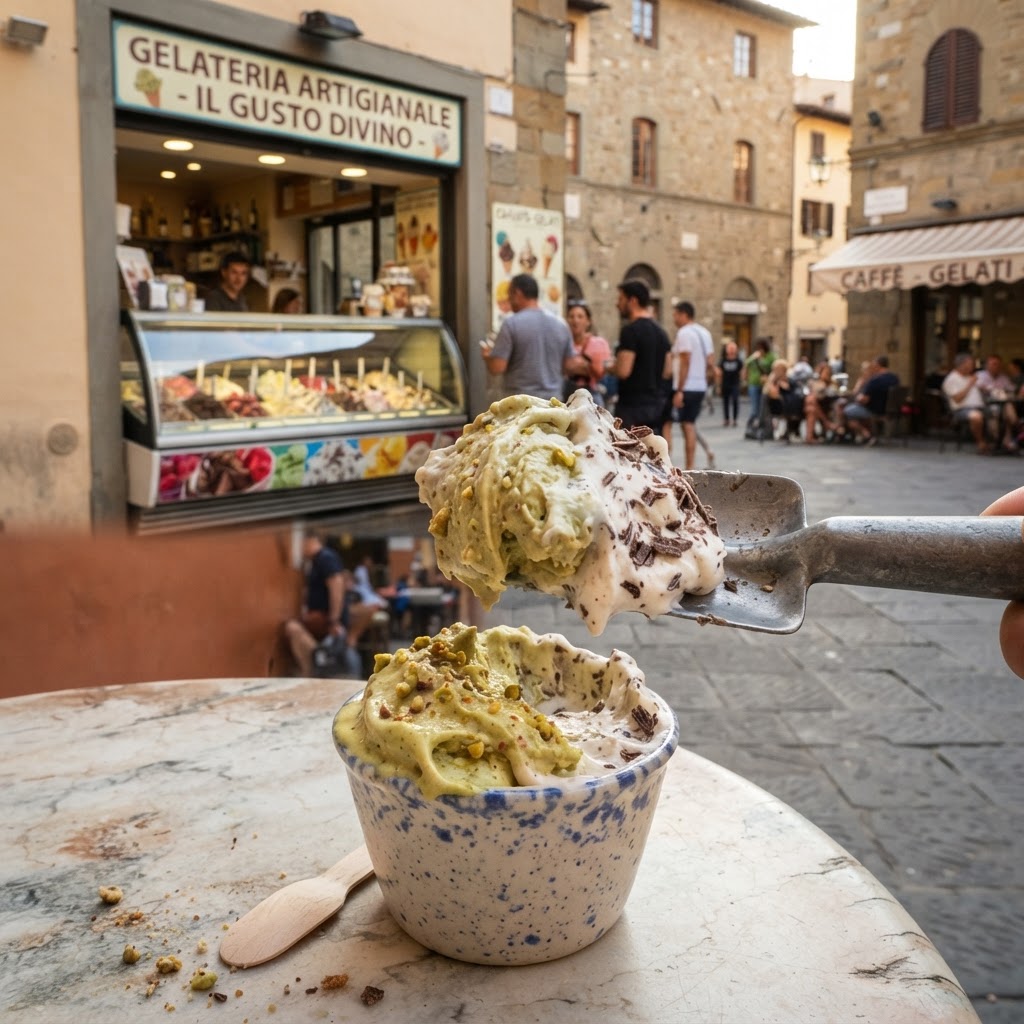
This is one of the most extraordinary food products on earth: a condiment of such concentration, complexity, and sweetness that it is used not as a dressing but as a sauce in its own right — a few drops on Parmigiano-Reggiano, on a grilled piece of aged beef, or even on vanilla gelato, where its sweet-sour intensity provides the defining counterpoint.
**The Production Process**
The process begins with the cooking of freshly pressed grape must in open copper kettles — reducing the liquid by approximately 40–60% over several hours, concentrating the sugars and flavours into a dark, syrupy mosto cotto. This cooked must is inoculated with acetobacteria (sourced from an existing mother culture) and begins the slow process of acetification — the conversion of sugars to acetic acid — over the first year of fermentation.
The young vinegar is then placed in the largest barrel of a batteria — a set of 5–7 barrels of decreasing size, each made from a different wood species: traditionally mulberry (for sweetness and colour), chestnut (for tannin), cherry (for subtle fruitiness), ash or oak (for structure), and juniper (for aromatic complexity). Each year, the master of the acetaia (the attic where the barrels are stored — the temperature fluctuations of the Modena attic are essential to the development, as the summer heat accelerates evaporation and concentration while winter cold slows fermentation) draws off a portion from the smallest barrel for bottling, then refills it from the next largest, cascading up through the battery to the largest, which receives fresh cooked must. This process — the rincalzo — continues annually for 12 to 100+ years.
**The DOP Standards**
Aceto Balsamico Tradizionale di Modena DOP is regulated by the Consorzio Produttori Aceto Balsamico Tradizionale di Modena (balsamico.it). The two designations are Affinato (a minimum of 12 years, identified by a cream-coloured cap) and Extra Vecchio (a minimum of 25 years, identified by a gold cap). Each bottle must pass organoleptic evaluation by a panel of five official tasters before certification. Approximately 9,000–11,0 cup of certified Tradizionale are produced per year across all Modena producers — a tiny quantity for a global market.
A parallel DOP exists for Aceto Balsamico Tradizionale di Reggio Emilia (consorziobalsamicoreggiano.it), produced under similar standards in the neighbouring province, identified by a differently shaped bottle and classified by colour-coded labels (red — minimum 12 years, silver — minimum 18 years, gold — minimum 25 years with Extra Vecchio designation).
**Where to Experience It**
The Acetaia Comunale di Spilamberto (acetaiacomunale.it), in the town of Spilamberto near Modena, is a public acetaia maintained by the municipality — open for visits and one of the finest places to understand the production process. Several private acetaias offer visits: Acetaia Giusti (giusti.it) — founded in 1605 and the world's oldest balsamic producer — offers tours of their extraordinary multi-century barrel batteries. Acetaia Villa Manodori (villamanodori.com), associated with Michelin-starred chef Massimo Bottura of Osteria Francescana (osteriafrancescana.it — three Michelin stars, twice voted World's Best Restaurant), produces exceptional certified Tradizionale.
At the table: Osteria Francescana's '5 Ages of Parmigiano-Reggiano in Different Textures and Temperatures' — possibly Italy's most celebrated dish — uses Tradizionale as its defining counterpoint element. Even in domestic use, a few drops of 25-year Extra Vecchio on a fragment of Parmigiano Stravecchio represents one of the most complete and satisfying flavour experiences available without leaving the kitchen.



Continue Reading