Food & Drink
Absinthe: The Green Fairy & the Belle Époque's Most Seductive Spirit
Blamed for madness, banned across Europe and America, and beloved by Van Gogh, Wilde, and Hemingway — absinthe has had the most dramatic career in spirits history. After a century of prohibition, the green fairy has returned, and its story is far more fascinating than the legends.
They called her 'la fée verte' — the green fairy. She presided over the cafés of Paris and Montmartre for half a century, inspiring poetry (Verlaine, Rimbaud), painting (Picasso, Toulouse-Lautrec, Degas), and prose (Oscar Wilde, Ernest Hemingway, Edgar Allan Poe). She was blamed for madness and murder. She was banned across most of Europe and America. And after nearly a century of prohibition, she returned — legal, vindicated, and more interesting than ever.
Absinthe's story begins in the Vallée de Travers region of the Swiss Jura, around the village of Couvet, in the late 18th century. A French doctor, Pierre Ordinaire, is credited with first distilling a medicinal elixir from the wormwood plant (Artemisia absinthium) around 1792, combined with green anise, fennel, and a complex botanical array. The formula was acquired by the Henriod sisters of Couvet, who sold it as a patent medicine. Henri-Louis Pernod eventually obtained the recipe and established the first true absinthe distillery in Couvet in 1798, before opening the far larger Pernod Fils plant in Pontarlier, France in 1805.
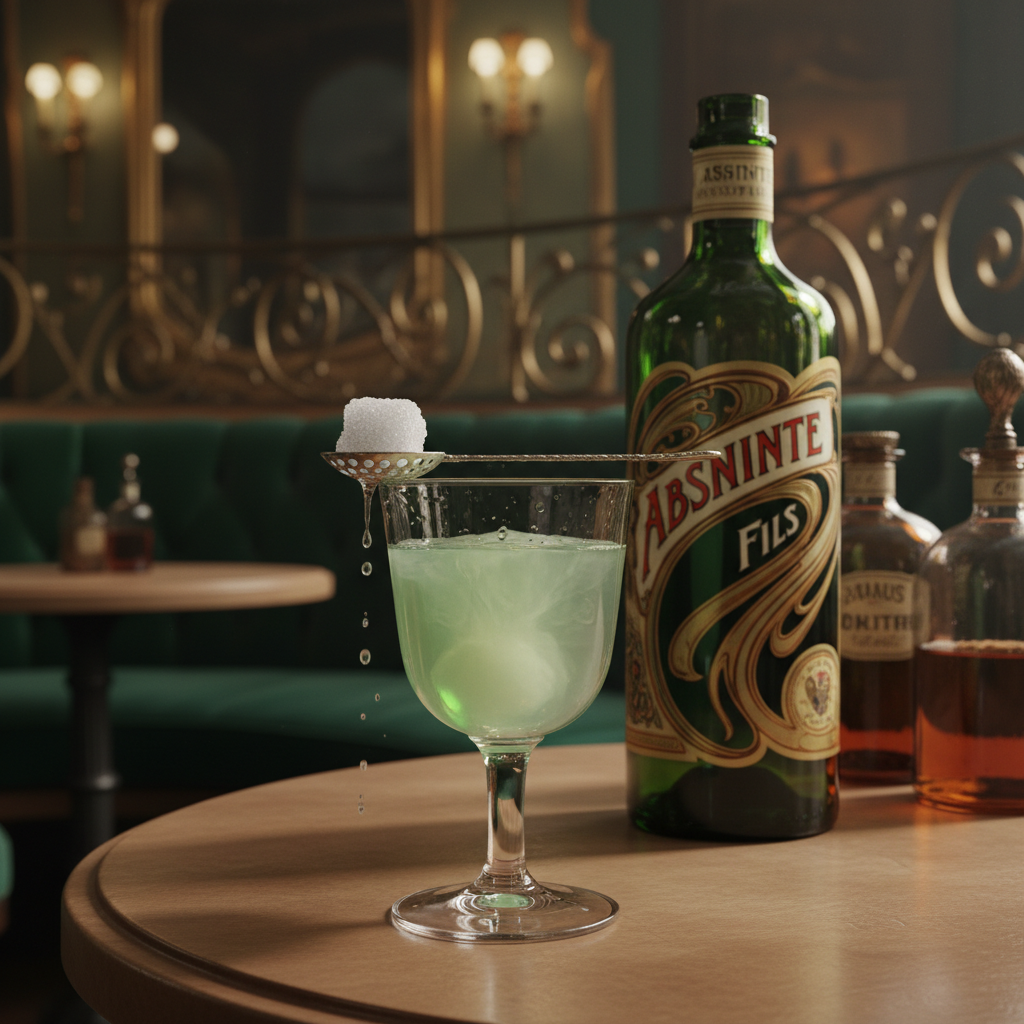
It was in France that absinthe became a cultural phenomenon. By the 1860s and 1870s, l'heure verte — the green hour — had become a daily Parisian institution, the 5pm ritual of the boulevards and brasseries, when glasses of absinthe were prepared with ceremony, their ice-cold water louching the spirit from clear emerald to opalescent cloud. By 1900, France was consuming an estimated 36 million litres per year. The BBC has written at length on absinthe as literary muse (https://www.bbc.com/culture/article/20140109-absinthe-a-literary-muse).
The ritual of absinthe preparation was — and remains — central to the experience. The traditional French service requires a wide-bowled absinthe glass with a reservoir at the base measuring one to one-and-a-half ounces (the standard pour). A slotted absinthe spoon is balanced across the glass rim. A cube of sugar is placed on the spoon. Ice-cold water is then dripped slowly over the sugar cube, dissolving it into the glass. As the cold, sweetened water mixes with the absinthe, the essential oils of the botanical blend — principally those from anise and fennel, which are virtually insoluble in high-proof spirit but soluble in water — precipitate out, turning the liquid a milky, opalescent white or pale green. This is the louche, and watching it develop is one of the great small rituals of the drinking world.
The recommended water-to-absinthe ratio is typically 3:1 to 5:1. Higher quality absinthes benefit from a gentler dilution that allows complexity to emerge gradually. The resulting drink is far lower in alcohol than the base spirit (typically 45–74% ABV undiluted) and ideally should not exceed around 15–18% after dilution — comparable to a glass of wine.
The 'madness' narrative was largely the result of a political and moral campaign, not scientific fact. Wormwood contains thujone — a compound identified as a neural agent — but studies have shown that historical absinthes contained far too little thujone to cause the effects attributed to them. The 'absinthism' of the Belle Époque was almost certainly the consequence of alcoholism (at 68–74% ABV, abuse was readily achieved) compounded by the era's poor-quality, adulterated production.
Absinthe was banned in Switzerland in 1910, France and the United States in 1912–1915, and across most of Europe during and after World War I. It remained illegal for nearly a century. The Swiss lifted their ban in 2005; the US updated its thujone regulations in 2007 to effectively permit absinthe sales. The revival of both historic Swiss and French distilleries has been remarkable — producers including Jade Liqueurs (https://www.jadeliqueurs.com), Distillerie Lemercier Frères, and the Val-de-Travers Maison de l'Absinthe (https://www.hausdesabsinths.de) have revived 19th-century recipes with exceptional fidelity.
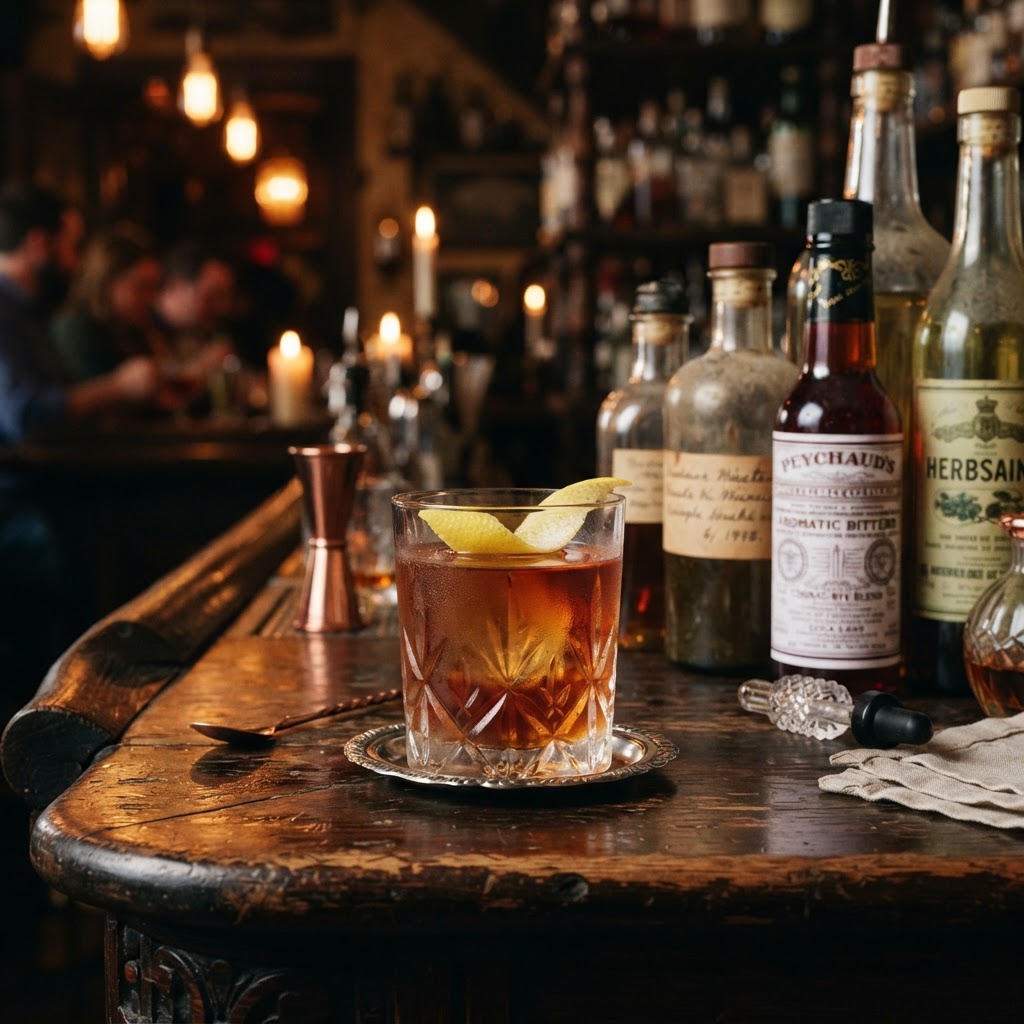
For cocktail use, absinthe functions brilliantly as a rinse or wash in classic recipes: the Sazerac (a rinse of absinthe in a chilled glass before adding rye whiskey), the Corpse Reviver #2, and the classic Death in the Afternoon (Hemingway's recipe: one jigger of absinthe topped with cold Champagne). For those visiting Paris, the legendary Café de Flore (https://www.cafedeflore.fr) and La Belle Époque (https://www.labelleepoque.com) both serve traditional absinthe preparations — though the most authentic experience may be found in Pontarlier, the historic capital of French absinthe, where distilleries including Pernod (https://www.pernod.net) still operate.



Continue Reading