Swedish Meatballs (Köttbullar)
July 10, 2026
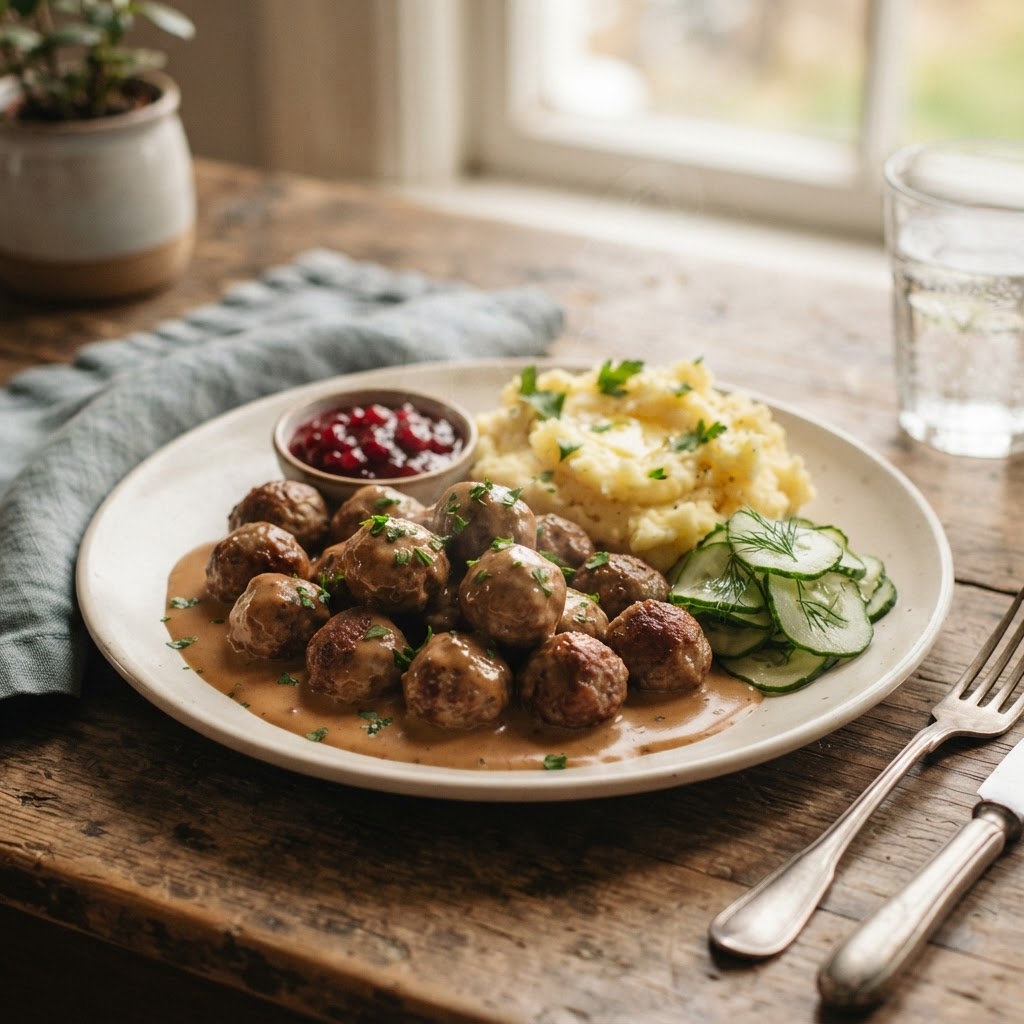
Köttbullar — Swedish meatballs — are so identified with Sweden that they are considered a national dish, and so popular worldwide that IKEA alone serves more than a billion of them a year across its cafeterias. According to Wikipedia, in Sweden meatballs are called köttbullar (literally "meat buns") and are considered a national dish; the term köttbulle first appeared in 1755 in Cajsa Warg's cookbook, though since the mid-1600s they were more commonly called frikadeller, and they became popular in the mid-1800s with the advent of meat grinders. Swedish meatballs are usually made with a mix of ground beef and ground pork, bound with breadcrumbs soaked in milk and egg, and seasoned simply with salt, white pepper, and a touch of allspice; they are traditionally served with a creamy brown gravy, boiled or mashed potatoes, lingonberry jam, and pickled cucumber. In 2018 a viral (and later retracted) claim that Swedish meatballs originated in Turkey was refuted by leading food historian Richard Tellström, who stated there was no evidence behind the claim. Swedish cuisine places köttbullar among its most famous dishes.
For a party, Swedish meatballs are the perfect cocktail bite — small, savory, allspice-scented meatballs in a creamy gravy, with a dot of lingonberry jam, on a pick.
About the Ingredients
Meat — a mix of ground beef and ground pork; the pork adds juiciness and flavor, the beef structure; all-beef meatballs are drier and blander.
Binder — breadcrumbs soaked in milk (a panade), and an egg; the soaked breadcrumbs are the secret to the famously soft, tender texture of Swedish meatballs.
Seasoning — salt, white pepper, and a pinch of allspice; the allspice is the quiet, distinctive note that separates a Swedish meatball from an Italian one. A little finely chopped or grated onion adds savor.
Gravy — the meatball pan drippings enriched with butter, flour, beef stock, and cream; the gravy should be creamy, silky, and deeply savory, the perfect complement to the meatball and the lingonberry.
Lingonberry jam — the sweet-tart, ruby accompaniment; it cuts the richness and is non-negotiable in Sweden.
Ingredients (makes about 36 small meatballs, serves 8–12): - ½ lb ground beef - ½ lb ground pork - ⅓ cup breadcrumbs - ¼ cup milk - 1 egg - 1 small onion, finely grated or minced - 1 teaspoon salt - ½ teaspoon white pepper - ¼ teaspoon ground allspice - 2 tablespoons butter - For the gravy: 2 tablespoons butter, 2 tablespoons flour, 1½ cups beef stock, ⅓ cup heavy cream, salt and pepper to taste - Lingonberry jam and small pickled cucumbers, for serving - Cocktail picks
Instructions: In a small bowl, soak the breadcrumbs in the milk until soft. In a large bowl, combine the beef, pork, soaked breadcrumbs, egg, grated onion, salt, white pepper, and allspice; mix gently with your hands just until combined (do not overwork). Roll into 36 small meatballs, about 1 inch across.
In a large skillet, melt the butter over medium heat. Brown the meatballs in batches, turning, until golden all over and just cooked through, 6–8 minutes per batch. Transfer to a plate; keep warm.
For the gravy: in the same skillet (leave the drippings), melt 2 tablespoons butter, whisk in 2 tablespoons flour, and cook 1 minute. Whisk in the stock and bring to a simmer, scraping up the browned bits; cook until slightly thickened. Stir in the cream; simmer 2–3 minutes until the gravy is silky and spoon-coating. Season with salt and pepper. Return the meatballs to the gravy to coat and warm through.
Spear 2–3 meatballs per pick, or serve in a chafing dish with the gravy alongside. Dot each bite with lingonberry jam and serve with a pickled cucumber.
The Mimosa Pairing Logic: The creamy, allspice-scented meatballs and the sweet-tart lingonberry want a bright, fruit-driven drink to cut the richness and echo the berry. A lingonberry-style cranberry mimosa is the natural, Nordic-inspired choice — the tart cranberry mirrors the lingonberry and cuts the creamy gravy. A blueberry lavender mimosa is equally lovely, the gentle berry and floral lavender a soft, Scandinavian counterpoint to the allspice. This pairing is, in its way, the brunch equivalent of köttbullar and a cold lager at a Swedish midsummer table — a sparkling toast to Sweden.
Reference Links: - Meatball (köttbullar, national dish, Cajsa Warg 1755, IKEA): Wikipedia - Swedish cuisine (köttbullar among iconic dishes): Wikipedia
Make-Ahead: The meatballs can be rolled a day ahead, raw, and refrigerated, or fully cooked and refrigerated up to 2 days; reheat gently in the gravy. The gravy can be made ahead and refrigerated; reheat gently, adding a splash of stock to loosen. The whole dish can be assembled (meatballs in gravy) a day ahead and reheated on the stovetop or in a chafing dish. Swedish meatballs are one of the great make-ahead party foods, and they hold beautifully for an hour over a low flame.
Pro Tips: The breadcrumb-and-milk panade is the secret to the famously soft Swedish texture; do not skip it or substitute dry breadcrumbs, which make a dense meatball. Mix the meat gently — overworked meatballs are tough, while barely-mixed ones are tender. The allspice is small in amount but essential in character; it is what makes a meatball Swedish, and a meatball without it is merely a meatball. Brown the meatballs in batches so they sear rather than steam, and build the gravy in the same pan to capture every bit of flavor. And do not forget the lingonberry; the sweet-tart jam is not a garnish but a counterpoint, and the creamy, savory meatball without it is only half the dish.
Rate this recipe
Be the first to rate this recipe
to submit your rating.
Recent Posts

Couscous Royale: North Africa's Grand Platter of Lamb, Chicken, and Merguez
October 14, 2026

Seattle Cream Cheese Dog Bites: Hadley Long's 1989 Pioneer Square Invention
October 14, 2026

Khao Soi: Chiang Mai's Northern Thai Coconut Curry Noodles
October 13, 2026

Korean Bibimbap: Jeonju's Joseon Dynasty Mixed Rice
October 11, 2026

Spaghetti alla Carbonara: Rome's World War II Pasta of Eggs, Guanciale, and Pecorino
October 9, 2026