Russian Oladi: The Kefir-Leavened Fluffy Pancakes of the Russian Breakfast Table
March 8, 2026
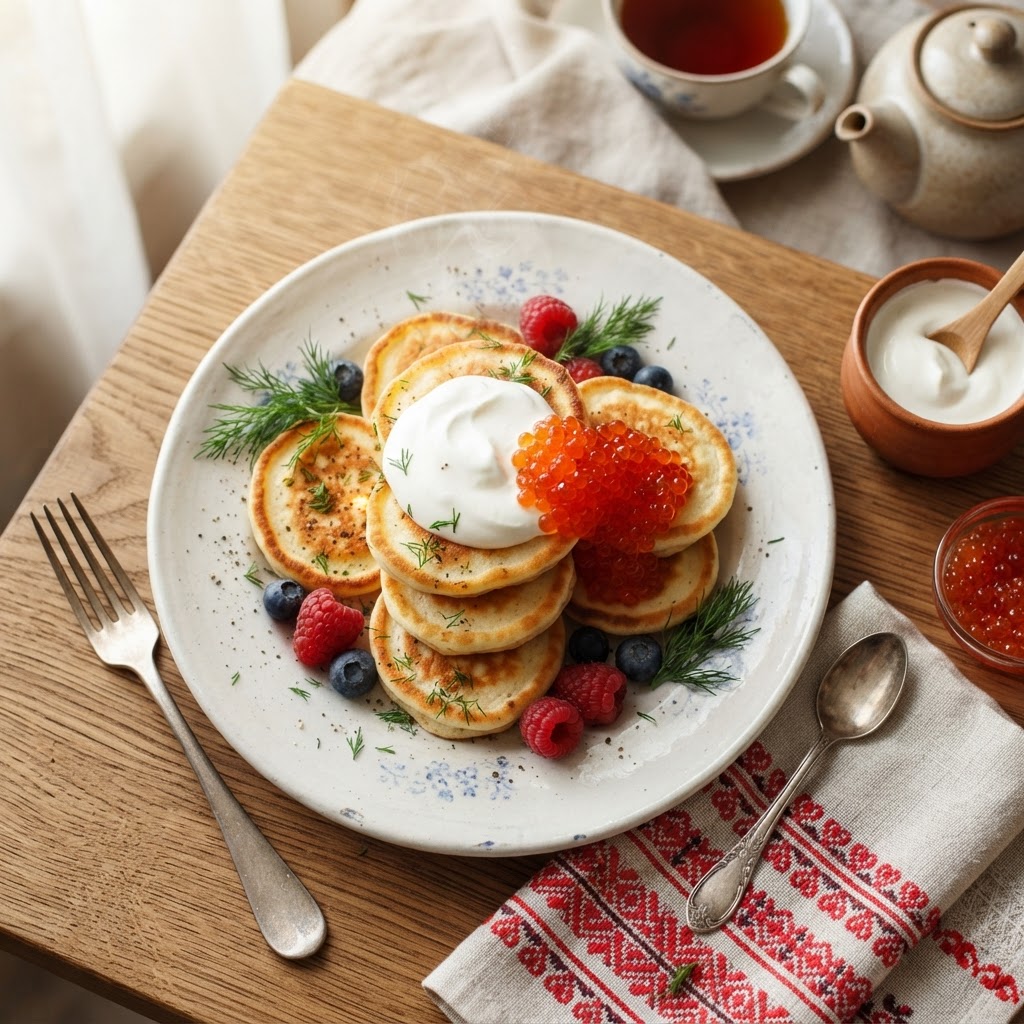
Oladi are the small, thick, fluffy pancakes of the Russian breakfast — leavened with kefir, the fermented milk drink of the Caucasus, and fried in a generous slick of oil so that the edges crisp while the centers stay pillowy and light, served with smetana (sour cream), jam, honey, or even red caviar, a dish so embedded in the Russian kitchen that it appears in the *Domostroy*, the 16th-century Russian book of household management. According to Wikipedia, oladyi (or oladi) are small, thick pancakes or fritters common in Russian and Ukrainian cuisines, made from wheat or buckwheat flour, eggs, milk, salt, and sugar with yeast or baking soda, and the batter "may also contain kefir, soured milk, or yogurt"; the word is first attested in Old East Slavic in 1470 and as a dish is first mentioned in the *Domostroy*, the 16th-century Russian book of household rules. Vikalinka describes oladi as "crispy on the outside, yet still fluffy and tasty on the inside," leavened with kefir for a distinctly tangy flavor, and notes that the batter should be thick enough to hold its shape in the pan rather than spreading thin like a French crêpe. Peter's Food Adventures calls oladi "a Russian breakfast favorite," small and thick, "crispy on the outside, yet still fluffy and tasty on the inside."
The genius of oladi is the kefir: the fermented milk gives the pancakes a slight tang that distinguishes them from American buttermilk pancakes, and the thick, almost dough-like batter means the pancakes fry up small, thick, and puffy — more like a drop scone than a thin pancake — with edges that go deep golden and crisp in the hot oil. Eaten warm with a generous spoonful of smetana and a dollop of jam, or in the grand Russian style with a spoonful of red caviar and a sprig of dill, oladi are the most popular breakfast of the Russian table.
About the Ingredients
Kefir — a fermented milk drink, slightly tangy and slightly effervescent, made from kefir grains; it is the traditional leavening for oladi and gives them their distinctive flavor. Buttermilk or soured milk can be substituted.
Flour — all-purpose flour, enough to make a thick batter that holds its shape; the batter should be thicker than American pancake batter.
Eggs — one or two eggs for richness and structure.
Leavening — baking soda (not baking powder) reacts with the acidic kefir to create lift; the fizzing of soda in kefir is visible and is what makes oladi fluffy.
Sugar and salt — a little sugar for sweetness and a pinch of salt.
Oil — a generous amount of neutral oil for shallow-frying; oladi are fried in more oil than American pancakes, which is what gives them their crisp edges.
Smetana — Russian sour cream, richer and less tangy than American sour cream; the classic accompaniment.
Ingredients (makes about 12 oladi): - 1 cup kefir (or buttermilk) - 1 large egg - 1 tbsp granulated sugar - 1/4 tsp salt - 1/2 tsp baking soda - 1 cup all-purpose flour (or enough to make a thick batter) - Neutral oil, for shallow-frying - Smetana (or sour cream), jam, or honey, to serve - Optional: red caviar and fresh dill, for a grand Russian finish
Instructions: In a bowl, whisk the kefir, egg, sugar, and salt. Sprinkle the baking soda over the kefir mixture — it will fizz as the soda reacts with the acid in the kefir; let it bubble. Add the flour and stir until just combined; the batter should be thick and almost scoopable, not pourable — add more flour if it seems thin.
Heat 1/4 inch of oil in a heavy skillet over medium heat. Drop rounded tablespoons of the thick batter into the hot oil; the oladi should be small, about 2 inches across. Fry 2–3 minutes per side until deep golden and cooked through. Drain briefly on paper towels. Repeat with the remaining batter.
Serve warm, with smetana and jam or honey. For a grand Russian brunch, top with a spoonful of red caviar and a sprig of dill.
The Mimosa Pairing Logic: The tangy, crispy oladi and the rich smetana want a bright, fruit-driven drink that echoes the jam and lifts the fried dough. A blueberry lavender mimosa is a beautiful choice — the blueberry nods to the berry jam and the lavender is a beautiful floral counter to the kefir tang. A strawberry mimosa is equally lovely, its soft fruit a beautiful mirror for the jam and a bright counter to the smetana. This pairing is, in its way, the brunch equivalent of oladi with smetana and jam and a cup of strong Russian tea — a sparkling toast to the Russian morning and the kefir-leavened pancake.
Reference Links: - Oladyi (Russian and Ukrainian thick pancakes, kefir, first attested 1470, Domostroy): Wikipedia - Kefir Pancakes 'Oladi' Recipe (crispy, fluffy, kefir-leavened): Vikalinka - Kefir Pancakes (Oladi) Recipe (Russian breakfast favorite): Peter's Food Adventures
Make-Ahead: The batter is best mixed and cooked at once; the leavening power of the soda in kefir fades after 15 minutes, and oladi made from rested batter are denser. Oladi can be cooked ahead and held warm on a baking sheet in a 200°F oven for 15–20 minutes. Reheated oladi are best crisped briefly in a hot dry pan; the microwave makes them soft. The kefir should be at room temperature for the best leavening.
Pro Tips: Let the baking soda fizz in the kefir before adding the flour; the reaction is what makes oladi fluffy, and skipping it makes them dense. Make the batter genuinely thick — it should hold its shape when dropped into the oil, not spread; a thin batter makes flat pancakes, not oladi. Use enough oil for shallow-frying; oladi fried in a dry pan are pale and cakey, and oladi fried in oil are crisp and golden at the edges. Do not flip too early; wait until the edges are deep golden and the top is beginning to set before turning. Serve with genuine smetana if you can find it; it is richer and less tangy than American sour cream and is the proper Russian accompaniment.
Rate this recipe
Be the first to rate this recipe
to submit your rating.
Recent Posts

Couscous Royale: North Africa's Grand Platter of Lamb, Chicken, and Merguez
October 14, 2026

Seattle Cream Cheese Dog Bites: Hadley Long's 1989 Pioneer Square Invention
October 14, 2026

Khao Soi: Chiang Mai's Northern Thai Coconut Curry Noodles
October 13, 2026

Korean Bibimbap: Jeonju's Joseon Dynasty Mixed Rice
October 11, 2026

Spaghetti alla Carbonara: Rome's World War II Pasta of Eggs, Guanciale, and Pecorino
October 9, 2026