Food & Drink
The Southern Buttermilk Biscuit: A Brunch Staple Born of Necessity
Few foods carry the weight of the Southern biscuit. It is a humble thing — flour, fat, buttermilk, a hot oven — yet it is the cornerstone of the American Southern table and the undisputed centerpiece of the Southern brunch.
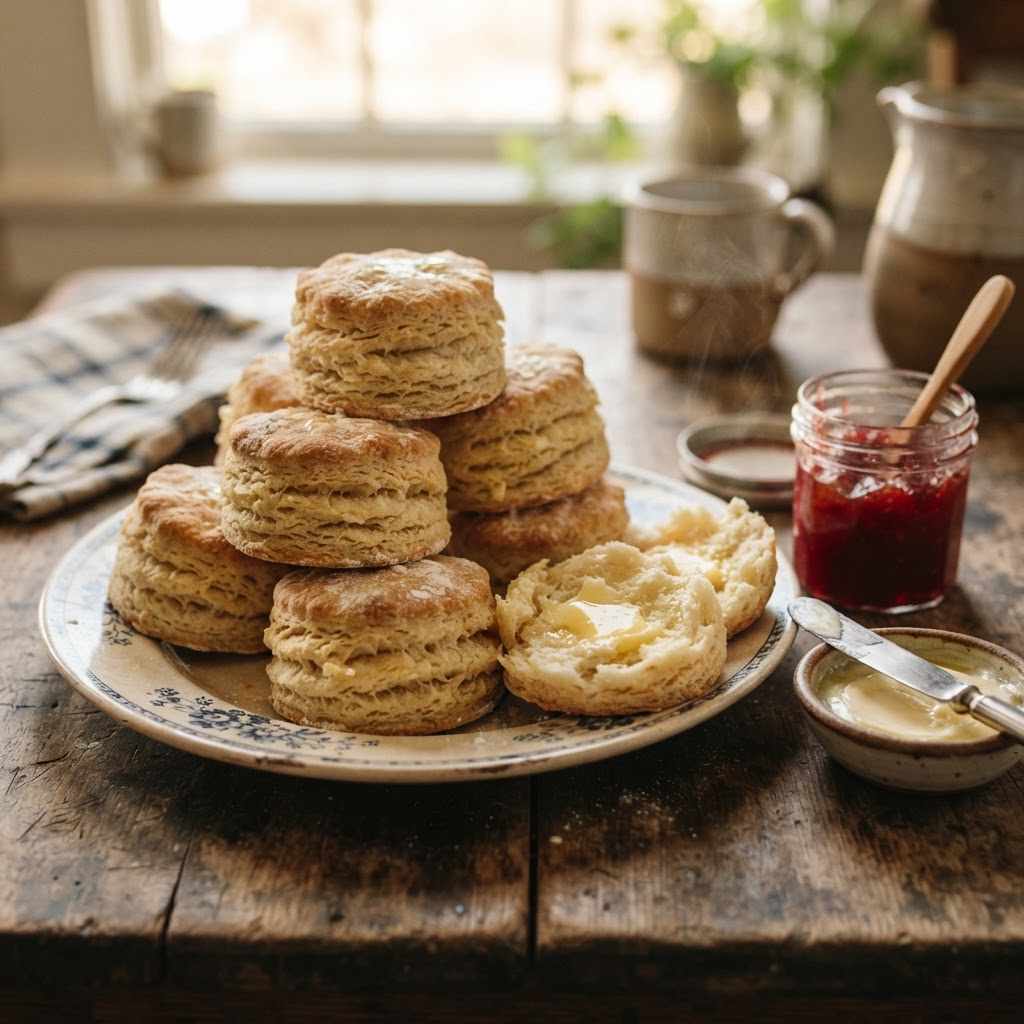
Few foods carry the weight of the Southern biscuit. It is a humble thing — flour, fat, buttermilk, a hot oven — yet it is the cornerstone of the American Southern table and the undisputed centerpiece of the Southern brunch. Split open while still steaming, slicked with butter or draped in sausage gravy or piled with fried chicken, the biscuit is the lens through which the South eats its mornings.
**Not the British Biscuit**
The first source of confusion is the name. In Britain, a biscuit is a crisp, sweet baked good akin to what Americans call a cookie. In the American South, a biscuit is a soft, layered quick bread leavened with baking powder or baking soda rather than yeast, baked fresh and eaten warm. The two share a common ancestor in the ships' biscuits and scone-like breads of the early modern Atlantic, but they diverged sharply in the American kitchen, where cheap flour, abundant fat, and the absence of a developed wheat-and-yeast tradition pushed bakers toward fast, chemical leavening.
**The Beaten Biscuit and the Soft Biscuit**
Before the modern soft biscuit, there was the beaten biscuit — a dense, layered bread made by beating the dough for upwards of half an hour against a table or block until it blistered, then baking it slowly. Beaten biscuits were a fixture of the antebellum Southern table, particularly in Maryland and Virginia, prized for keeping on long journeys. They required enormous labor, much of it performed by enslaved cooks, and they all but disappeared as a daily bread once chemical leavening became reliable in the late nineteenth century.
The soft biscuit that replaced it is faster, lighter, and more forgiving. The fat — historically lard, today more often butter or shortening — is cut into the flour until the mixture resembles coarse meal, the buttermilk is stirred in just until the dough holds together, and the whole is folded, patted, cut, and baked hot. The layers come not from yeast or beating but from the pockets of fat that steam apart in the oven.
**Why Buttermilk**
Buttermilk is not a flourish. It is the ingredient that makes the Southern biscuit Southern. The cultured buttermilk of the dairy farm was, historically, the tangy liquid left after churning butter, and every Southern kitchen had some on hand. Its acidity reacts with baking soda to produce carbon dioxide, which lifts the dough, and its tang balances the richness of the fat. The result is a biscuit that is tender rather than tough, with a faint sour note that butter alone cannot provide. Modern bakers who substitute sweet milk lose that tenderness and that taste, which is why the buttermilk biscuit endures as the canonical version.
**The Brunch Connection**
The Southern biscuit is the natural anchor of a brunch. Split and filled with country ham or fried chicken, it becomes a meal. Drizzled with sorghum or honey, it becomes dessert. And alongside a brunch cocktail, its richness finds its perfect counterpoint: a bright, acidic Classic Champagne Mimosa or a Grapefruit Rosemary Mimosa cuts through the butter and the gravy and refreshes the palate for the next bite. The biscuit does not need embellishment. It needs only heat, butter, and a glass of something sparkling beside it.
**References**
- Wikipedia: Biscuit (bread) — https://en.wikipedia.org/wiki/Biscuit_(bread)
- Wikipedia: Cuisine of the Southern United States — https://en.wikipedia.org/wiki/Cuisine_of_the_Southern_United_States
- Wikipedia: Brunch — https://en.wikipedia.org/wiki/Brunch

Continue Reading