Caribbean
New Orleans' Caribbean Soul: The French Creoles Who Built a Caribbean City on the Mississippi
New Orleans is the northernmost Caribbean city, founded by the French in 1718, built by Creoles and enslaved Africans on the sugar and rum trade, and shaped by the same French colonial culture that built Port-au-Prince and Martinique.
New Orleans is often called the northernmost city of the Caribbean, and the comparison is not merely poetic. The city was founded by the French in 1718, on a bend of the Mississippi River, and it was built by the same French colonial administration that built Port-au-Prince in Saint-Domingue (Haiti) and Fort-de-France in Martinique. The original New Orleans Creoles were French colonists born in the New World, and the word "Creole" itself, as the [Historic New Orleans Collection](https://hnoc.org/publishing/first-draft/taste-creole-and-cajun-cuisine-10-stories) notes, derives from the Spanish and Portuguese criollo, meaning a person of European descent born in the colonies. These Creoles introduced sugar plantations, African enslaved labor, and a more efficient exportation system for goods such as coffee, sugar, and rum, the same system that powered the French Caribbean.
The French Quarter and the Sugar Trade
The French Quarter, the Vieux Carré, is the oldest neighborhood in New Orleans, laid out by the French engineer Adrien de Pauger in 1721 in a grid of narrow streets that still survives. The architecture that defines the Quarter, the cast-iron balconies and the pastel stucco walls, is actually more Spanish than French, a legacy of the four decades (1768 to 1801) when Spain ruled the city after the French and Indian War. The sugar trade, however, was French, and by the 1790s the plantations upriver from New Orleans were producing the sugar and molasses that fed the rum distilleries of the Caribbean basin. According to research published by [Cairn.info](https://www.cairn.info/la-louisiane-et-les-antilles-une-nouvelle-region--9791095177043-page-67), the French Creoles of Louisiana introduced sugar plantations, African slave labor, and a more efficient exportation system for goods such as coffee, sugar, and rum, creating a direct cultural and economic link between New Orleans and the French Caribbean islands of Martinique, Guadeloupe, and Saint-Domingue.
The Haitian Connection
The deepest Caribbean connection in New Orleans came in 1809, when approximately ten thousand refugees from the Haitian Revolution arrived in the city, doubling its population in a single year. These refugees were a mix of white French planters, free people of color, and enslaved Africans, fleeing the slave revolt that had destroyed the sugar colony of Saint-Domingue and created the independent republic of Haiti. The refugees brought with them the Creole cuisine, the voodoo religion, and the musical traditions that would, over the next century, become the foundations of New Orleans culture. The city's famous Creole cuisine, with its gumbo, jambalaya, and beignets, is a direct descendant of the French Caribbean cooking of Saint-Domingue, adapted to the ingredients of the Louisiana bayou.
The Caribbean of the Senses
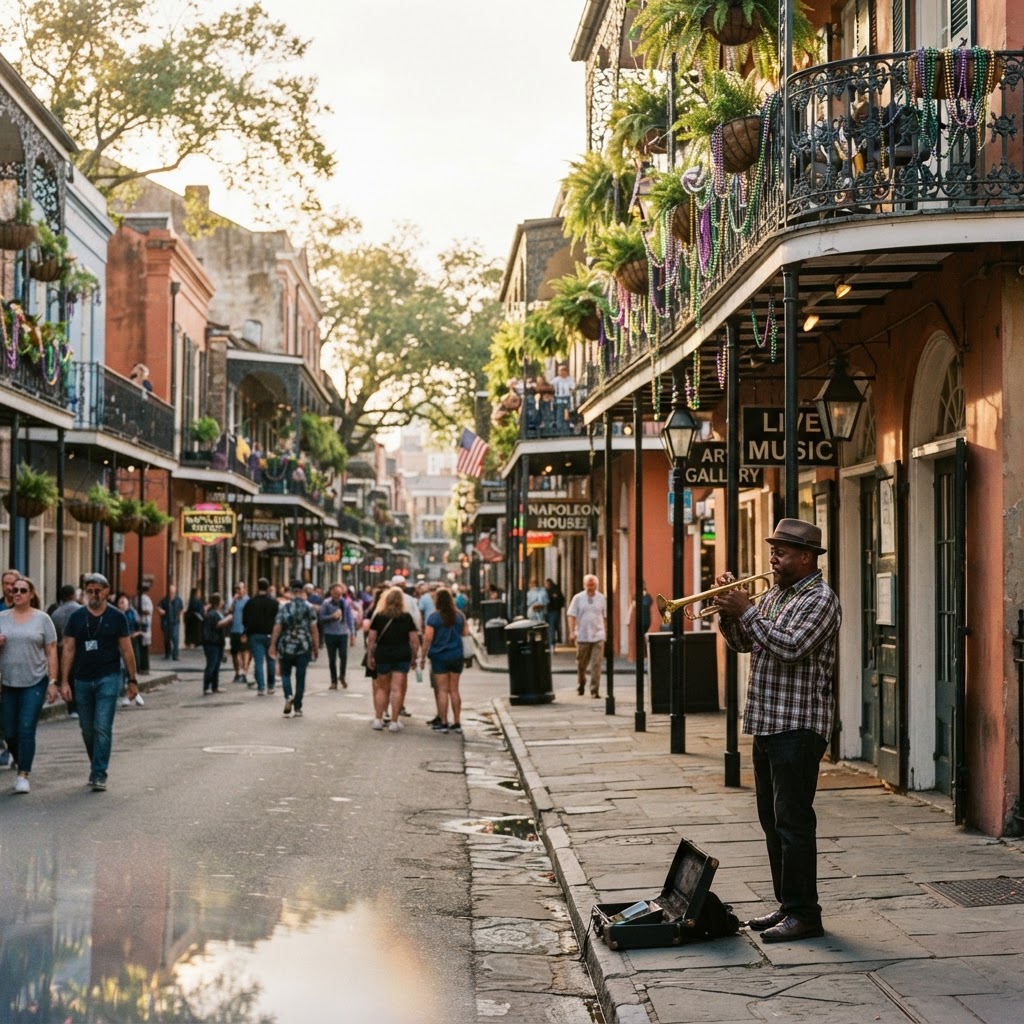
To walk the French Quarter at dawn is to feel the Caribbean in the air. The humidity, the smell of chicory coffee and fried beignets, the sound of a trumpet from a doorway, and the wrought-iron balconies draped in Mardi Gras beads all belong to a city that is culturally closer to Havana or Port-au-Prince than to Atlanta or Dallas. The cemeteries, with their above-ground tombs, are a Caribbean solution to a Caribbean problem: a water table so high that bodies would float to the surface if buried. The second-line parades, the brass bands, and the Mardi Gras Indians all trace their roots to the African and Creole cultures of the French Caribbean, carried up the Mississippi by the sugar and slave trades.
A Mimosa for the Quarter
A morning in the French Quarter, with the smell of chicory coffee and beignets in the air, calls for a sparkling drink that can match the city's Caribbean soul. A [classic Champagne mimosa](/recipes/classic-champagne-mimosa) is the natural match, the orange juice echoing the citrus of the café au lait and the bubbles lifting the beignets. A [pomegranate mimosa](/recipes/pomegranate-mimosa) is equally lovely, its deep red color a nod to the rum and Creole tradition of the city.
**Reference Links:**
- A Taste of Creole and Cajun Cuisine in 10 Stories (Creole definition, French colonial cuisine): [Historic New Orleans Collection](https://hnoc.org/publishing/first-draft/taste-creole-and-cajun-cuisine-10-stories)
- Louisiana and the Antilles (French Creoles, sugar plantations, Caribbean connections): [Cairn.info](https://www.cairn.info/la-louisiane-et-les-antilles-une-nouvelle-region--9791095177043-page-67.html)



Continue Reading