Food & Drink
Mexican Café de Olla and Pan Dulce: A Spiced Morning Ritual
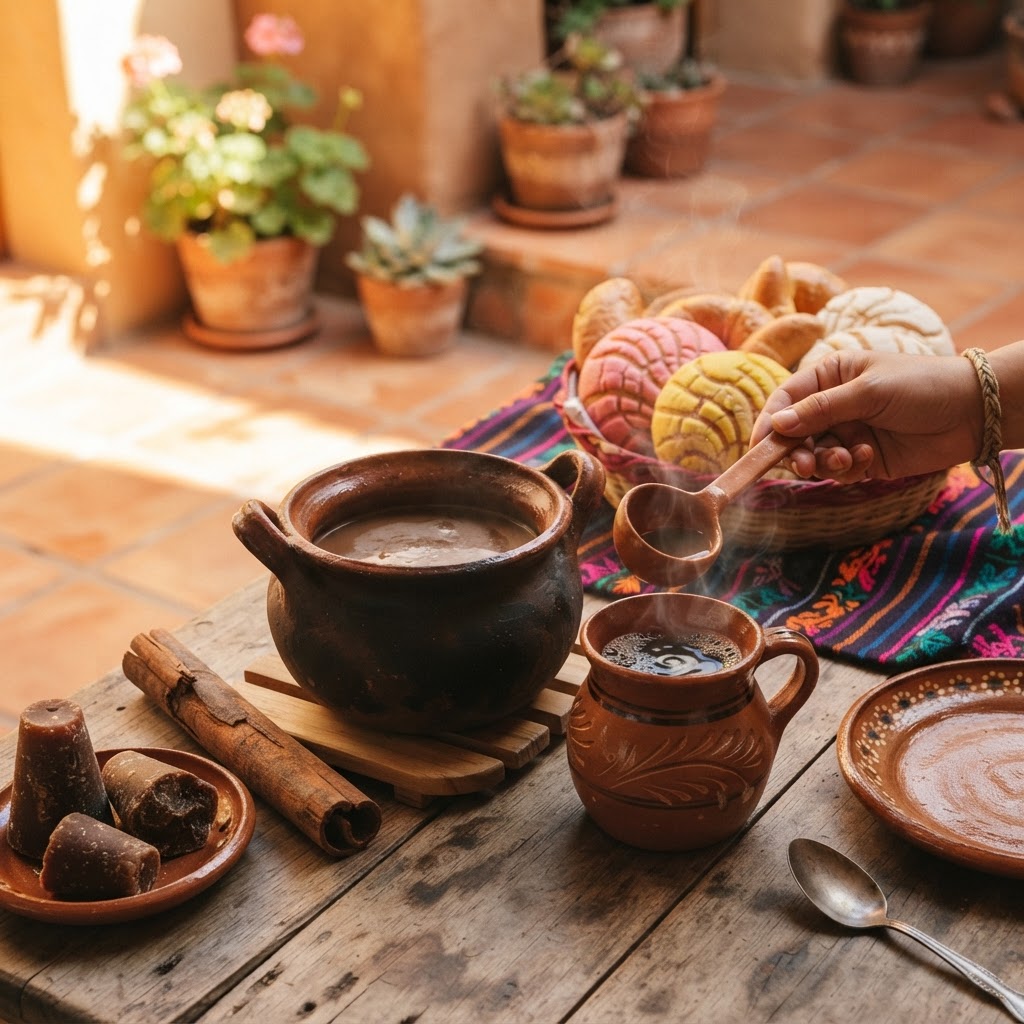
In Mexico, the morning often arrives scented with cinnamon and scorched cane sugar. Café de olla, brewed in a clay pot with piloncillo and spice, alongside a basket of pan dulce, is one of the most quietly beautiful breakfast rituals in the Americas.
In Mexico, the morning often arrives scented with cinnamon and scorched cane sugar. Café de olla, brewed in a clay pot with piloncillo and spice, alongside a basket of pan dulce, is one of the most quietly beautiful breakfast rituals in the Americas. It is a coffee of the countryside and the kitchen rather than the café, and it carries within it the memory of revolution, of clay and fire, and of the women who fed armies from a single pot.
**Coffee in a Clay Pot**
Café de olla is, at its simplest, coffee brewed in an earthenware pot (the olla) with water, ground coffee, cinnamon, and piloncillo — the dark, unrefined cane sugar of Mexico, sold in cones and tasting of molasses and smoke. Optional aromatics include orange peel, cloves, and anise. The clay pot is not incidental: it imparts an earthy, mineral undertone that no metal vessel quite reproduces, and it holds heat gently so that the coffee steeps rather than boils. The result is a cup that is dark, sweet, spiced, and somehow softer than coffee has any right to be.
**The Revolution and the Soldaderas**
The most accepted origin of café de olla places it in the camps of the Mexican Revolution, which raged from 1910 to 1920. The soldaderas — the women who traveled with the revolutionary armies, cooking, nursing, and sometimes fighting — brewed coffee for the troops in large clay pots over open fires, sweetening the bitter brew with piloncillo because it was what they had, and perfuming it with the cinnamon and cloves of the Mexican pantry. The drink was practical — it warmed the soldiers, the sugar gave energy, and the clay kept it hot — but it was also a small act of care in a brutal time, and it carried into the civilian kitchen after the war ended. To drink café de olla today is, in some small way, to taste that history.
**Piloncillo and the Mexican Sweet**
The defining sweetness of café de olla is piloncillo, also called panela or panocha in other parts of Latin America. It is raw cane sugar, boiled down and poured into cone-shaped molds to harden, retaining all the molasses and mineral complexity that refining strips away. It tastes of caramel, smoke, and earth, and it dissolves slowly in the hot coffee, deepening as it goes. No white sugar or syrup reproduces it. The cinnamon is ideally Mexican cinnamon — true Ceylon cinnamon, soft and complex, in curled bark rather than the hard, hot cassia bark common elsewhere — and the difference is the difference between a coffee and a ritual.
**Pan Dulce and the French Hand**
No Mexican morning is complete without pan dulce, the family of sweet, enriched breads that fill the baskets of every panadería in the country. The tradition reaches back to the nineteenth century and the brief French intervention in Mexico, when French bakers and pastry techniques entered the Mexican kitchen and were adapted, over generations, to local taste. The most iconic of the pan dulce is the concha — a soft, sweet roll topped with a shell-patterned crust of sugar and flour — but the family extends to orejas (palmiers), cuernos (croissants), and dozens of regional variations. The panadería, where these breads are sold warm in the early morning, is a daily institution as central to Mexican life as the boulangerie is to French.
**The Brunch Connection**
Café de olla and pan dulce form a brunch of great warmth and simplicity. The spiced, sweet coffee is already almost a dessert in itself, and the sweet bread beside it asks for a bright, refreshing counterpoint. A Classic Champagne Mimosa or a Tropical Mango Mimosa cuts the molasses and cinnamon beautifully; a Hibiscus Lime Mimosa, with its tart floral note, echoes the spices of the pot. The pairing is a small bridge between two great morning traditions — the Mexican kitchen and the brunch table — and it rewards the same unhurried, generous spirit.
**References**
- Wikipedia: Café de olla — https://en.wikipedia.org/wiki/Caf%C3%A9_de_olla
- Wikipedia: Pan dulce — https://en.wikipedia.org/wiki/Pan_dulce
- Wikipedia: Mexican cuisine — https://en.wikipedia.org/wiki/Mexican_cuisine
Continue Reading