Caribbean
Martinique's Mount Pelée: The 1902 Eruption That Destroyed Saint-Pierre and Left One Survivor
On May 8, 1902, Mount Pelée on Martinique erupted in a pyroclastic surge that destroyed the city of Saint-Pierre in two minutes, killing nearly 29,000 people, the deadliest eruption of the 20th century, with a single survivor in a jail cell.
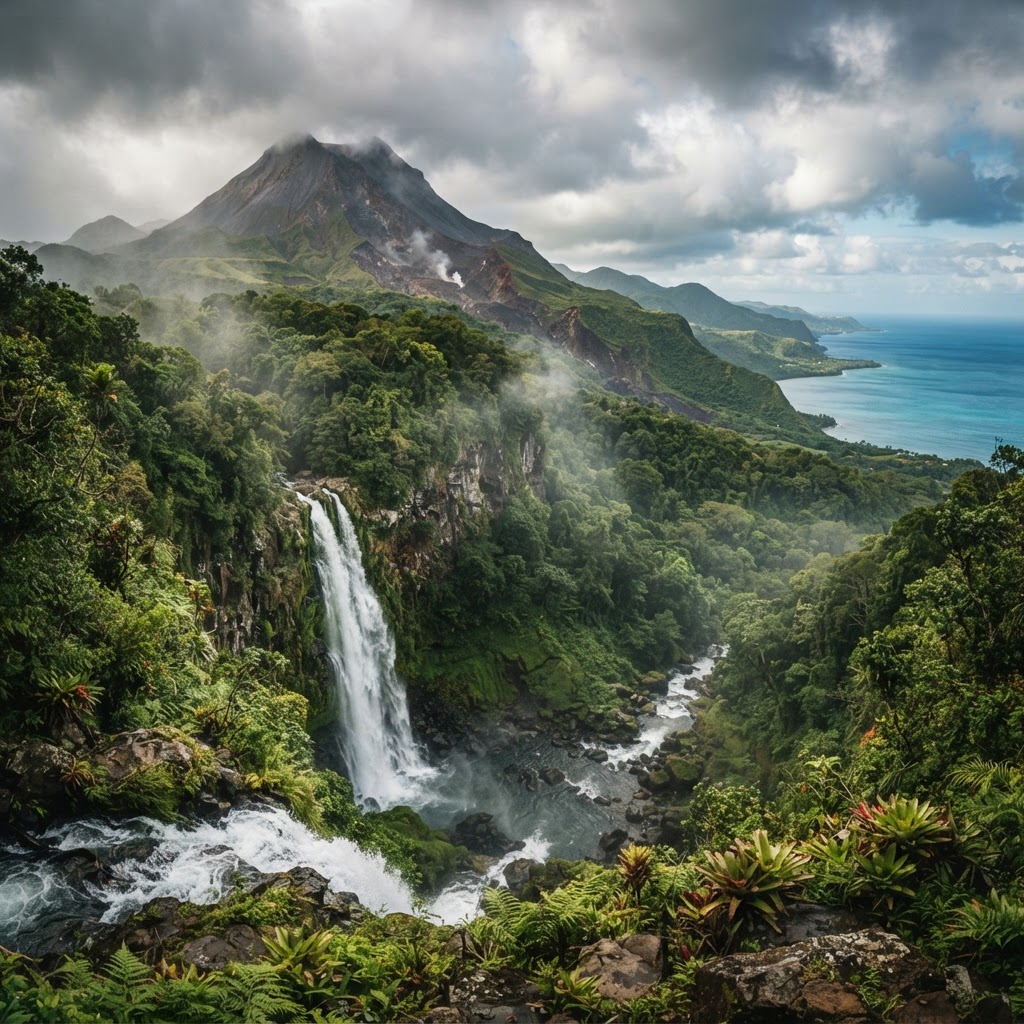
On the morning of May 8, 1902, at 8:02 a.m., the volcano Mount Pelée on the Caribbean island of Martinique erupted in a pyroclastic surge, a ground-hugging cloud of incandescent lava particles and searing gases that moved at hurricane speed down the southwest flank of the mountain and into the city of Saint-Pierre. The city, known as the Paris of the Caribbean, was destroyed in approximately two minutes, and nearly every one of its roughly 29,000 inhabitants was killed, making it the deadliest volcanic eruption of the twentieth century. According to [Wikipedia](https://en.wikipedia.org/wiki/1902_eruption_of_Mount_Pel%C3%A9e), the 1902 eruption of Mount Pelée was one of the deadliest eruptions in recorded history, beginning on April 23 as a series of phreatic eruptions and culminating on May 8 in a pyroclastic surge that reached Saint-Pierre at 8:02 a.m., where escape was virtually impossible and almost everyone within the city, about 28,000 people, died.
The Warning Signs and the Election
The tragedy of Saint-Pierre is made more painful by the fact that the warning signs were present for two weeks before the eruption, but they were ignored or misinterpreted. The volcano had been emitting sulfurous vapors and ash since April 23, and the rivers were swollen with mud and debris. The local newspaper, *Les Colonies*, dismissed the danger, and the city's leaders, facing a runoff election on May 11, discouraged evacuation, arguing that leaving the city would destabilize the political situation. Many who tried to leave were persuaded to stay, and the refugees from the surrounding villages who fled into Saint-Pierre for safety were walking toward the disaster. The morning of the eruption, the mountain appeared quiet, and many residents believed the worst had passed.
Ludger Sylbaris and the Cell
One man in Saint-Pierre survived the eruption, Ludger Sylbaris, a laborer who had been arrested the night before for a bar fight and locked in a single, windowless stone cell in the town jail. The thick stone walls of the cell shielded him from the worst of the heat, and though he was badly burned, he was discovered alive by rescuers four days later, the only person in the city to survive. Sylbaris was pardoned and joined the Barnum & Bailey Circus, where he toured the United States and Europe as a living wonder, reenacting the eruption in a replica of his cell. His story is one of the most remarkable in the history of natural disasters, a single life preserved by the architecture of a prison.
Rhum Agricole and the French Caribbean
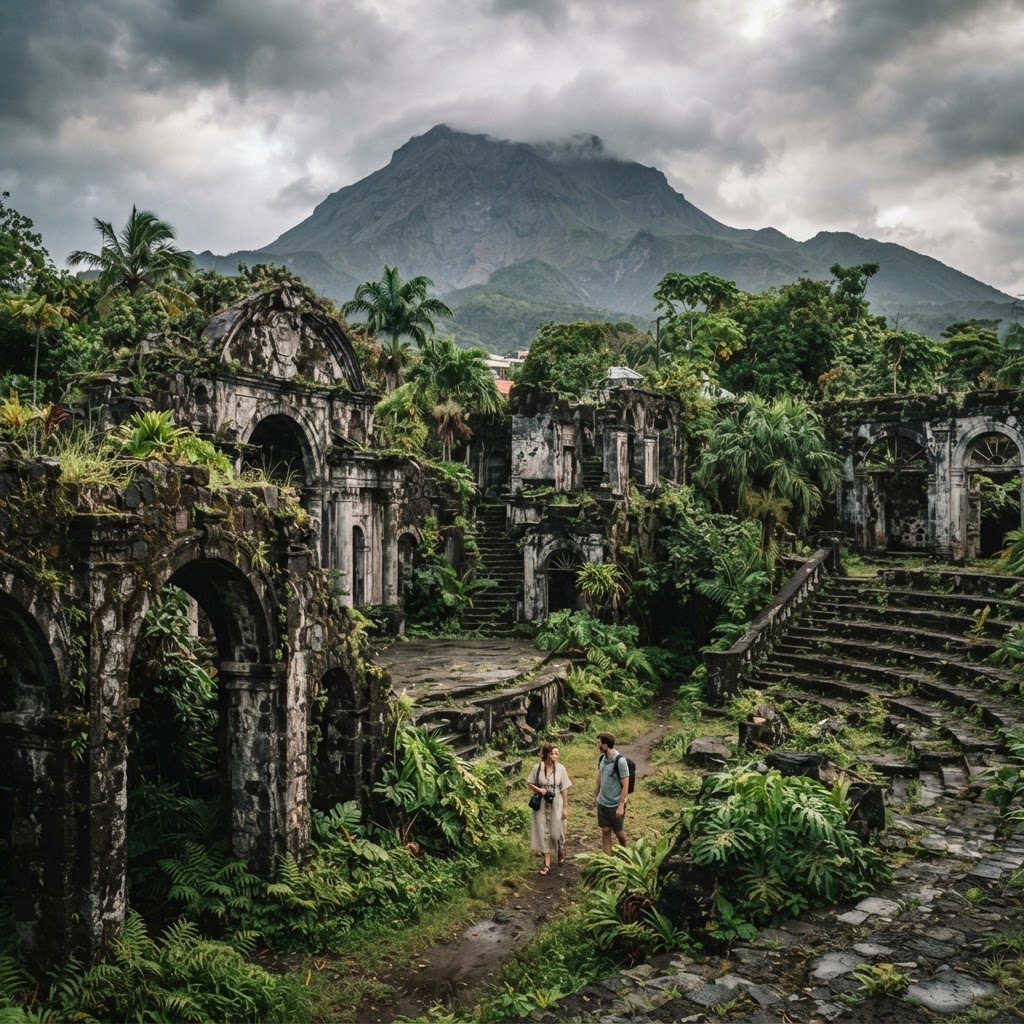
Martinique is an overseas department of France, and it is the home of rhum agricole, the rum made from fresh-pressed sugarcane juice rather than molasses, a method that produces a lighter, more vegetal spirit than the rum of the English-speaking Caribbean. The destruction of Saint-Pierre in 1902 devastated the sugar and rum industry of the north of the island, and the center of production shifted south, where the distilleries of Depaz, Clément, and Neisson produce the rhum agricole that carries the Appellation d'Origine Contrôlée, the only rum in the world with a protected designation of origin. The ruins of Saint-Pierre, the old theater, the prison, and the destroyed houses, still stand, partially reclaimed by the tropical vegetation, and the city is a monument to the eruption that changed the history of Martinique.
A Mimosa for the Ruins
A morning among the ruins of Saint-Pierre, with Mount Pelée in the distance and the smell of sugarcane on the breeze, calls for a sparkling drink that can honor the memory of the lost city. A [classic Champagne mimosa](/recipes/classic-champagne-mimosa) is the natural match, the orange juice a bright companion to the rhum agricole tradition and the bubbles a toast to the resilience of the island. A [passionfruit mimosa](/recipes/passionfruit-mimosa) is equally lovely, its tropical fruit a nod to the French Caribbean.
**Reference Links:**
- 1902 Eruption of Mount Pelée (deadliest eruption of the 20th century, 29,000 deaths, Ludger Sylbaris): [Wikipedia](https://en.wikipedia.org/wiki/1902_eruption_of_Mount_Pel%C3%A9e)
- Mount Pelée and Martinique (volcanic history, Caribbean): [Smithsonian Global Volcanism Program](https://volcano.si.edu/volcano.cfm?vn=360030)



Continue Reading