Food & Drink
Maine Lobster: America's Most Celebrated Shellfish and the Coast That Produces It
From colonial prison food to America's most celebrated shellfish, the Maine lobster is a story of remarkable transformation — and a fishery so carefully managed that it may be the most sustainable in the world.
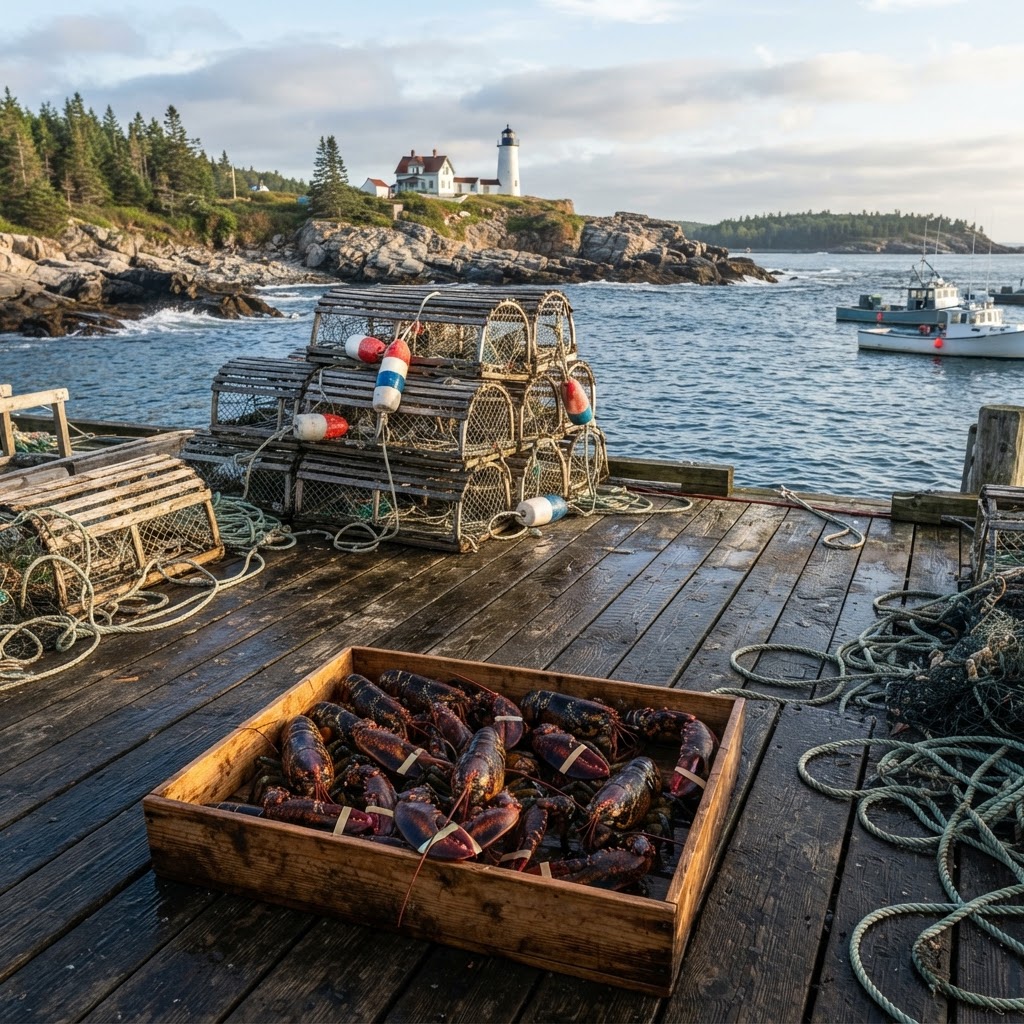
The American lobster, Homarus americanus, thrives in the cold, clean waters of the North Atlantic, and nowhere is it more abundant or more celebrated than the coast of Maine. Maine is the largest lobster-producing state in the United States, and the lobster fishery is the backbone of the state's coastal economy, supporting thousands of fishing families, lobster pounds, restaurants, and related businesses. In 2016, Maine lobstermen landed a record 132 million pounds of lobster, valued at over $533 million — a figure that underscored the extraordinary productivity of the Gulf of Maine lobster population. Annual landings have consistently exceeded 100 million pounds in recent years, making Maine one of the most valuable single-species fisheries in North America (mainelobstermen.org).
The story of the Maine lobster is one of remarkable transformation. In colonial America, lobster was so abundant that it was considered poverty food — the meat of servants, prisoners, and the poor. There are documented cases of servants in Massachusetts Bay Colony rebelling against being served lobster more than twice a week, and a colonial law limited the number of times lobster could be served to prisoners. Lobsters were so plentiful that they washed ashore in piles after storms, and were commonly used as bait and fertiliser. The transformation from nuisance to delicacy began in the mid-19th century, when the development of the lobster smack (a specialized boat with a well to keep lobsters alive) and the canned lobster industry made it possible to transport live lobster to inland markets. By the 1880s, lobster had become a luxury item in Boston and New York, and the price began its inexorable rise (maine.gov/dmr).
The Maine lobster fishery is widely regarded as one of the most sustainably managed fisheries in the world. The state's regulatory framework, administered by the Maine Department of Marine Resources, is built on a combination of size limits, trap limits, seasonal closures, and a unique system of territorial fishing rights known as 'lobster zones.' Lobstermen must measure every catch: lobsters that are too small (below 3¼ inches carapace length) are returned to the water to allow them to reproduce, and lobsters that are too large (above 5 inches carapace length) are also returned because they are the most productive breeders. Female lobsters carrying eggs (berried females) must be returned to the water, and their tails are marked with a V-notch to identify them as protected breeders if caught again. This system, maintained voluntarily by lobstermen since the 19th century and codified in law, ensures the long-term health of the population. The fishery has been certified as sustainable by the Marine Stewardship Council (maine.gov/dmr).
The lobstering community of Maine is concentrated in small coastal towns and islands, many of which have been fishing for generations. The key lobster ports include Portland, the state's largest city and a major lobster landing port; Stonington on Deer Isle, which frequently leads the state in landings; Vinalhaven, an island community accessible only by ferry; Beals Island and Jonesport in Down East Maine; and hundreds of smaller harbours where lobster boats leave at dawn and return in the afternoon. The lobster boat itself — typically 30 to 40 feet long, with a cabin forward, an open work deck aft, and a hydraulic pot hauler — is an iconic sight in Maine, and the communities that depend on lobstering have developed a distinctive culture of self-reliance, hard work, and deep connection to the sea.
The distinction between hard-shell and soft-shell (new-shell) lobster is essential to understanding the Maine lobster market. Lobsters grow by molting — shedding their hard shell and growing a new, larger one. In late summer and early autumn, lobsters in Maine shed their shells, and the new shell is soft and thin. Soft-shell lobsters are easier to crack, contain less meat per pound, and are prized for their tender, sweeter meat. Hard-shell lobsters, caught primarily in winter and spring, contain more meat, have a firmer texture, and are preferred for shipping because they survive transport better. The difference is a matter of passionate debate among lobster enthusiasts, with locals often preferring soft-shell for eating and hard-shell for shipping.
The Maine lobster roll — a simple preparation of lobster meat on a buttered, toasted split-top hot dog bun — has become one of the most iconic sandwiches in American cuisine. There are two canonical styles: the Connecticut-style roll, which features warm lobster meat tossed in melted butter, and the Maine-style roll, which features cold lobster meat dressed lightly with mayonnaise. Both are served on a New England-style split-top bun that has been buttered and grilled until golden. The best lobster rolls are defined by the quality of the lobster (fresh, never frozen), the restraint of the dressing (it should enhance, not mask, the lobster), and the quality of the bun. In Maine, the lobster roll is not merely a menu item but a culinary institution, served at roadside stands, lobster shacks, and fine dining restaurants alike, from Red's Eats in Wiscasset (famous for its heaping portions) to Five Islands Lobster Company in Georgetown to McLoons Lobster Shack on South Thomaston's Spruce Head Island.
For the traveller, the Maine lobster experience extends far beyond the restaurant. Many lobster pounds — working seafood markets where lobsters are held in tanks of circulating seawater — offer the opportunity to select your lobster and have it steamed on the spot, to be eaten at a picnic table overlooking the harbour. The Maine Lobster Festival, held annually in Rockland since 1947, draws tens of thousands of visitors for lobster dinners, cooking demonstrations, and the coronation of the Maine Sea Goddess. And for those who want to go to the source, many lobstermen offer tours where visitors can go out on a lobster boat, haul traps, and learn about the fishery from the people who live it every day (mainelobsterfestival.com).
What makes the Maine lobster so resonant in the world of food and drink is the way it embodies the connection between place, community, and food. The lobster is a product of the cold, clean, mineral-rich waters of the Gulf of Maine. The fishery is sustained by a community of families who have fished the same waters for generations and who have voluntarily adopted conservation practices that ensure the resource will be there for their children. And the experience of eating a Maine lobster — whether cracked at a picnic table overlooking a working harbour, or savoured as a butter-dressed roll at a roadside shack — is inseparable from the landscape, the sea, and the people who make it possible. It is a reminder that the best food is not merely a product but a relationship — between the sea and the shore, the fisherman and the resource, the eater and the place.
For those planning a visit, the Maine Department of Marine Resources provides comprehensive information on the lobster fishery, regulations, and landings data (maine.gov/dmr). The Maine Lobstermen's Association offers resources on the fishery and the lobstering community (mainelobstermen.org). The Maine Lobster Festival provides information on the annual event in Rockland (mainelobsterfestival.com). Visit Maine, the state's tourism board, offers guides to lobster shacks, lobster pounds, and coastal dining (visitmaine.com).
Continue Reading