Travel
Bergen and the Norwegian Fjords: Scandinavia's Most Dramatic Coastline
Bergen is the gateway to the Norwegian fjords — a UNESCO city of colourful wooden houses, surrounded by mountains and sea, and the starting point for the world's most beautiful railway and fjord journeys.
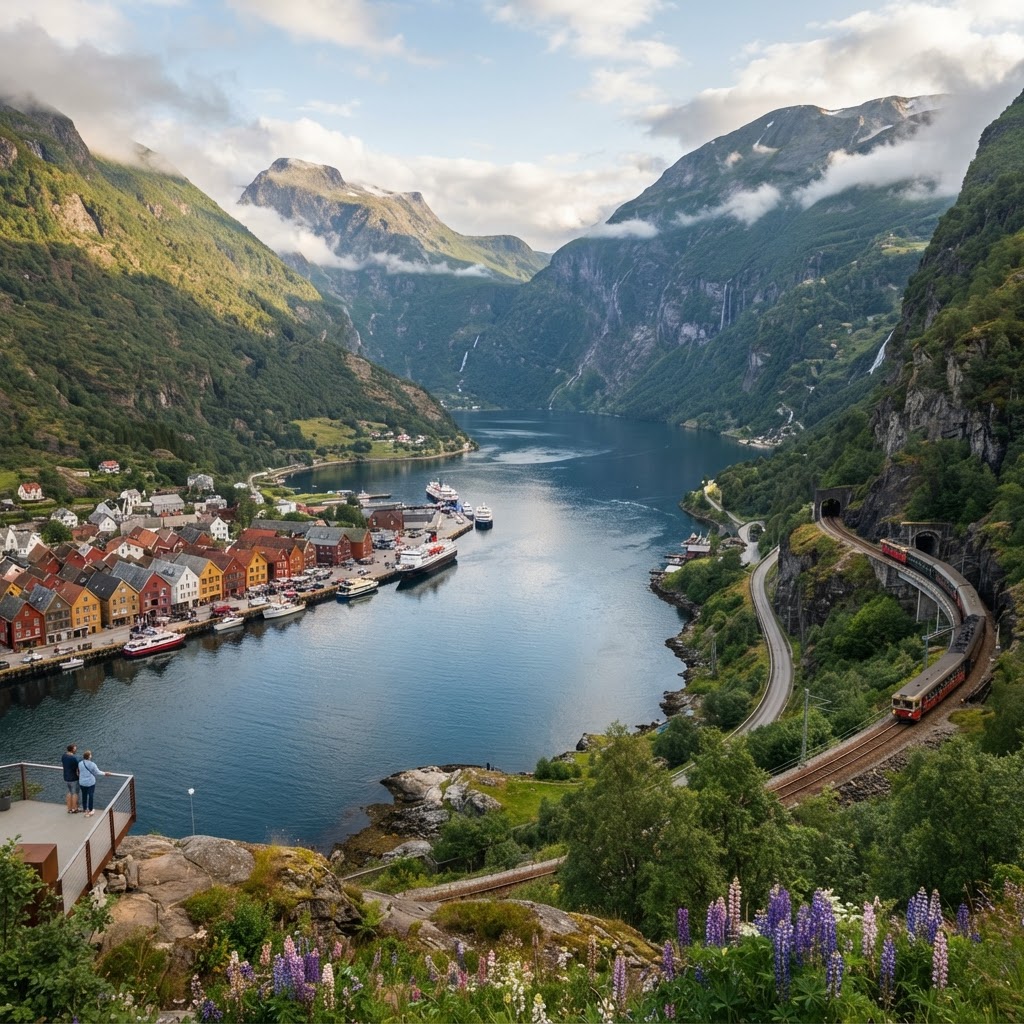
Bergen, Norway is the gateway to the most dramatic coastline in Europe. Norway's second-largest city, with a population of 280,000, is set on a peninsula on the country's western coast, surrounded by seven mountains and facing the North Sea. It was the capital of Norway in the twelfth and thirteenth centuries and has been the nation's premier trading city since the medieval period. Bergen is the starting point for the fjord journeys that are Norway's greatest natural attraction, and the city itself — with its UNESCO World Heritage wharf, its funicular railways, and its proximity to some of the most spectacular mountain and sea scenery in the world — is one of the most rewarding destinations in Scandinavia.
Bryggen: The Hanseatic Wharf
The heart of historic Bergen is **Bryggen** (the Wharf), a row of colourful wooden commercial buildings dating to the Hanseatic period. Bergen was a member of the Hanseatic League from approximately 1350 until the league's decline in the sixteenth century, and the city was the northernmost of the League's four major overseas trading posts (Kontors). The German merchants of the Hanseatic League traded dried cod from northern Norway for grain, textiles, and other goods from continental Europe.
The buildings of Bryggen, with their distinctive gabled facades painted in ochre, red, and white, are built on narrow plots running from the harbour front to the steep hill behind, connected by a labyrinth of narrow passages and wooden walkways. The existing buildings date mostly from after the great fire of 1702 (Bergen has burned many times), but they follow the medieval property lines and construction methods. Bryggen was inscribed as a UNESCO World Heritage Site in 1979.
The Flåm Railway
The **Flåm Railway** (Flåmsbana) is one of the most beautiful railway journeys in the world. The 20-kilometre line descends from Myrdal station, on the main Oslo-Bergen line at an elevation of 866 metres (2,841 feet), to Flåm station at the head of the Aurlandsfjord at sea level — a descent of 866 metres in just 20 kilometres, making it one of the steepest standard-gauge railway lines in the world. The railway was built between 1923 and 1940, and the construction of its 20 tunnels (18 of which were hand-excavated) took 20 years.
The journey passes through Alpine and sub-Alpine landscapes, past the **Kjosfossen waterfall** (where the train pauses so passengers can photograph the 93-metre cascade), and along the steep-sided Flåm Valley to the fjord below. The Flåm Railway connects to fjord cruises on the Aurlandsfjord and Naerøyfjord — the latter being the narrowest fjord in the world, at points just 250 metres wide with cliffs rising 1,800 metres on either side.
The Naerøyfjord and Sognefjord
The **Sognefjord** is the longest and deepest fjord in Norway — 205 kilometres long and reaching a depth of 1,308 metres. It is the second-longest fjord in the world after the Scoresby Sund in Greenland. The **Naerøyfjord**, a branch of the Sognefjord, is inscribed as a UNESCO World Heritage Site and is widely considered the most beautiful fjord in Norway. A fjord cruise from Flåm through the Naerøyfjord to Gudvangen is one of the most spectacular boat journeys in the world, passing beneath sheer cliffs, cascading waterfalls, and abandoned mountain farms clinging to the rock faces.
Mount Fløyen and Mount Ulriken
Bergen is surrounded by seven mountains, and two of them — **Mount Fløyen** and **Mount Ulriken** — are accessible by funicular railway and cable car, respectively. The **Fløibanen funicular** opened in 1918 and ascends from the city centre to Mount Fløyen (320 metres) in about eight minutes, offering a panoramic view over the city, the harbour, and the surrounding islands and mountains. The **Ulriksbanen cable car** reaches the summit of Mount Ulriken (643 metres), the highest of Bergen's seven mountains, from which the view extends to the open sea.
Troldhaugen and Edvard Grieg
**Troldhaugen** was the home of the composer Edvard Grieg (1843-1907), Norway's greatest composer, and is now a museum dedicated to his life and work. The villa, built in 1885, sits on the shore of Lake Nordås and contains Grieg's Steinway piano and original furnishings. The site also includes a small purpose-built concert hall, opened in 1985, which hosts concerts of Grieg's music throughout the summer. The composer is buried in a cliff-side tomb on the property.
Bergen Fish Market
The **Bergen Fish Market** (Torget), located on the harbour front, is one of the oldest and most famous fish markets in Scandinavia. The market sells the full range of Norwegian seafood — salmon, cod, halibut, king crab, and the full panoply of cured and dried fish that has been Bergen's primary trade for 900 years. The outdoor stalls, open from early morning, are one of the great food experiences of Norway.
Reference Links:
- Visit Bergen: visitbergen.com
- Flåm Railway (Norway's Best): norwaysbest.com
- UNESCO Bryggen: whc.unesco.org/en/list/59
- UNESCO West Norwegian Fjords: whc.unesco.org/en/list/1195
- Troldhaugen (Grieg Museum): griegmuseum.no
- Fløibanen Funicular: floibanen.no
- Visit Norway: visitnorway.com

Continue Reading