Zabaglione al Moscato
May 9, 2026
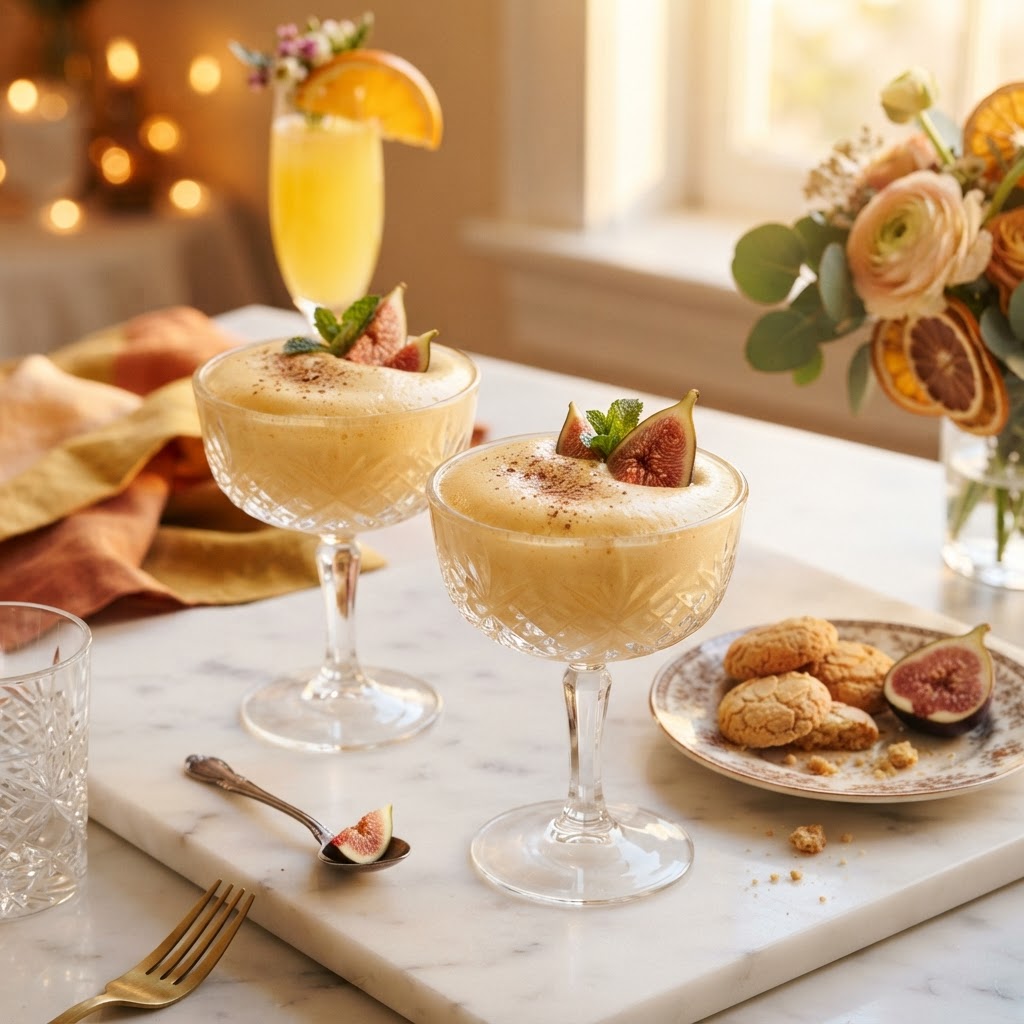
Zabaglione (or zabaione, as it's spelled in some regions) is Italy's most intimate dessert — a warm, foamy custard of egg yolks, sugar, and wine, whisked over gentle heat until it triples in volume and becomes as light as whipped cream but with the depth of a great glass of dessert wine. It's served in small glasses, warm, often with fresh fruit or biscotti on the side. It's the kind of dessert that feels like a secret — something a grandmother makes for you after a long meal, standing at the stove with a whisk and a copper bowl.
The origin of zabaglione is disputed, as is the case with most ancient Italian recipes. The most charming story attributes it to San Pasquale Baylon, a Franciscan friar of Spanish origins who lived in Turin in the early 16th century. Known for his skill in the kitchen, he supposedly created the dessert to help restore the strength of weary travelers. He became the patron saint of Turin's pastry chefs in 1722, and his feast day, May 17, is still celebrated with zabaglione. Another story credits Giovanni Baglioni, a condottiere (military captain) from Emilia-Romagna, whose troops supposedly invented the dish out of necessity — they had only eggs, sugar, and wine. The name "zabaglione" may derive from "zabaja," a word in the dialect of Illyria (the Adriatic coast) for a similar drink.
Traditionally, zabaglione is made with Marsala wine, the fortified wine from Sicily. Our Mimosavated version uses Moscato d'Asti — a lightly sweet, gently sparkling wine from Piedmont with intense aromas of peach, apricot, and orange blossom. The Moscato makes the zabaglione lighter, more floral, and more brunch-appropriate, with a fruit character that pairs beautifully with fresh figs or berries.
Ingredients (serves 4):
The Zabaglione: - 6 large egg yolks - 3 ½ oz granulated sugar - ⅔ cup Moscato d'Asti - A pinch of salt - Freshly grated nutmeg, to taste
To Serve: - 8 fresh figs, halved, or 10.6 oz fresh berries - Amaretti cookies or biscotti - A few sprigs of fresh thyme or mint
Making the Zabaglione: Set up a double boiler: fill a saucepan with about 1 ⅛ in (1 inch) of water and bring it to a gentle simmer — not a rolling boil. The water should not touch the bottom of your bowl. Use a copper bowl if you have one — copper conducts heat evenly and is traditional for zabaglione.
In the bowl, combine the egg yolks, sugar, and a pinch of salt. Whisk vigorously for 2-3 minutes until the mixture is thick and pale yellow. Slowly pour in the Moscato d'Asti, whisking constantly.
Place the bowl over the simmering water. Whisk continuously and vigorously — this is the most important part. You're simultaneously cooking the eggs and incorporating air. Keep whisking for 8-10 minutes. The mixture will foam, expand, and eventually thicken into a light, airy custard that holds soft peaks when you lift the whisk. If you have a thermometer, the zabaglione should reach about 160°F (160°F) — hot enough to be safe, not so hot that the eggs scramble.
Remove from heat immediately. Whisk for another 30 seconds off the heat to stop the cooking. The zabaglione should be served warm, within minutes of making it.
Serving: Divide the warm zabaglione among 4 coupe glasses or small dessert bowls. Arrange the figs or berries alongside or on top. Dust lightly with freshly grated nutmeg. Serve with amaretti cookies or biscotti for dipping. The contrast of the warm, foamy custard with the crisp cookies and fresh fruit is the whole point.
The Mimosa Pairing Logic: The Moscato d'Asti in the zabaglione makes a peach mimosa the natural pairing — the peach echoes the Moscato's stone fruit character. A classic orange mimosa also works beautifully, as the citrus brightens the rich, eggy custard. For something more adventurous, a fig mimosa (sparkling wine with a fig-infused syrup) would be extraordinary, as it mirrors the fig garnish. Avoid very dry or bitter mimosas — the zabaglione's delicate sweetness needs a gentle, fruity companion.
Reference Links: - Zabaglione history and San Pasquale Baylon: La Cucina Italiana - Zabaione origin story: Live in Italy Magazine - The sainted sweet of Piedmont: Faith Willinger - Moscato d'Asti wine guide: Wine Folly - Double boiler custard technique: King Arthur Baking
Make-Ahead: Zabaglione cannot be made ahead — it must be served immediately after cooking, while it's still warm and airy. The fruit can be prepped in advance. The eggs should be at room temperature before you start. This is a dessert that demands your full attention for 10 minutes, and then it's done.
Pro Tips: The heat must be gentle — if the water is boiling or the bowl touches the water, the eggs will scramble. Use a gentle simmer, not a rolling boil. Whisk continuously and vigorously — if you stop, the eggs will cook unevenly and scramble at the edges of the bowl. The zabaglione should be served immediately — it deflates and loses its airy texture as it cools. If you need to hold it for a few minutes, whisk it again briefly over the warm water to reinvigorate the foam. Fresh eggs are essential — they're only gently cooked, and the quality matters. Use freshly grated nutmeg, not pre-ground — the difference is enormous. The Moscato d'Asti should be of good quality — the wine is the primary flavor, and a cheap, cloying Moscato will make a cheap, cloying zabaglione.
Rate this recipe
Be the first to rate this recipe
to submit your rating.
Recent Posts

Couscous Royale: North Africa's Grand Platter of Lamb, Chicken, and Merguez
October 14, 2026

Seattle Cream Cheese Dog Bites: Hadley Long's 1989 Pioneer Square Invention
October 14, 2026

Khao Soi: Chiang Mai's Northern Thai Coconut Curry Noodles
October 13, 2026

Korean Bibimbap: Jeonju's Joseon Dynasty Mixed Rice
October 11, 2026

Spaghetti alla Carbonara: Rome's World War II Pasta of Eggs, Guanciale, and Pecorino
October 9, 2026