The Wisconsin Kringle: The Racine Danish Pastry That Became the Official State Pastry
May 2, 2026
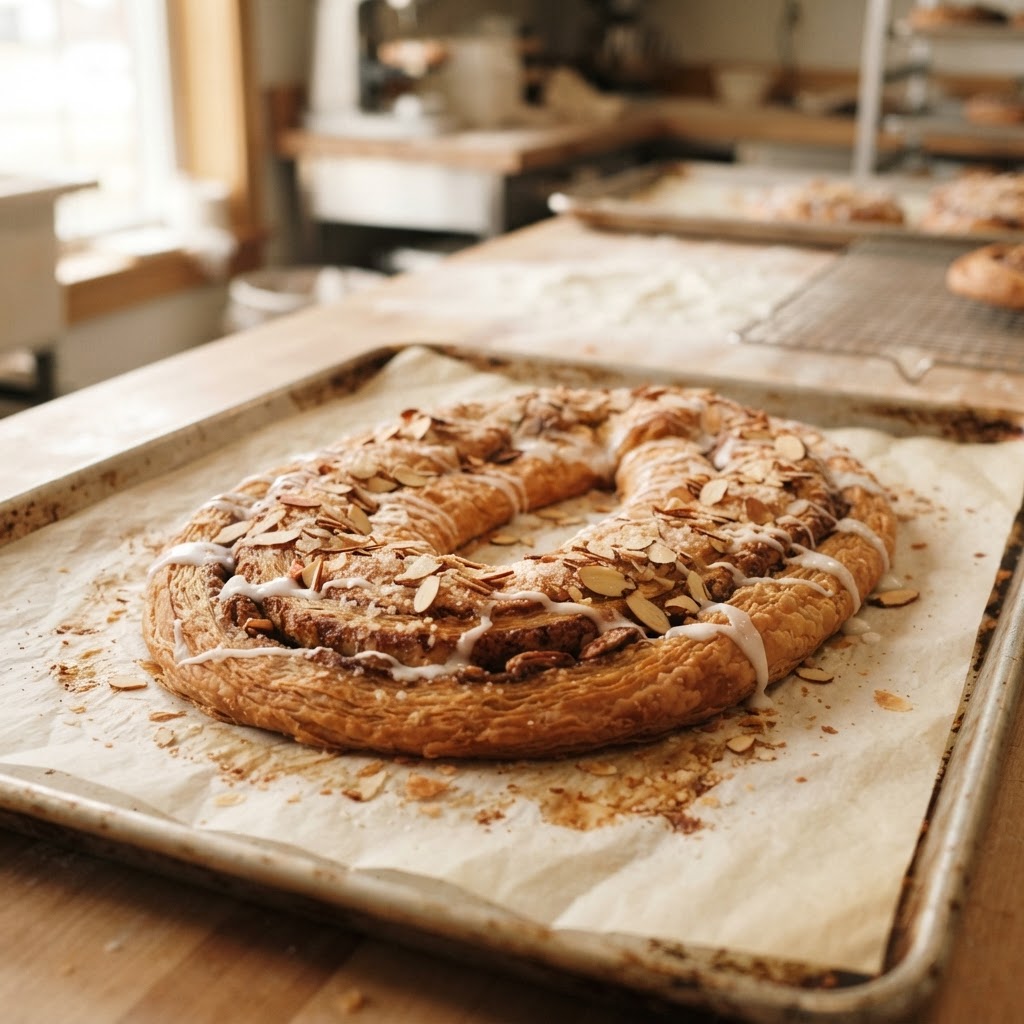
The Wisconsin kringle is the oval, hand-shaped Danish pastry of Racine — a flaky, layered, butter-rich dough shaped into a pretzel-like ring, filled with fruit or nuts or almond paste, and drizzbled with icing — that Danish immigrants brought to the shores of Lake Michigan in the late 1800s and that Wisconsin, in 2013, named its Official State Pastry. According to Wikipedia, the kringle is a Scandinavian pastry that came to the United States with Danish immigrants, with pretzels introduced by Roman Catholic monks in thirteenth-century Denmark; in the United States, the kringle is most associated with Racine, Wisconsin, where it was brought by Danish immigrants in the late nineteenth century. Wikipedia's entry on Racine Danish Kringles records the story of one of the town's defining bakeries. Kringle.com notes that the kringle was originally brought to Racine in the late 1800s by Danish immigrants and became the "Official Wisconsin Pastry" in 2013 — a uniquely American recognition of a uniquely Danish-Wisconsin tradition.
The genius of the kringle is the dough: a laminated pastry, like a Danish or croissant, in which butter is folded into the dough again and again to create hundreds of flaky layers that shatter and separate in the oven. The shape is an oval ring (once a true pretzel, now usually a simpler oval for ease), split and filled, then baked until deep golden and finished with a slick of icing and toasted nuts. Eaten warm, sliced into wedges with coffee, it is the defining breakfast pastry of the upper Midwest.
About the Ingredients
Dough — a laminated yeast dough of flour, milk, egg, butter, and yeast, folded with a butter block in the manner of a Danish; the lamination is what creates the flaky layers.
Butter block — cold butter, enclosed in the dough and folded in three "turns," each fold tripling the layers; three turns yield hundreds of distinct butter-and-dough layers.
Filling — almond paste is the classic; also pecan, walnut, cherry, apple, or raspberry. The filling is piped or spooned along the center of the rolled dough before shaping.
Icing — a simple powdered-sugar-and-water icing drizzled over the warm pastry, often with toasted sliced almonds or pecans.
Ingredients (makes 2 kringles): - For the dough: 1 cup warm milk, 2 1/4 tsp active dry yeast, 1/3 cup sugar, 1 tsp salt, 1 egg, 3 cups all-purpose flour, 1 cup (2 sticks) cold unsalted butter - For the filling: 1 cup almond filling or almond paste, softened with 1 egg white and 2 tbsp sugar (or 1 cup pecan/walnut filling, or 1 cup fruit preserves) - For the icing: 1 cup powdered sugar, 2–3 tbsp milk, 1/2 tsp vanilla, 1/2 cup toasted sliced almonds
Instructions: Make the dough: in a bowl, dissolve the yeast in the warm milk with a pinch of the sugar; let stand 5 minutes. Add the remaining sugar, salt, egg, and flour; mix to a soft dough. Knead briefly, then roll into a rectangle. Place the cold butter (cut in thin slices) over two-thirds of the rectangle, fold the unbuttered third over the center, then fold again like a letter. Wrap and chill 30 minutes.
Give the dough two more folds (turns), chilling 30 minutes between each. After the final chill, divide the dough in two. Roll each piece into a large rectangle about 1/4 inch thick. Pipe or spoon the filling in a line along the long center of each. Fold the long edges over the filling, pinch to seal, and shape each into an oval ring, seam-down, on a parchment-lined baking sheet. Cover and let rise 30–45 minutes.
Bake at 375°F for 20–25 minutes until deep golden. Cool slightly, then drizzle with the icing and scatter toasted almonds. Slice into wedges and serve warm.
The Mimosa Pairing Logic: The buttery, almond-filled kringle wants a drink that echoes the almond and the fruit and lifts the richness. An amalfi lemon mimosa is a beautiful choice — the lemon brightens the butter and cuts the icing's sweetness. A raspberry rose champagne mimosa is equally lovely for a fruit-filled kringle, its berry-and-rose perfume a beautiful mirror for the Danish pastry. This pairing is, in its way, the brunch equivalent of a warm kringle wedge and a cup of strong Danish coffee — a sparkling toast to Racine and the Official State Pastry of Wisconsin.
Reference Links: - Kringle (Scandinavian pastry, Racine Wisconsin, Danish immigrants): Wikipedia - Racine Danish Kringles (Racine bakery history): Wikipedia - What Is a Kringle? (Official Wisconsin Pastry, 2013): Kringle.com
Make-Ahead: The laminated dough can be made a day ahead and refrigerated between folds; in fact, cold dough laminates more cleanly than warm. The shaped, unfilled kringle can be assembled, covered, and refrigerated overnight for a bake-to-order breakfast; let it warm slightly and rise before baking. Kringles are best eaten the day they are baked, ideally still warm; the icing should be added while the pastry is warm.
Pro Tips: Keep the butter cold at every fold; warm butter melts into the dough and destroys the lamination that makes the layers. Chill between every fold — patience is the whole technique. Seal the seams well before shaping into a ring; an unsealed seam lets the filling boil out. Bake until genuinely deep golden; a pale kringle is doughy and heavy. Add the icing while the kringle is still warm so it melts into a thin glaze rather than sitting in a thick cap.
Rate this recipe
Be the first to rate this recipe
to submit your rating.
Recent Posts

Couscous Royale: North Africa's Grand Platter of Lamb, Chicken, and Merguez
October 14, 2026

Seattle Cream Cheese Dog Bites: Hadley Long's 1989 Pioneer Square Invention
October 14, 2026

Khao Soi: Chiang Mai's Northern Thai Coconut Curry Noodles
October 13, 2026

Korean Bibimbap: Jeonju's Joseon Dynasty Mixed Rice
October 11, 2026

Spaghetti alla Carbonara: Rome's World War II Pasta of Eggs, Guanciale, and Pecorino
October 9, 2026