Wild Mushroom Risotto
May 25, 2026
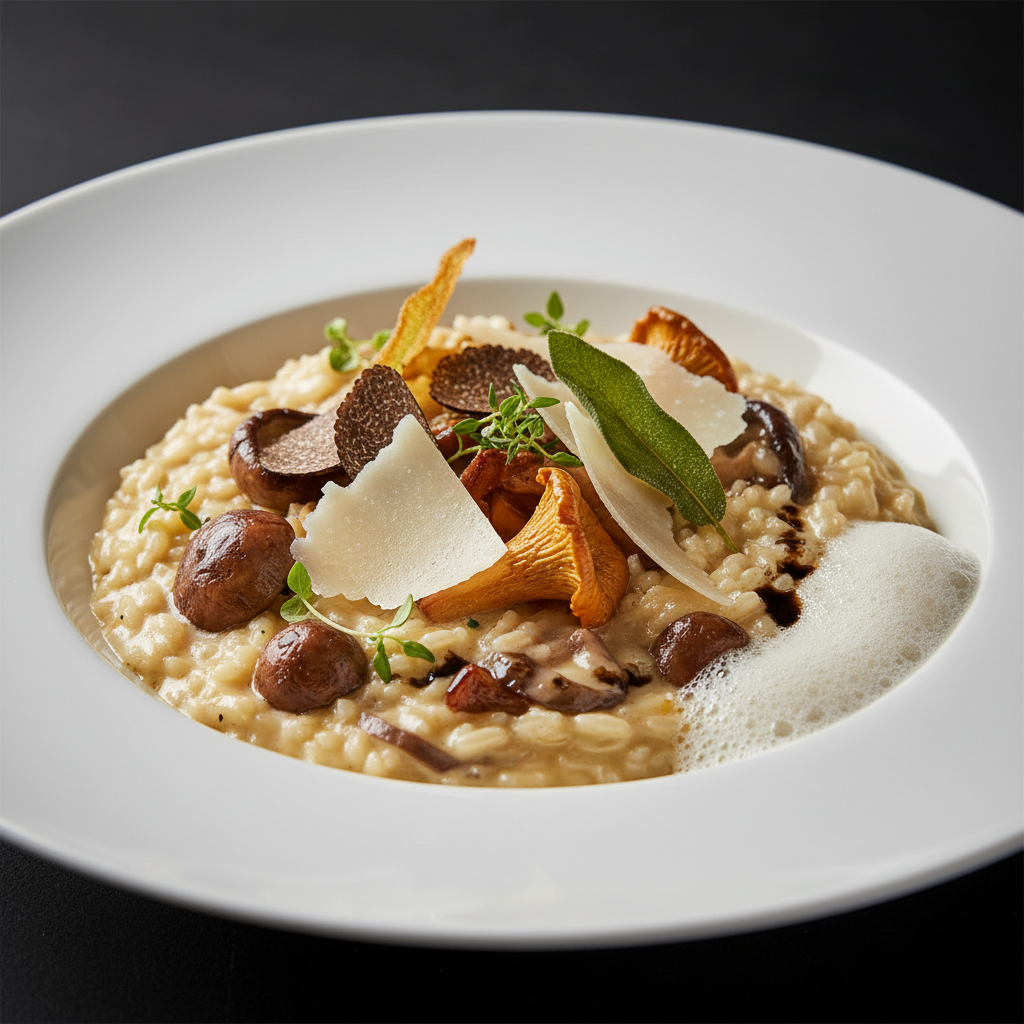
Wild mushroom risotto is the vegetarian main course of pure Italian elegance — Arborio rice coaxed into a silky, flowing wave of creaminess with a deeply savory wild mushroom base, finished with aged Parmigiano-Reggiano, truffle oil, and crispy sage. It is simultaneously rustic and refined, and when made with the care it deserves, it is one of the most profoundly satisfying dishes at any dinner table.
The key to exceptional risotto is patience, good stock, and never walking away from the pan. The process is meditative — and the result is extraordinary.
Ingredients (serves 8–10): - 2½ cups Arborio or Carnaroli rice (Carnaroli holds its shape better and is the preferred restaurant choice) - 1¼ lbs mixed wild mushrooms (porcini, chanterelle, shiitake, cremini), cleaned and roughly torn or sliced - 1 oz dried porcini mushrooms, soaked in 1¼ cups hot water for 20 minutes (reserve soaking liquid) - 2 large shallots, very finely minced - 4 garlic cloves, minced - ¾ cup dry white wine (Pinot Grigio or Soave) - 7–8 cups good vegetable or mushroom stock, kept warm - 5 tablespoons unsalted butter, divided - 3 oz Parmigiano-Reggiano (minimum 24-month), finely grated, plus extra shavings to finish - 3 tablespoons extra virgin olive oil - 2 tablespoons fresh thyme leaves - 1 tablespoon black truffle paste or 2 tablespoons high-quality truffle oil - Fresh sage leaves, fried until crisp in butter (for garnish) - Fresh flat-leaf parsley, finely chopped - Flaky sea salt and cracked black pepper
Mushroom Base: Strain the porcini soaking liquid through a fine sieve or cheesecloth — this intensely flavored liquid will go into the risotto. Finely chop the rehydrated porcini.
Heat 2 tablespoons olive oil and ⅔ oz butter in a wide, heavy pan over high heat. Add the fresh wild mushrooms in a single layer — do not crowd, or they will steam rather than sear. Cook undisturbed for 2–3 minutes until deeply golden on one side. Toss, add rehydrated porcini and thyme, cook a further 2 minutes. Season generously. Remove from pan and set aside. Reserve the pan.
Risotto: In the same pan, add remaining olive oil over medium heat. Add shallots, cook gently 5–6 minutes until completely soft and translucent. Add garlic, cook 1 minute more. Add rice, stir to coat, and toast for 2 minutes until the edges of the grains turn translucent.
Add white wine, stir constantly until completely absorbed. Add the reserved porcini soaking liquid, stir until absorbed. Now begin adding warm stock one ladleful at a time, stirring continuously and adding the next ladle only when the previous has been fully absorbed. This process takes 18–22 minutes. The risotto is done when the rice is al dente — tender with a slight bite at the center — and the mixture flows like a slow wave when the pan is shaken.
Finishing (the mantecare step): Remove from heat. Add remaining cold butter, grated Parmigiano, and truffle paste or truffle oil. Stir vigorously for 60–90 seconds — this is the mantecare, the step that creates the characteristic creamy emulsion. The risotto should flow and spread when spooned onto a plate. Fold in three-quarters of the sautéed mushrooms.
Plating: Spoon generously into warm, wide shallow bowls. The risotto should settle and spread slightly — it should not be stiff or mounded. Arrange the remaining mushrooms on top. Add large shavings of Parmesan, a drizzle of truffle oil, crispy sage leaves, fresh parsley, cracked black pepper, and a pinch of flaky salt.
Make-Ahead for Groups: Cook the risotto to 75% (about 14 minutes of stock addition), spread on a tray to cool quickly, and refrigerate. At service, resume with warm stock, finish as above. This technique is used in professional kitchens and produces excellent results.
Pro Tips: The stock must be warm — cold stock shocks the starch release and breaks the creaminess. Never rinse the rice — the surface starch is what creates the sauce. The mantecare step off the heat is the single most important technique for achieving a restaurant-quality finish. Carnaroli rice is more forgiving than Arborio if overcooked, making it the professional's choice for entertaining.
Rate this recipe
Be the first to rate this recipe
to submit your rating.
Recent Posts

Couscous Royale: North Africa's Grand Platter of Lamb, Chicken, and Merguez
October 14, 2026

Seattle Cream Cheese Dog Bites: Hadley Long's 1989 Pioneer Square Invention
October 14, 2026

Khao Soi: Chiang Mai's Northern Thai Coconut Curry Noodles
October 13, 2026

Korean Bibimbap: Jeonju's Joseon Dynasty Mixed Rice
October 11, 2026

Spaghetti alla Carbonara: Rome's World War II Pasta of Eggs, Guanciale, and Pecorino
October 9, 2026