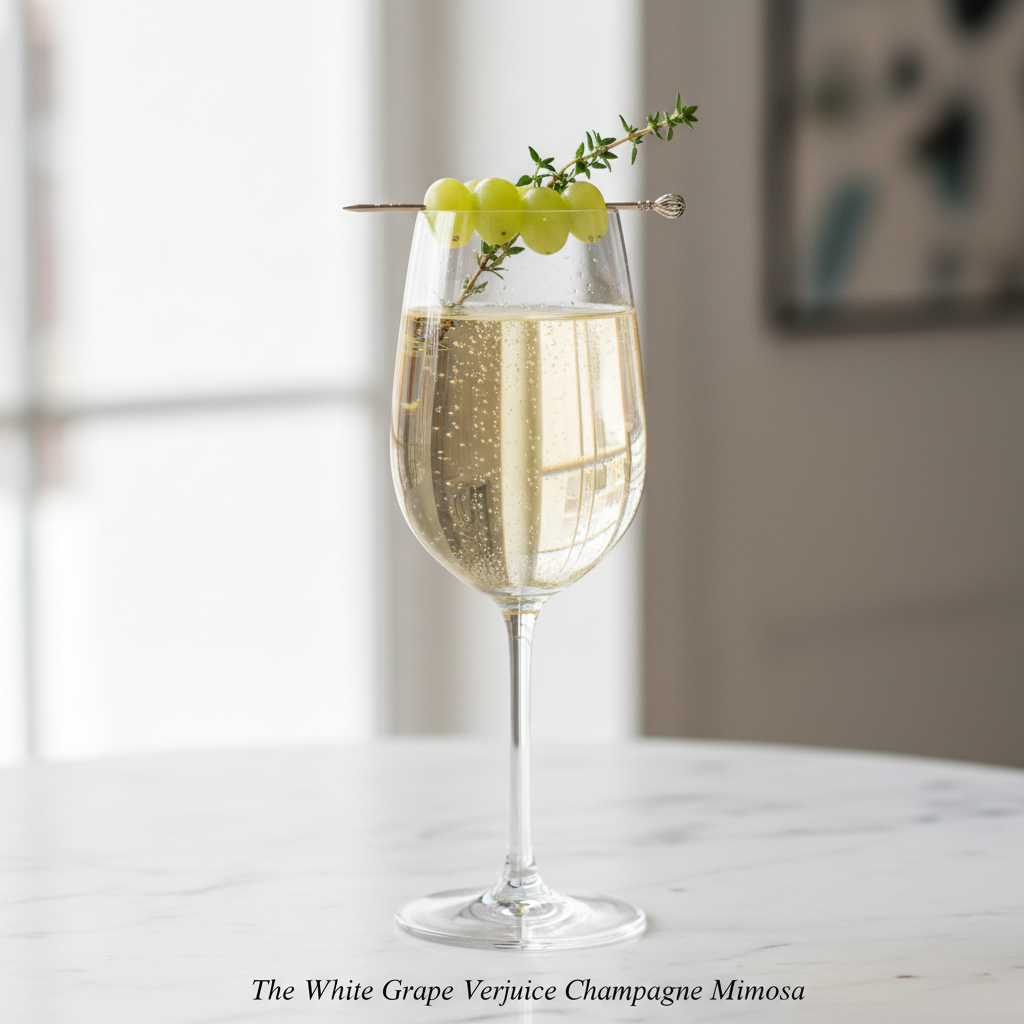
The White Grape Verjuice Champagne Mimosa
February 20, 2026
The White Grape Verjuice Champagne Mimosa is the sommelier's mimosa — the drink that a great wine professional would choose for themselves at a long, leisurely brunch. Verjuice (from the French *verjus*, "green juice") is the pressed juice of unripe wine grapes, and its flavor is a revelation to anyone who has never encountered it: intensely acidic but not harsh, with fresh grape, green apple, and subtle floral notes that sit exactly between citrus juice and white wine in the cocktail landscape. Combined with fresh Muscat grape juice and topped with Champagne, this mimosa is the most wine-sophisticated, most restrained, and most genuinely elegant in the collection.
About Verjuice
Verjuice has been produced in France since at least the 14th century — it appears in Taillevent's *Le Viandier* (circa 1375) as a cooking acid and condiment. It fell out of fashion as lemon imports became cheaper, but was revived in the 1990s by Australian chef and food writer Maggie Beer, whose South Australian Barossa Valley verjuice became a global specialty food item. Maggie Beer Verjuice is now available at Williams-Sonoma, Whole Foods, and specialty food stores in the US.
Verjuice can be made from any unripe grape variety; Chardonnay-based verjuice is the most neutral and widely available. California producers including Wolffer Estate and several Napa Valley wineries produce small quantities of excellent verjuice as a secondary product. In the absence of verjuice, equal parts white grape juice and fresh lemon juice with a splash of white wine vinegar approximates the acidity profile.
Ingredients (serves 6): - ¾ cup fresh Muscat or Concord white grape juice (pressed from about 20 oz whole white grapes — or substitute with Welch's 100% White Grape Juice for an excellent year-round version) - ¾ cup verjuice (Maggie Beer, or equivalent) - 1 tablespoon St-Germain elderflower liqueur (amplifies the grape's natural floral notes) - 1 bottle (25 oz chilled Champagne Blanc de Blancs (Ruinart Blanc de Blancs, or Billecart-Salmon Blanc de Blancs — the Chardonnay base creates a seamless bridge to the verjuice) - Small bunch of green grapes and a fresh thyme sprig for garnish - Optional: a few drops of white wine vinegar (adds additional acidity for those who prefer a drier drink)
For Fresh Grape Juice: Remove grapes from stems, blend until smooth. Press through a fine-mesh sieve, extracting all juice. The juice should be pale gold-green and intensely grapey. Use immediately — fresh grape juice oxidizes within hours.
Instructions: Stir grape juice, verjuice, and St-Germain together. Taste — the blend should be acidic, intensely fresh and grapey, with a floral note from the elderflower. Chill thoroughly.
Chill Champagne flutes or wide white wine glasses (this mimosa shows particularly well in a Burgundy glass, which opens the aromatics). Pour 2 oz of the grape-verjuice blend into each glass. Top slowly with Blanc de Blancs. The pale gold juice creates a drink of exceptional clarity and delicacy — almost completely clear, shimmering with bubbles. Garnish with 3–4 small green grapes on a cocktail pick and a single thyme sprig for visual elegance.
For a Mimosa Bar (serves 12): - 1½ cups white grape juice - 1½ cups verjuice - 2 tablespoons St-Germain - 2 bottles Champagne Blanc de Blancs, chilled
Variations: - Add ½ oz of Cointreau per serving for a White Grape Cointreau Champagne Mimosa with an orange liqueur dimension. - Use Crémant d'Alsace (Riesling or Pinot Blanc-based) instead of Champagne for a regional French pairing that mirrors the grape-and-verjuice character of Alsatian cuisine. - Add a small pinch of white pepper to each glass — the spice amplifies the verjuice's green, vegetal notes in a remarkable way.
Pairing: Verjuice's wine-like acidity makes this the ideal mimosa for a cheese course — it bridges the gap between wine and cocktail beautifully alongside soft fresh cheeses, brie, and fresh chèvre. It is also exceptional alongside smoked fish, oysters, and any delicate seafood preparation.
Reference Links: - Verjuice history (Medieval France): Wikipedia — Verjuice - Welch's 100% White Grape Juice: Welch's
Pro Tips: Verjuice is genuinely different from any other acidic ingredient — neither as sharp as lemon juice nor as alcoholic as white wine. Its subtlety is the point; use less rather than more and allow it to be a background texture rather than a flavor that guests can explicitly identify. The Blanc de Blancs pairing is non-negotiable — a rosé Champagne or full-bodied red-grape sparkling wine will overwhelm the delicate pale color and restrained flavor.
Rate this recipe
Be the first to rate this recipe
to submit your rating.
Recent Posts

Couscous Royale: North Africa's Grand Platter of Lamb, Chicken, and Merguez
October 14, 2026

Seattle Cream Cheese Dog Bites: Hadley Long's 1989 Pioneer Square Invention
October 14, 2026

Khao Soi: Chiang Mai's Northern Thai Coconut Curry Noodles
October 13, 2026

Korean Bibimbap: Jeonju's Joseon Dynasty Mixed Rice
October 11, 2026

Spaghetti alla Carbonara: Rome's World War II Pasta of Eggs, Guanciale, and Pecorino
October 9, 2026