The Violette Royale Champagne Mimosa
March 4, 2026
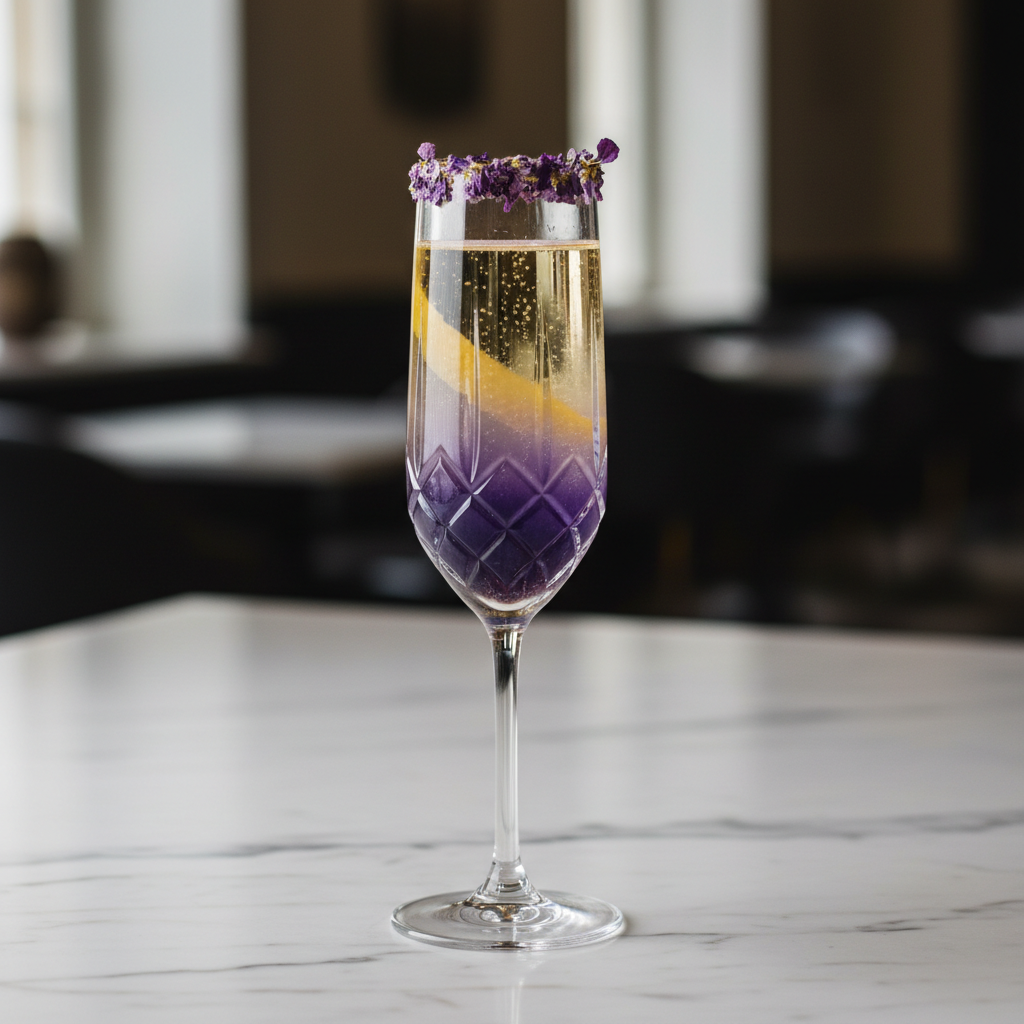
The Violette Royale is the most visually arresting mimosa in the entire collection — a deep, saturated violet-purple that is genuinely unlike any other natural color in a glass. Crème de Violette, the violet-flower liqueur that colors and flavors the classic Aviation cocktail, produces an extraordinary gradient in a champagne flute: deep indigo at the base, shifting to lavender as it rises through the pale Champagne, and settling into a dusty violet haze at the surface. No other ingredient in the bartender's toolkit creates this color, and its flavor — sweet, floral, distinctly violet, with a powdery elegance — is as distinctive as its appearance.
About Crème de Violette
Crème de Violette is a liqueur made from violet blossoms (*Viola odorata*) macerated in neutral spirit with added sugar, producing a vivid purple liqueur of intensely floral character. It was a fixture of pre-Prohibition cocktail culture — the Aviation cocktail (gin, maraschino, lemon juice, and crème de violette) was one of the most widely known cocktails of the early 20th century — before disappearing from bar shelves during Prohibition and the homogenization of the mid-century cocktail scene. Its revival in the craft cocktail renaissance of the 2000s restored it to the premium bar staples it deserves.
The two most respected and widely available producers are Rothman & Winter Crème de Violette (Austrian, made with Alpine violets, the gold standard — available at Total Wine and specialty bottle shops) and Giffard Crème de Violette (French, slightly sweeter, also excellent). Both are genuine violet liqueurs — not artificially colored grape spirits — and both produce the exceptional purple color that characterizes this mimosa.
Ingredients (serves 6): - 3 oz Crème de Violette (Rothman & Winter, or Giffard) - 2 oz fresh lemon juice (the acid brightens the violet color from blue toward lavender) - 1 tablespoon simple syrup (optional, to balance acidity) - 1 bottle (25 oz chilled Champagne Blanc de Blancs or Brut NV (Taittinger Brut La Française or Ruinart Blanc de Blancs for the cleanest color expression) - Dried violet flowers and lemon twists for garnish
Instructions: Stir Crème de Violette, lemon juice, and simple syrup together in a small pitcher. Taste — the blend should be floral, lightly tart, and vivid. The lemon juice shifts the color from deep indigo toward a more violet-lavender register. Chill.
Chill Champagne flutes for at least 5 minutes. Pour about ¾ oz of the violette blend into the base of each flute. Top slowly with chilled Champagne poured very gently down the side — the deep violet will bloom upward in extraordinary tendrils through the pale wine. Do not stir. Garnish with a lemon twist expressed over the surface (the citrus oils enhance the floral aroma) and a single dried violet flower rested on the foam.
For a Mimosa Bar (serves 12): - 6 oz Crème de Violette - 4 oz fresh lemon juice - 2 tablespoons simple syrup - 2 bottles Champagne Blanc de Blancs, chilled
Label the pitcher elegantly — this is the most photogenic drink on any mimosa bar.
Variations: - Add ¾ oz of gin (Hendrick's or The Botanist) per serving for a Violette Aviation Mimosa that bridges the cocktail and mimosa categories — exceptionally sophisticated. - Replace lemon juice with fresh grapefruit juice for a Violette Grapefruit Champagne Mimosa with a more complex, bitter-citrus note. - Use sparkling rosé instead of Blanc de Blancs for a Violette Rosé Mimosa with a deeper, more complex color.
Pairing: The Violette Royale's extraordinary visual and delicate floral flavor make it the ideal welcome cocktail or toast drink — its impact is maximum at first sip and first sight. It pairs with equal elegance alongside light, floral pastries and desserts: lavender macarons, rose petal shortbread, and almond financiers. The lemon in the drink also pairs well with smoked salmon and delicate fish preparations.
Pro Tips: Use the smallest possible amount of Crème de Violette — its color is very powerful and its flavor can easily dominate. ½ oz per serving (rather than the ¾ oz specified above) creates a subtler version for guests who prefer less sweetness. The quality of the sparkling wine affects the color dramatically: a Blanc de Blancs with its very pale color shows the violet gradient most clearly. A rosé Champagne will muddle the color into a less distinct brownish-purple.
Rate this recipe
Be the first to rate this recipe
to submit your rating.
Recent Posts
Couscous Royale: North Africa's Grand Platter of Lamb, Chicken, and Merguez
October 14, 2026
Seattle Cream Cheese Dog Bites: Hadley Long's 1989 Pioneer Square Invention
October 14, 2026
Khao Soi: Chiang Mai's Northern Thai Coconut Curry Noodles
October 13, 2026
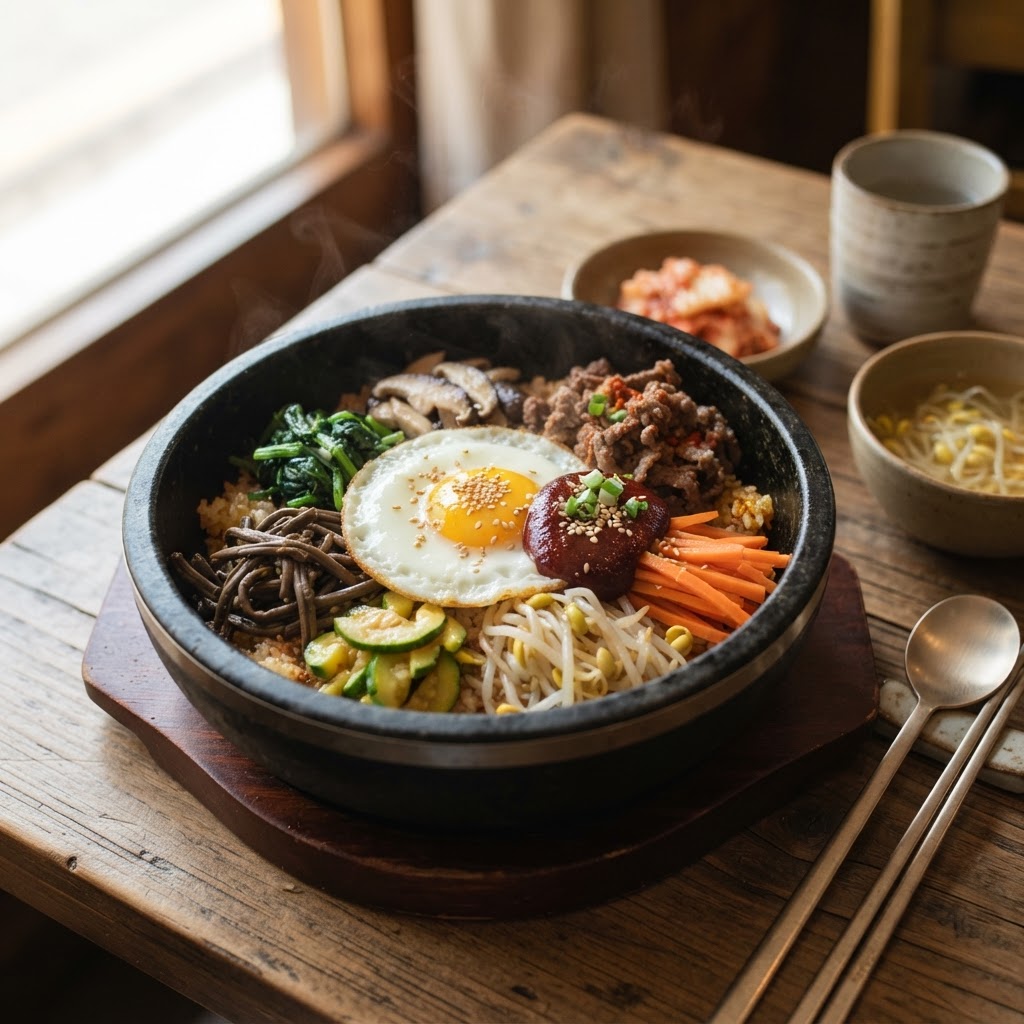
Korean Bibimbap: Jeonju's Joseon Dynasty Mixed Rice
October 11, 2026
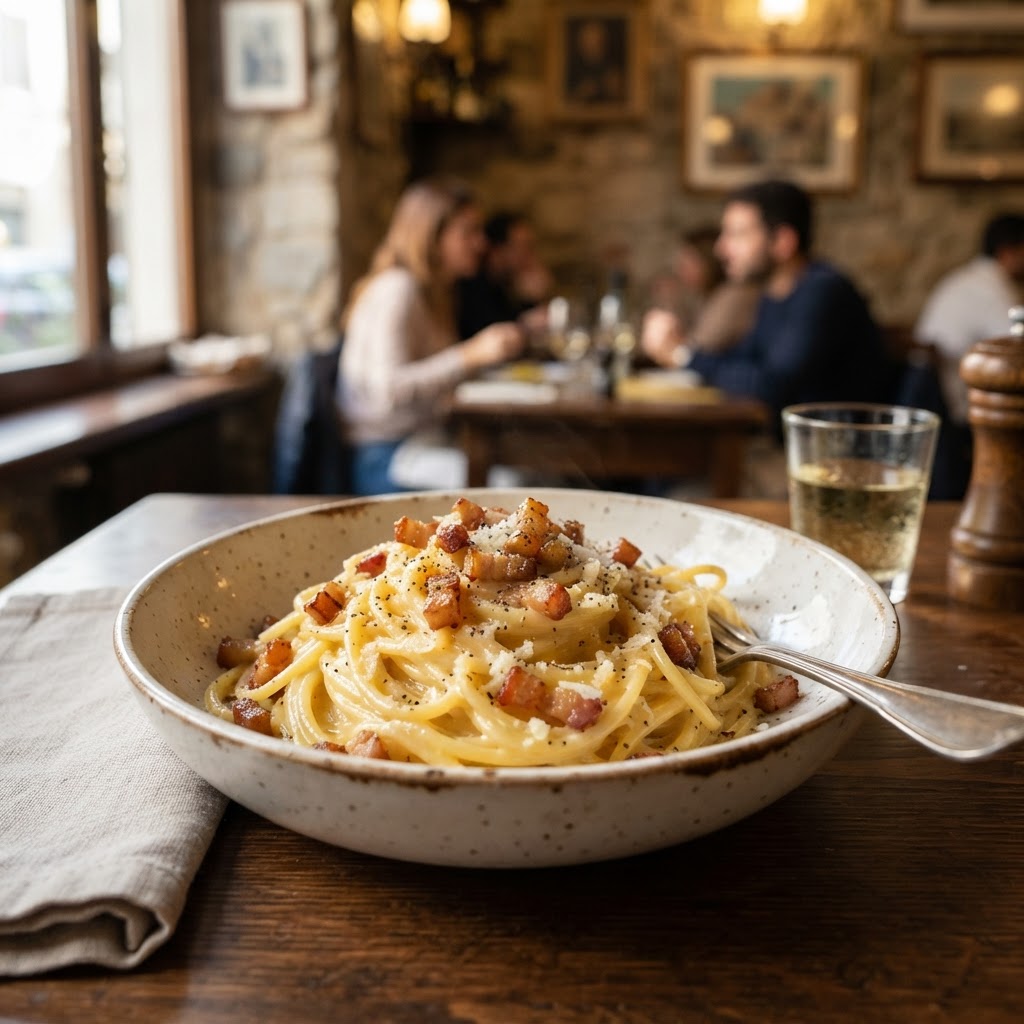
Spaghetti alla Carbonara: Rome's World War II Pasta of Eggs, Guanciale, and Pecorino
October 9, 2026